

 English
 中文简体
中文简体 русский
 Deutsch
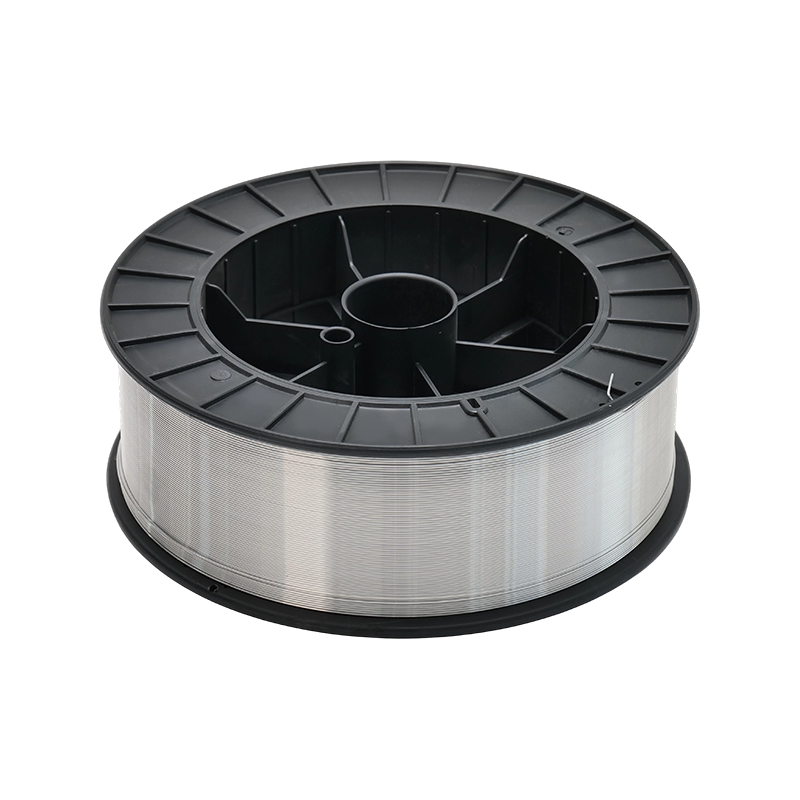
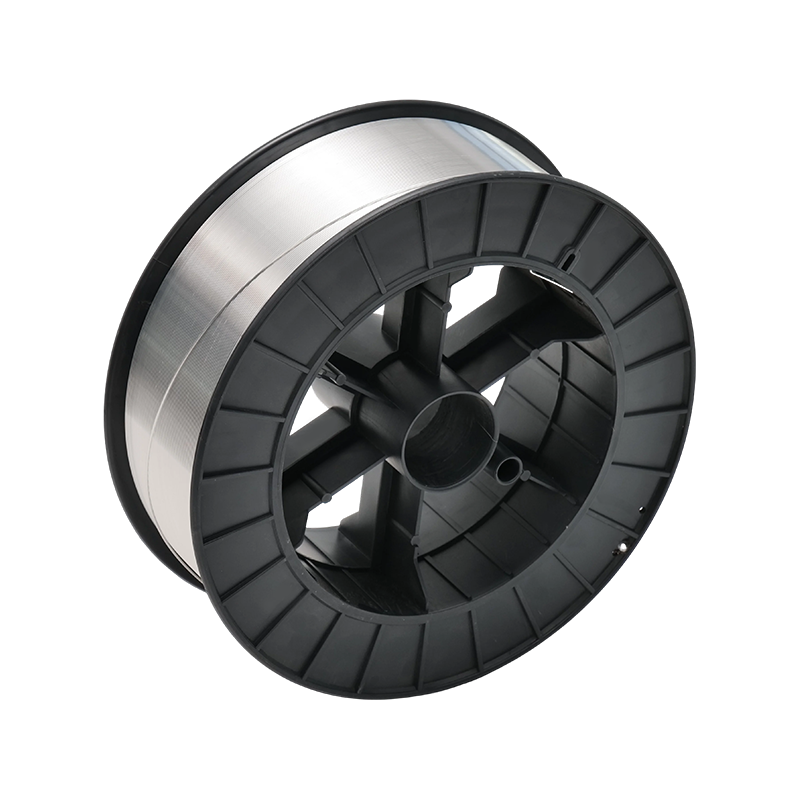
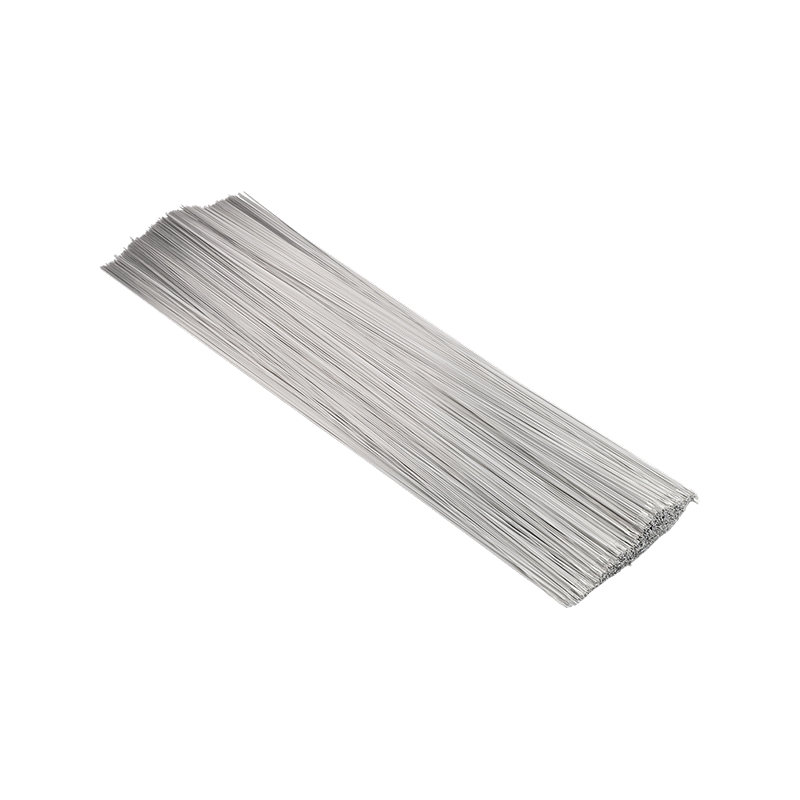
AlMg6 aluminum alloy wire is a high-strength aluminum-magnesium wire designed for demanding fabrication, joining, and component-manufacturing applications. With a nominal magnesium content of approximately 5.8% to 6.8%, the alloy combines relatively high strength with good weldability, strong resistance to exfoliation corrosion, low density, and the practical advantages associated with aluminum materials.
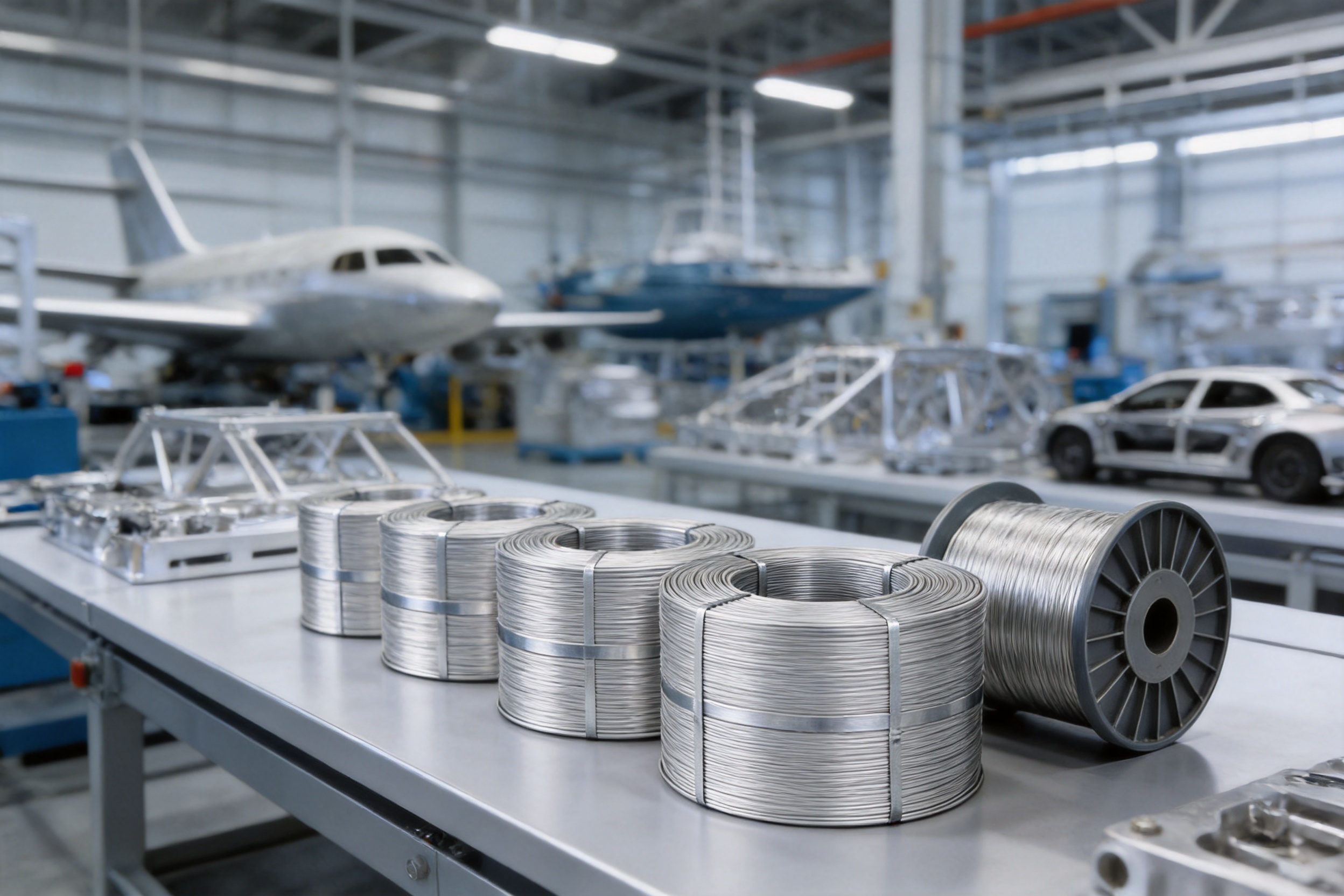
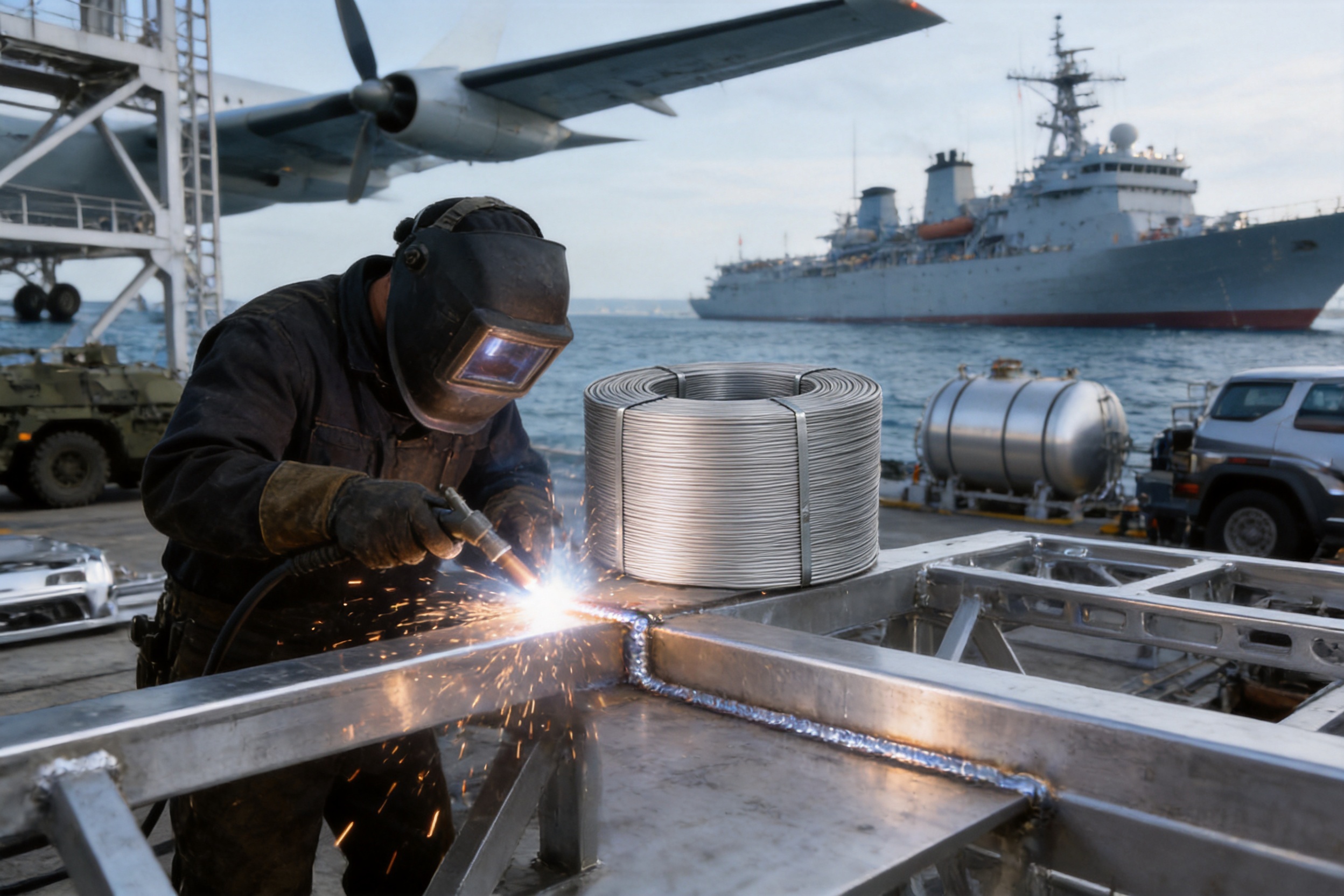
The wire is suitable for industries in which weight reduction, structural reliability, corrosion protection, and efficient welding are essential. Typical fields include aviation, aerospace, military equipment, shipbuilding, automotive manufacturing, tank production, transportation equipment, and other specialized engineering applications.
Jiangsu Hetuo Aluminum Wire Co., Ltd. manufactures AlMg6 aluminum alloy wire as part of its high-strength aluminum alloy wire portfolio. The company operates an intelligent manufacturing system covering high-purity aluminum wire, high-strength aluminum alloy wire, and aluminum and aluminum alloy welding materials. Its production capabilities, inspection procedures, technical personnel, and certified quality-management systems support consistent material quality for domestic and international customers.
Content
- 1 What Is AlMg6 Aluminum Alloy Wire?
- 2 Key Characteristics of the Material
- 3 AlMg6 Chemical Composition
- 4 Advantages Over Conventional Aluminum Wire Options
- 5 Why Manufacturing Control Matters
- 6 Advanced Manufacturing Strengths
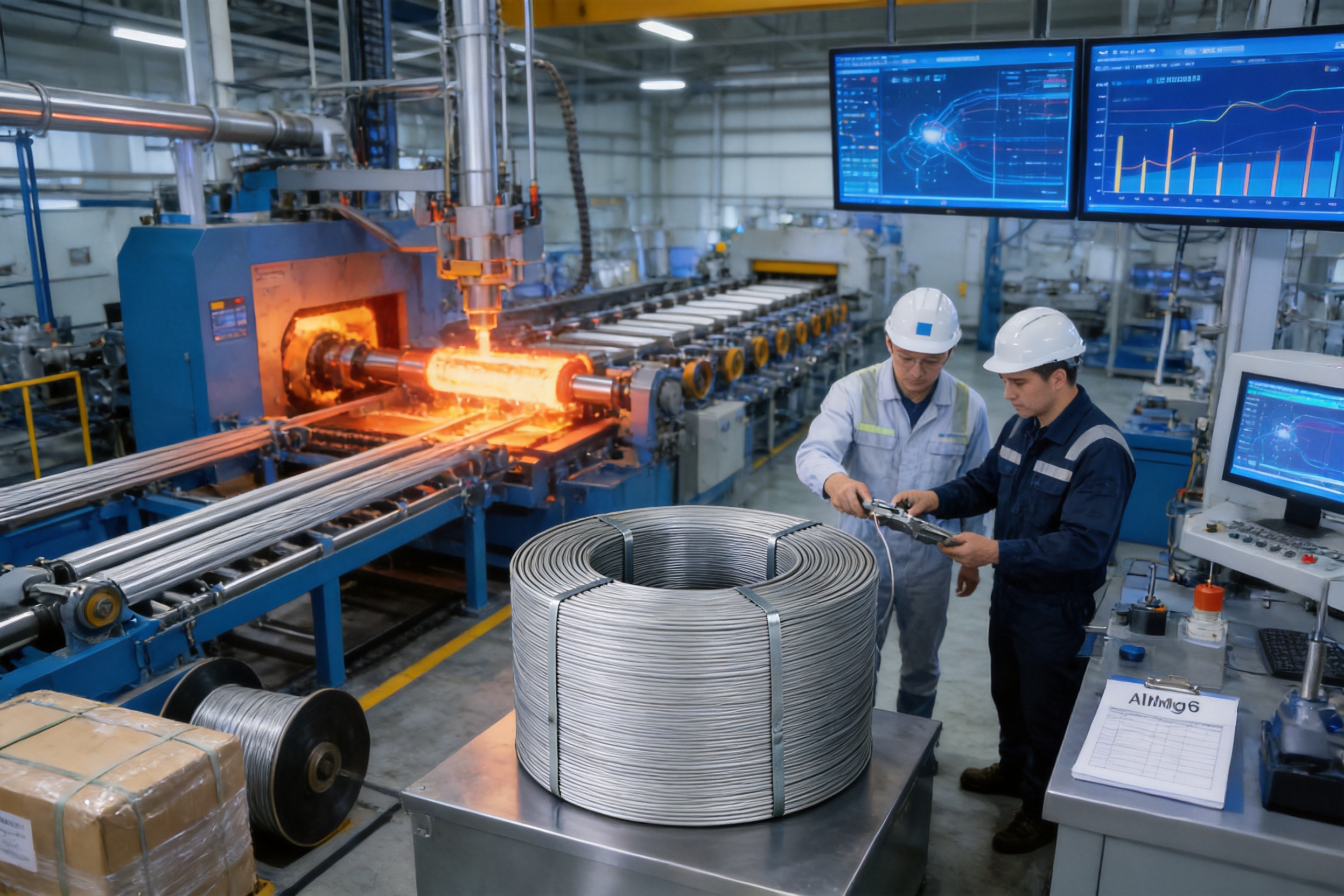
- 7 Manufacturing Process for AlMg6 Aluminum Alloy Wire
- 7.1 1. Raw-Material Selection
- 7.2 2. Melting and Alloying
- 7.3 3. Chemical Analysis and Melt Adjustment
- 7.4 4. Casting into Rod or Feedstock
- 7.5 5. Homogenization or Thermal Conditioning
- 7.6 6. Surface Preparation
- 7.7 7. Multi-Stage Wire Drawing
- 7.8 8. Mechanical and Dimensional Control
- 7.9 9. Spooling, Coiling, and Packaging
- 8 Application Areas
- 9 Welding Considerations
- 10 Product Selection Guide
- 11 Benefits of Choosing a Specialized Manufacturer
- 12 Quality Assurance from Order to Delivery
- 13 Environmental and Economic Advantages
- 14 Common Questions and Answers
- 14.1 What does AlMg6 mean?
- 14.2 What is AlMg6 aluminum alloy wire used for?
- 14.3 Is AlMg6 suitable for welding?
- 14.4 What is the main advantage of AlMg6 over high-purity aluminum wire?
- 14.5 How does AlMg6 compare with AlMg5?
- 14.6 Can AlMg6 wire be used in marine applications?
- 14.7 What diameter options are available?
- 14.8 What packaging is available?
- 14.9 What quality certifications does the manufacturer have?
- 14.10 How should the wire be stored?
- 14.11 What information should be included in an inquiry?
- 14.12 Can the manufacturer support international orders?
- 15 Conclusion
- 16 References
- 17 Product: AlMg6 Aluminum Alloy Wire
What Is AlMg6 Aluminum Alloy Wire?
AlMg6 is a wrought aluminum-magnesium alloy containing aluminum as the balance and magnesium as the principal alloying element. The “Mg6” designation indicates a magnesium level close to 6%, although the exact chemical limits depend on the applicable product specification, manufacturing standard, and customer agreement.
Magnesium strengthens aluminum primarily through solid-solution strengthening. Unlike some precipitation-hardening aluminum alloys, aluminum-magnesium alloys do not depend on the same heat-treatment mechanism used by many aluminum-copper or aluminum-zinc grades. Their performance is strongly influenced by chemical composition, cold working, drawing reduction, wire diameter, temper, and manufacturing control.
In the supplied AlMg6 composition, silicon is controlled at up to 0.40%, iron at up to 0.40%, copper at up to 0.10%, manganese at approximately 0.5% to 0.8%, magnesium at approximately 5.8% to 6.8%, zinc at up to 0.20%, titanium at approximately 0.1% to 0.2%, beryllium at approximately 0.002% to 0.005%, and aluminum makes up the balance. Other elements are controlled according to the listed limits and the relevant purchasing specification.
This chemistry provides a useful balance between mechanical performance and fabrication performance. Magnesium raises strength without making the material excessively heavy, while the aluminum matrix preserves the low-density and corrosion-resistant characteristics expected from aluminum alloy products.
Key Characteristics of the Material
High Strength with Low Density
The most important advantage of AlMg6 aluminum alloy wire is the combination of strength and light weight. Aluminum has a much lower density than steel, and the addition of magnesium significantly improves the strength of the aluminum matrix. This makes the alloy attractive where a design requires a reduction in component weight without accepting a comparable reduction in structural performance.
Weight reduction can benefit aircraft structures, marine equipment, transportation systems, military vehicles, automotive components, and mobile machinery. Lower mass may reduce energy consumption, increase payload capacity, improve acceleration, or simplify installation and handling.
Wire products also offer manufacturing efficiency. They can be fed continuously into automated welding equipment, cut into controlled lengths, or used in processes that require a precise and repeatable filler-metal supply. The combination of material efficiency and low density may reduce the amount of filler metal needed for a specific assembly compared with heavier alternatives.
Good Weldability
AlMg6 aluminum alloy wire is intended for applications in which welding performance is important. Aluminum-magnesium welding materials are commonly selected because they can provide suitable wetting, reliable filler-metal transfer, and good compatibility with many aluminum alloy base materials when the correct welding process and procedure are used.
Good weldability does not mean that every welding condition is automatically suitable. Aluminum has high thermal conductivity and a persistent oxide film, so joint preparation, shielding-gas quality, torch setup, wire cleanliness, current selection, and heat control remain essential. When these factors are properly managed, AlMg6 wire can support stable welding and high-quality joints.
The wire can be considered for gas-shielded welding operations, including automated and semi-automated production environments. The final welding procedure should be validated according to the base alloy, joint design, service environment, required strength, and applicable welding standard.
Resistance to Exfoliation Corrosion
The supplied product information highlights good exfoliation corrosion resistance. Exfoliation corrosion is a form of localized corrosion that may develop along elongated grain boundaries, particularly in certain high-strength aluminum products exposed to aggressive environments. It can cause layered or flaking damage and may threaten the long-term integrity of structural components.
The corrosion performance of an AlMg6 wire or welded joint depends on more than nominal chemistry alone. Processing history, grain structure, surface condition, welding heat input, residual stress, post-weld treatment, and exposure conditions all influence actual service behavior. Nevertheless, the aluminum-magnesium composition provides a useful foundation for corrosion-resistant applications, especially when compared with less suitable alloy systems in marine or humid environments.
Excellent Marine and Transportation Potential
Aluminum-magnesium alloys are widely valued in shipbuilding and marine fabrication because they combine low weight, corrosion resistance, and weldability. AlMg6 wire can be considered for suitable marine structures, decks, cabins, fittings, fabricated assemblies, and repair operations when the filler metal is compatible with the base material and the relevant marine requirements.
The same characteristics benefit automotive and transportation equipment. Vehicle manufacturers seek lighter materials to improve fuel efficiency, battery range, payload, and overall performance. A high-strength aluminum alloy wire can support the production of welded frames, panels, enclosures, brackets, tanks, and other components where aluminum construction is appropriate.
Stable Chemical Composition
Precise chemistry control is fundamental to reliable aluminum alloy wire. Even small changes in magnesium, manganese, silicon, iron, copper, titanium, or other elements can influence strength, ductility, corrosion performance, melting behavior, and weld response.
The stated AlMg6 composition gives customers a clear reference for material selection and incoming inspection. Controlled limits also help reduce variation between production batches. For customers operating automated welding lines, chemical consistency is especially important because changes in melting behavior or wire transfer can affect arc stability, deposition characteristics, and weld appearance.
AlMg6 Chemical Composition
The following table summarizes the chemical composition provided for AlMg6 aluminum alloy wire. Values are expressed as percentage by mass unless otherwise specified. “Rest” means the remaining portion of the composition is aluminum.
| Element | Specified Content | Function or Significance |
|---|---|---|
| Silicon (Si) | Up to 0.40% | Controlled to limit changes in melting behavior and alloy performance. |
| Iron (Fe) | Up to 0.40% | Controlled because excess iron may influence intermetallic phases and ductility. |
| Copper (Cu) | Up to 0.10% | Kept low to support corrosion resistance and preserve the aluminum-magnesium alloy design. |
| Manganese (Mn) | 0.5%–0.8% | Contributes to strength and metallurgical stability. |
| Magnesium (Mg) | 5.8%–6.8% | Main strengthening element and a major contributor to alloy performance. |
| Zinc (Zn) | Up to 0.20% | Controlled as a minor alloying element and impurity limit. |
| Titanium (Ti) | 0.1%–0.2% | May support grain refinement and material consistency. |
| Beryllium (Be) | 0.002%–0.005% | Controlled at a very low level according to the stated composition. |
| Other elements | Single up to 0.05%; total up to 0.15% | Limits unintended elemental accumulation. |
| Aluminum (Al) | Balance | Base metal and principal matrix of the alloy. |
Customers should confirm the exact applicable standard, tolerance, diameter, temper, packaging, and inspection documentation before placing an order. The chemistry listed above is a product reference and should be matched with the technical requirements of the intended application.
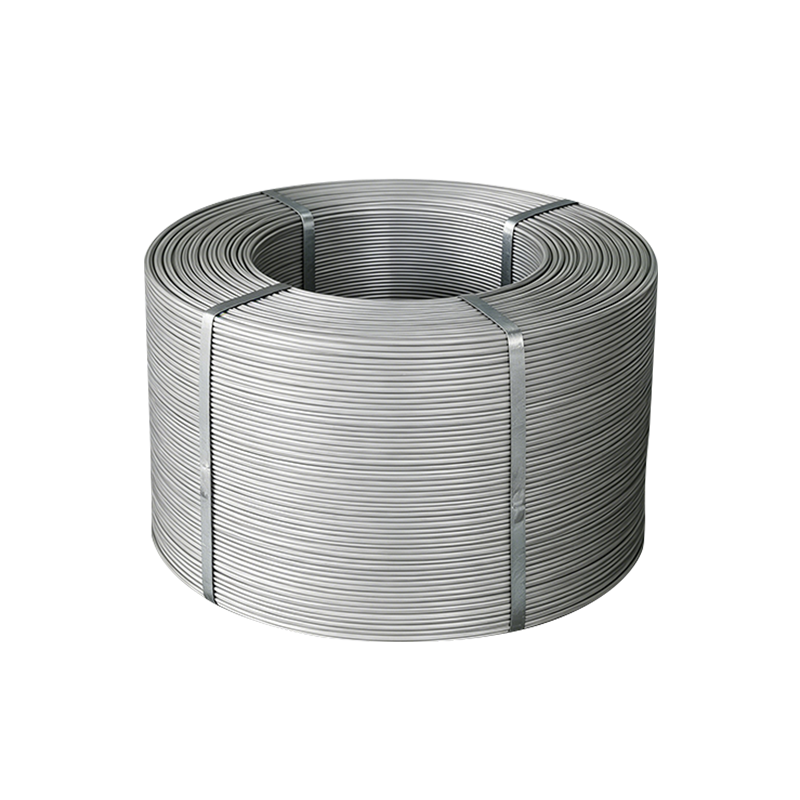
AlMg6 Aluminum Alloy Wire
Advantages Over Conventional Aluminum Wire Options
Compared with High-Purity Aluminum Wire
High-purity aluminum wire is valued for electrical conductivity, ductility, and excellent corrosion resistance. However, it generally does not provide the same strengthening effect as an aluminum-magnesium alloy containing approximately 6% magnesium. Where the primary requirement is structural strength, load-bearing performance, or durable welded fabrication, AlMg6 may offer a more appropriate balance.
High-purity aluminum remains the better choice for applications in which maximum conductivity is the dominant requirement. AlMg6 should be selected when strength, weldability, and corrosion-resistant structural performance are more important than the highest possible electrical conductivity.
Compared with Low-Magnesium Aluminum Alloys
Lower-magnesium grades, such as AlMg3 and AlMg5, can provide good corrosion resistance and weldability. AlMg6 contains a higher magnesium range and is therefore intended for applications requiring a higher level of alloy strengthening within the aluminum-magnesium family.
The choice between AlMg3, AlMg5, and AlMg6 should not be made solely by selecting the grade with the highest magnesium content. The designer must consider required tensile strength, ductility, forming behavior, weld procedure, service temperature, corrosion exposure, base-metal compatibility, and applicable standards. AlMg6 is advantageous when its higher alloy level matches the design and welding requirements.
Compared with Aluminum-Silicon Welding Wires
Aluminum-silicon wires such as 4043 and 4047 are often selected for their fluidity, reduced melting temperature, and favorable appearance in certain welding applications. They can be particularly useful for cast aluminum alloys and applications where crack sensitivity or weld fluidity is a central concern.
AlMg6 wire offers a different performance profile. Its aluminum-magnesium chemistry is directed toward higher-strength aluminum-magnesium fabrication and applications where the welded assembly requires the characteristics associated with magnesium-bearing filler metal. The preferred filler depends on the base alloy and joint design. A professional welding engineer should confirm compatibility before substituting an AlMg6 wire for an aluminum-silicon grade or vice versa.
Compared with Aluminum-Copper and Aluminum-Zinc Alloy Wires
Aluminum-copper and aluminum-zinc systems can deliver high strength, but they may have different corrosion, welding, heat-treatment, and cracking characteristics. Some high-strength heat-treatable aluminum alloys are more difficult to weld or may experience a greater reduction in heat-affected-zone strength after welding.
AlMg6 is attractive when the user needs a high-strength aluminum alloy wire with good weldability and useful corrosion resistance rather than the highest possible strength in an unwelded, heat-treated condition. Its advantages are therefore practical and application-focused: reliable fabrication, lower density, corrosion protection, and a strong balance of properties.
Why Manufacturing Control Matters
Aluminum alloy wire quality is determined by the entire production chain. A chemically correct billet or rod does not automatically result in high-quality finished wire. The material must be melted, cast, homogenized when required, processed, drawn, finished, inspected, and packaged under controlled conditions.
Wire diameter, straightness, surface condition, tensile behavior, ductility, chemical composition, cleanliness, and feed performance all affect the customer’s production process. A small surface defect can interrupt automated welding. Variation in diameter can affect wire feeding and deposition rate. Inconsistent chemistry can change arc behavior and weld performance.
For this reason, an experienced manufacturer must combine suitable equipment with technical personnel and documented quality procedures. Jiangsu Hetuo Aluminum Wire Co., Ltd. states that it has built an intelligent manufacturing system covering three major product areas: high-purity aluminum wire, high-strength aluminum alloy wire, and aluminum and aluminum alloy welding materials.
Advanced Manufacturing Strengths
Integrated Product Scope
The company’s product range includes high-grade aluminum alloy rods, welding wires, and precision profiles. This integrated scope is valuable because it allows the manufacturer to develop knowledge across raw materials, alloy design, wire drawing, welding applications, and precision product requirements.
Customers can benefit from a supplier that understands both the metallurgy of aluminum alloys and the practical needs of downstream fabrication. A wire manufacturer with welding-material experience is better positioned to consider feeding stability, surface quality, melting behavior, and application-specific requirements during production.
Intelligent Manufacturing System
The stated intelligent manufacturing system is designed to support stable production and process visibility. In a modern wire plant, intelligent manufacturing may include production planning, equipment monitoring, digital process records, batch identification, quality-data management, and traceability from raw material to finished coil or spool.
Digital controls do not replace metallurgical expertise. Instead, they support technicians and managers by making production information more consistent and easier to review. When process data are recorded systematically, manufacturers can identify variations earlier, improve repeatability, and respond more efficiently to customer quality requirements.
Advanced Equipment and Facilities
The company introduces advanced equipment and facilities for its aluminum wire and welding-material operations. The specific equipment configuration may vary by product line, but modern aluminum wire production commonly requires controlled melting and casting systems, rod-processing equipment, drawing machines, surface-treatment or cleaning systems, diameter-control equipment, spooling lines, and inspection instruments.
Each stage contributes to the final product. Melting and casting influence internal uniformity. Rod preparation affects drawability. Drawing determines dimensional accuracy and mechanical condition. Surface control influences welding-feed performance. Spooling and packaging protect the wire during storage, transport, and handling.
Advanced equipment is particularly important for fine and precision wire. As diameter decreases, the allowable dimensional and surface tolerances become more demanding. A stable production line helps maintain consistent wire geometry and reduce the risk of feeding problems in automated welding systems.
Quality Inspection Throughout Production
Jiangsu Hetuo Aluminum Wire Co., Ltd. states that it strictly implements quality inspection throughout production. Continuous inspection is more effective than relying only on a final check because it allows potential issues to be identified at the stage where they occur.
Typical control points for aluminum alloy wire may include incoming raw-material verification, melt chemistry analysis, cast-rod inspection, dimensional measurement, tensile and elongation testing, surface examination, spool or coil inspection, and final documentation review. Depending on the customer’s requirements, additional tests may be applied to evaluate weld performance, cleanliness, or packaging integrity.
Inspection records should be associated with batch numbers so that products can be traced back through production. This is important for aerospace, military, automotive, and other sectors in which material traceability and process documentation are central purchasing requirements.
ISO 9001 and IATF 16949 Certifications
The company has obtained ISO 9001 and IATF 16949 quality-management system certifications. ISO 9001 provides a structured framework for quality planning, process control, customer communication, corrective action, and continual improvement.
IATF 16949 is specifically associated with automotive quality-management requirements. Its application reflects the need for disciplined process control, risk management, defect prevention, traceability, supplier management, and continuous improvement in automotive supply chains.
Certification does not mean that every product is suitable for every application without verification. However, it demonstrates that the manufacturer has established a formal quality-management framework. For customers in automotive and other demanding industries, such systems can improve supplier evaluation, audit readiness, production consistency, and communication.
Technical and Management Personnel
The company has 60 employees, including 30 professional managers and technicians. A significant technical and management workforce supports process supervision, quality control, production planning, equipment operation, customer communication, and technical improvement.
Aluminum alloy wire production requires practical knowledge of alloy chemistry, solidification, deformation processing, surface treatment, welding behavior, and quality standards. Experienced personnel can help identify whether a customer’s requirement concerns alloy grade, diameter tolerance, temper, surface finish, packaging, or welding application. This technical understanding helps reduce the risk of selecting an unsuitable product specification.
Factory Scale and Production Organization
The factory covers approximately 40,000 square meters in the Guannan Economic Development Zone of Lianyungang, Jiangsu Province, China. This site provides space for production equipment, raw-material handling, inspection facilities, finished-product storage, packaging, and administrative operations.
A dedicated industrial facility can support better material flow and clearer separation of production stages. Organized logistics are especially important for aluminum wire because the finished product must be protected from contamination, moisture, impact, and deformation during storage and shipment.
Manufacturing Process for AlMg6 Aluminum Alloy Wire
1. Raw-Material Selection
The process begins with the selection of aluminum and alloying materials suitable for the required AlMg6 composition. Raw materials must be clean, identifiable, and compatible with the target chemistry. Control of impurities is important because excessive iron, silicon, copper, or other elements can affect ductility, corrosion behavior, and welding performance.
Raw materials should be verified against purchasing specifications before entering production. Chemical analysis, supplier documentation, batch identification, and storage controls help establish a reliable starting point.
2. Melting and Alloying
Aluminum is melted in controlled equipment, after which magnesium, manganese, titanium, and other required elements are introduced according to the production recipe. The temperature and holding time must be managed carefully to promote uniform dissolution while limiting oxidation and unnecessary heat exposure.
Magnesium requires particular attention because it can oxidize readily at elevated temperatures. Furnace practices, surface protection, transfer procedures, and melt handling influence recovery and final composition. Proper process control helps ensure that the finished alloy falls within the stated magnesium range of 5.8% to 6.8%.
3. Chemical Analysis and Melt Adjustment
Before casting, a representative sample may be analyzed to verify the composition. If an element is outside the target range, the melt can be adjusted where technically and economically appropriate. The objective is to achieve a stable chemistry before the material enters the next processing stage.
Accurate analysis is important because alloy composition affects not only strength but also welding performance. Customers using automated welding equipment require predictable wire behavior. A stable chemical range helps reduce variation in melting, transfer, deposition, and finished-joint properties.
4. Casting into Rod or Feedstock
The approved melt is cast into a suitable aluminum alloy rod or other feedstock form. Casting control affects grain structure, internal soundness, segregation, and surface quality. Cooling rate, mold condition, metal flow, and casting speed must be coordinated to produce feedstock that can be processed reliably.
Any casting-related defect may become more significant during drawing. For this reason, rod inspection and appropriate preparation are essential before the material is reduced to final wire dimensions.
5. Homogenization or Thermal Conditioning
Depending on the production route and applicable specification, the cast rod may undergo homogenization or another thermal-conditioning treatment. The purpose is to reduce chemical segregation, stabilize the microstructure, and improve subsequent processing behavior.
Thermal treatment must be controlled carefully. Excessive temperature or holding time can cause undesirable grain growth or surface effects, while insufficient treatment may leave nonuniformity that affects drawing and final performance. The appropriate schedule depends on alloy chemistry, rod size, equipment, and production requirements.
6. Surface Preparation
Before drawing, the rod surface may be cleaned, treated, or otherwise prepared to remove oxides, residues, and imperfections. Clean surface condition is especially important for welding wire because contaminants can affect arc stability, gas shielding, porosity, and weld appearance.
Surface preparation also protects drawing dies and supports stable dimensional reduction. Any lubricants or processing aids must be compatible with the wire and controlled so that the finished product meets cleanliness and application requirements.
7. Multi-Stage Wire Drawing
Wire drawing reduces the rod or intermediate wire to the required diameter by passing it through a series of dies. The reduction schedule, drawing speed, lubrication, die condition, and intermediate treatment all influence dimensional accuracy and mechanical properties.
AlMg6 wire may be produced in different diameters and conditions depending on the customer’s requirements. Smaller diameters require careful control of reduction per pass and line tension. Excessive reduction can cause cracking or excessive work hardening, while insufficient control may result in dimensional variation or poor surface finish.
Multi-stage drawing allows the manufacturer to balance productivity and quality. It also provides opportunities for inspection and process adjustment between stages. In demanding applications, stable drawing conditions are essential for maintaining wire roundness, straightness, surface continuity, and consistent feeding behavior.
8. Mechanical and Dimensional Control
After drawing, the wire is checked for dimensions and mechanical characteristics appropriate to the agreed condition. Measurements may include diameter, ovality, tensile strength, elongation, and visual surface quality. The test method and acceptance criteria should be established according to the relevant material standard or customer specification.
Dimensional accuracy is critical in continuous welding. If the wire is too large, it may not pass correctly through the liner or contact tip. If it is too small, feeding may become unstable. Excessive ovality can produce inconsistent electrical contact and irregular deposition. Consistent diameter supports more reliable process settings.
9. Spooling, Coiling, and Packaging
Finished wire may be supplied in coils, spools, drums, or other agreed forms. Winding tension must be controlled so that the wire is neither excessively loose nor deformed. The package should protect the wire from dust, moisture, impact, and handling damage.
Correct labeling is equally important. Product labels should identify the alloy, diameter, batch or heat number, net weight, production information, and any relevant quality documentation. Proper packaging and traceability make it easier for customers to control inventory and investigate any future issue.
Application Areas
Aviation and Aerospace
Aviation and aerospace manufacturers place strong emphasis on low density, structural efficiency, quality consistency, and traceability. AlMg6 wire may be considered for qualified welding and fabrication applications involving aluminum-magnesium components, support structures, enclosures, panels, tanks, and related assemblies.
In these industries, material selection must follow approved design data, welding procedures, and quality requirements. The wire’s benefits are most valuable when integrated into a complete process that includes controlled joint preparation, qualified operators, verified welding parameters, and documented inspection.
Military Equipment and Tanks
Military equipment and tanks may require a combination of reduced weight, durability, corrosion resistance, field maintainability, and repairability. Aluminum alloy construction can reduce vehicle mass and help improve transport efficiency or mobility.
AlMg6 wire is suitable for consideration in aluminum alloy fabrication where its chemical composition and welding characteristics match the base metal. The final application must account for impact loading, vibration, temperature, armor or structural requirements, and the specific corrosion environment.
Shipbuilding and Marine Fabrication
Marine structures are frequently exposed to moisture, salt, spray, condensation, and cyclic loading. Aluminum-magnesium materials are attractive because of their low density and corrosion-resistant behavior. AlMg6 wire can support suitable shipbuilding and marine welding operations when the wire, base material, shielding gas, and welding procedure are properly matched.
Surface preparation and post-weld cleaning deserve particular attention in marine applications. Contamination, embedded particles, improper storage, or unsuitable cleaning chemicals can reduce corrosion performance. The finished assembly should be designed to avoid water traps and should be inspected according to the required marine standard.
Automotive Manufacturing
Automotive manufacturers use aluminum to reduce vehicle weight and improve energy efficiency. Aluminum alloy wire can be used in structural welding, body components, tanks, frames, brackets, and specialized assemblies, subject to engineering approval.
IATF 16949 certification is particularly relevant to automotive customers because it supports a quality-management approach based on process capability, risk control, traceability, defect prevention, and continual improvement. Consistent wire geometry and surface condition can help automated welding lines operate with fewer interruptions.
Transportation Equipment
Rail vehicles, trailers, buses, cargo systems, and other transportation equipment benefit from materials that are strong, light, corrosion resistant, and suitable for efficient fabrication. AlMg6 wire may be used for appropriate aluminum alloy components where the design calls for aluminum-magnesium filler metal.
Lower weight can contribute to reduced operating energy, improved payload efficiency, and easier assembly. Long-term performance depends on correct design, joint quality, corrosion control, and maintenance practices.
Welding Considerations
Base-Metal Compatibility
The correct filler wire depends on the base-metal alloy and the required performance of the finished joint. AlMg6 should be evaluated against the base material’s magnesium content, strength, corrosion requirements, service temperature, and design code.
Different aluminum alloys may require different filler metals to control cracking, preserve corrosion resistance, achieve the required strength, or meet code requirements. A filler wire that performs well on one alloy may not be the best choice for another. Customers should confirm compatibility through welding procedure qualification or technical consultation.
Surface Cleaning
Aluminum surfaces naturally form a tenacious oxide layer. Oils, lubricants, dust, moisture, and oxide contamination can contribute to porosity, lack of fusion, unstable arc behavior, and poor weld appearance.
Before welding, the joint and wire should be kept clean and dry. The recommended cleaning method depends on the welding procedure and applicable standard. Tools used for aluminum preparation should not introduce ferrous contamination. Storage conditions should also prevent condensation and exposure to airborne contaminants.
Shielding Gas and Heat Control
Shielding-gas purity, flow rate, torch position, and nozzle condition influence weld quality. Aluminum’s high thermal conductivity means that heat can move quickly away from the arc area. Appropriate current, voltage, travel speed, preheating where permitted, and joint preparation are necessary to achieve sound fusion without excessive distortion.
Automated welding lines should be monitored for contact-tip wear, liner condition, wire-feed tension, grounding, and gas coverage. Stable wire geometry helps, but the welding system must also be properly maintained.
Storage and Handling
AlMg6 wire should be stored in clean, dry conditions and protected from moisture, dust, chemicals, and mechanical damage. If the package is opened, the wire should be handled in a way that prevents contamination and deformation.
Improper storage can cause surface oxidation or contamination that is not always visible. Good inventory control should follow a first-in, first-out approach where appropriate, while batch labels and quality documents should remain associated with the material.
Product Selection Guide
Before ordering AlMg6 aluminum alloy wire, customers should define the technical and commercial requirements clearly. Important information includes alloy designation, wire diameter, dimensional tolerance, temper or delivery condition, package type, coil or spool weight, surface requirements, applicable standard, inspection documents, and intended use.
The customer should also provide the base-metal grade and welding process if the wire will be used as welding material. This allows the manufacturer or technical team to confirm whether AlMg6 is suitable or whether another aluminum alloy wire would provide better joint performance.
| Selection Item | Why It Matters | Recommended Customer Information |
|---|---|---|
| Alloy designation | Determines chemistry, strength, corrosion behavior, and welding compatibility. | AlMg6 or the required equivalent designation. |
| Wire diameter | Influences feedability, deposition rate, current range, and joint size. | Required diameter and permitted tolerance. |
| Delivery condition | Influences strength, ductility, forming behavior, and handling characteristics. | Temper or mechanical condition if specified. |
| Application | Determines whether the wire is for welding, fabrication, repair, or another use. | Industry, component type, and service environment. |
| Base metal | Filler-metal compatibility depends on the aluminum alloy being joined. | Base alloy, thickness, and joint design. |
| Package format | Must match the welding equipment and logistics system. | Spool, coil, drum, weight, and winding requirements. |
| Quality documents | Supports traceability, audits, and incoming inspection. | Certificate, test report, batch information, or inspection plan. |
| Service environment | Corrosion and temperature requirements influence material selection. | Marine, outdoor, chemical, low-temperature, or high-temperature exposure. |
Benefits of Choosing a Specialized Manufacturer
A specialized aluminum wire manufacturer offers more than a metal product. It provides process knowledge, production consistency, application support, and the ability to adapt supply to customer requirements.
Jiangsu Hetuo Aluminum Wire Co., Ltd. focuses on aluminum wire and related aluminum alloy materials rather than treating wire as a minor product line. This specialization supports a deeper understanding of alloy chemistry, drawing behavior, welding requirements, and precision manufacturing.
The company’s stated manufacturing strengths include an approximately 40,000-square-meter factory, advanced equipment, an intelligent production system, quality inspection throughout production, and a professional team of managers and technicians. These capabilities are supported by ISO 9001 and IATF 16949 certifications.
For overseas customers, export experience is also important. The company reports that its products are exported to high-end overseas markets. International supply requires attention to packaging, documentation, communication, production scheduling, shipping coordination, and compliance with customer specifications.
Its location in Lianyungang, Jiangsu Province, provides access to an established industrial region and transportation infrastructure. Efficient logistics can support shipment of aluminum wire and welding materials to domestic customers and overseas markets.
Quality Assurance from Order to Delivery
Quality assurance begins with understanding the customer’s requirements. A clear technical inquiry allows the manufacturer to confirm the alloy, diameter, delivery condition, package, standard, and inspection needs before production starts.
During production, batch identification and process records support traceability. Chemical analysis verifies alloy composition. Dimensional checks confirm wire size. Mechanical testing provides information about the material condition. Surface inspection helps identify defects that could affect handling or welding.
Before shipment, finished products should be checked for packaging integrity, labeling accuracy, quantity, and document completeness. This final review reduces the risk of receiving the correct alloy in an incorrect package or with incomplete identification.
Customers with strict quality requirements may request a pre-production sample, inspection plan, first-article approval, test certificate, or third-party inspection. Such arrangements should be agreed upon before manufacturing so that the inspection process is aligned with the purchase order.
Environmental and Economic Advantages
Aluminum is valued for its low density and recyclability. When used in vehicles, aircraft, marine equipment, and other structures, aluminum alloys can contribute to lower operating weight. Reduced weight may produce energy savings throughout the service life of a product.
AlMg6 wire also supports efficient joining. Continuous wire welding can reduce the need for mechanical fasteners and enable repeatable production. In automated manufacturing, stable wire feed and controlled deposition can help reduce downtime, rework, and material waste.
The environmental benefit of an aluminum product depends on the full life cycle, including raw-material production, manufacturing energy, transportation, use-phase savings, maintenance, and recycling. A responsibly manufactured and properly specified aluminum alloy can support more sustainable engineering without compromising functional performance.
Common Questions and Answers
What does AlMg6 mean?
AlMg6 refers to an aluminum-magnesium alloy containing approximately 5.8% to 6.8% magnesium in the composition supplied for this product. Aluminum forms the balance, while manganese, titanium, and controlled minor elements contribute to the specified alloy system.
What is AlMg6 aluminum alloy wire used for?
It is mainly used in aviation, aerospace, military equipment, shipbuilding, automobiles, tanks, transportation equipment, and other applications requiring a combination of strength, low density, corrosion resistance, and weldability.
Is AlMg6 suitable for welding?
Yes, AlMg6 is supplied as a high-strength aluminum alloy wire with good weldability. However, suitability depends on the base-metal alloy, welding process, joint design, service environment, and required mechanical properties. Welding procedure qualification should be completed for critical applications.
What is the main advantage of AlMg6 over high-purity aluminum wire?
AlMg6 provides substantially greater alloy strengthening because of its high magnesium content. High-purity aluminum wire is generally selected for conductivity and ductility, while AlMg6 is more appropriate where structural strength and welded performance are the main priorities.
How does AlMg6 compare with AlMg5?
AlMg6 contains a higher magnesium range than AlMg5 and is intended for applications requiring a higher-strength aluminum-magnesium material. The final choice should consider strength, ductility, corrosion exposure, weld procedure, and base-metal compatibility rather than magnesium content alone.
Can AlMg6 wire be used in marine applications?
It can be considered for suitable marine fabrication because aluminum-magnesium alloys offer low density, corrosion resistance, and good weldability. The exact suitability must be confirmed against the base material, marine standard, welding procedure, and service environment.
What diameter options are available?
The supplied product information does not specify a single diameter. Diameter should be confirmed with the manufacturer according to the welding equipment, application, deposition rate, joint size, and customer specification.
What packaging is available?
Packaging should be agreed according to the customer’s equipment and logistics requirements. Common arrangements may include coils, spools, or other protected packages. The order should specify package type, weight, winding requirements, labeling, and moisture protection.
What quality certifications does the manufacturer have?
Jiangsu Hetuo Aluminum Wire Co., Ltd. reports that it has obtained ISO 9001 and IATF 16949 quality-management system certifications. These systems support structured process control, quality planning, traceability, corrective action, and continual improvement.
How should the wire be stored?
Store the wire in a clean, dry, protected area away from moisture, dust, chemicals, and mechanical impact. Keep the original package intact until use whenever possible. After opening, protect the wire from contamination and condensation.
What information should be included in an inquiry?
An inquiry should include the alloy grade, diameter, quantity, package format, delivery condition, intended application, base-metal alloy if the product is for welding, required standard, inspection documents, destination, and delivery schedule.
Can the manufacturer support international orders?
The company states that its products are exported to overseas markets. International customers should confirm available package formats, export documentation, shipping terms, production lead time, and any destination-specific requirements before ordering.
Conclusion
AlMg6 aluminum alloy wire is a practical material for demanding aluminum fabrication and welding applications. Its approximately 6% magnesium content provides strengthening within a lightweight aluminum matrix, while the alloy offers good weldability and resistance to exfoliation corrosion. These characteristics make it suitable for consideration in aviation, aerospace, military, marine, automotive, tank, and transportation applications.
Compared with high-purity aluminum wire, AlMg6 offers greater strength. Compared with lower-magnesium grades, it provides a higher alloy level for applications requiring enhanced aluminum-magnesium performance. Compared with certain high-strength heat-treatable aluminum alloys, it may provide a more balanced combination of weldability, corrosion resistance, and fabrication practicality.
The performance of the finished product depends on manufacturing control as well as alloy chemistry. Jiangsu Hetuo Aluminum Wire Co., Ltd. supports its AlMg6 product with an intelligent manufacturing system, advanced equipment, production-wide quality inspection, a 40,000-square-meter factory, a professional technical and management team, and ISO 9001 and IATF 16949 certifications.
For the best result, customers should select AlMg6 according to the complete application requirement rather than the alloy name alone. Base-metal compatibility, wire diameter, delivery condition, welding process, surface quality, packaging, inspection documentation, and service environment should all be reviewed before purchase. With the correct specification and a qualified welding procedure, AlMg6 aluminum alloy wire can provide an efficient and durable material solution for lightweight, high-performance aluminum structures.
References
Aluminum Association. Aluminum Standards and Data. Industry reference publication.
American Welding Society. Specification for Aluminum and Aluminum-Alloy Welding Electrodes and Rods. Welding-material reference standard.
International Organization for Standardization. ISO 9001 Quality Management Systems—Requirements.
International Automotive Task Force. IATF 16949 Quality Management System Requirements for Automotive Production and Relevant Service Parts Organizations.
ASM International. ASM Handbook, Volume 2: Properties and Selection—Nonferrous Alloys and Special-Purpose Materials.
ASM International. ASM Handbook, Volume 6: Welding, Brazing, and Soldering.
Product information supplied for AlMg6 Aluminum Alloy Wire by Jiangsu Hetuo Aluminum Wire Co., Ltd.