

 English
 中文简体
中文简体 русский
 Deutsch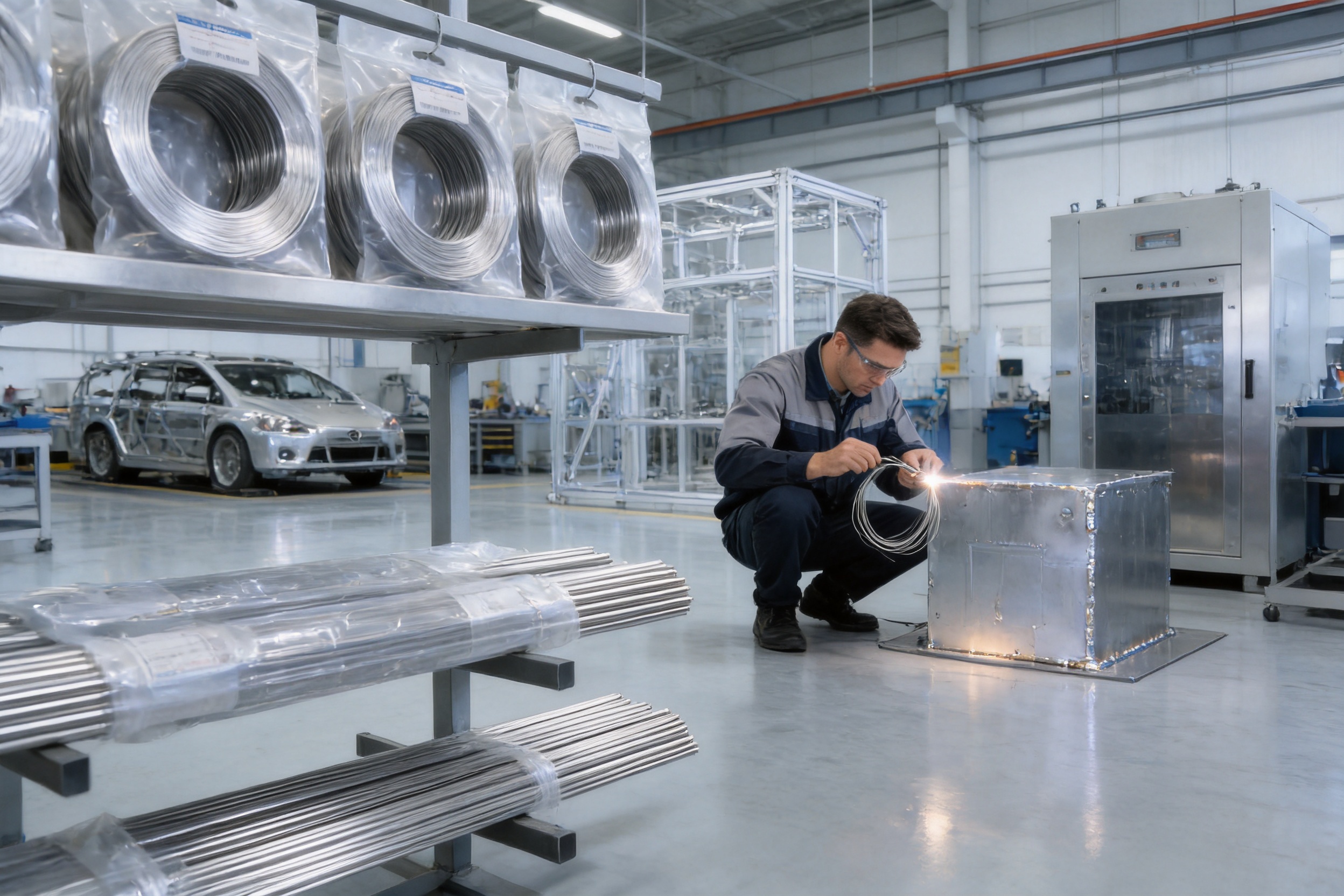
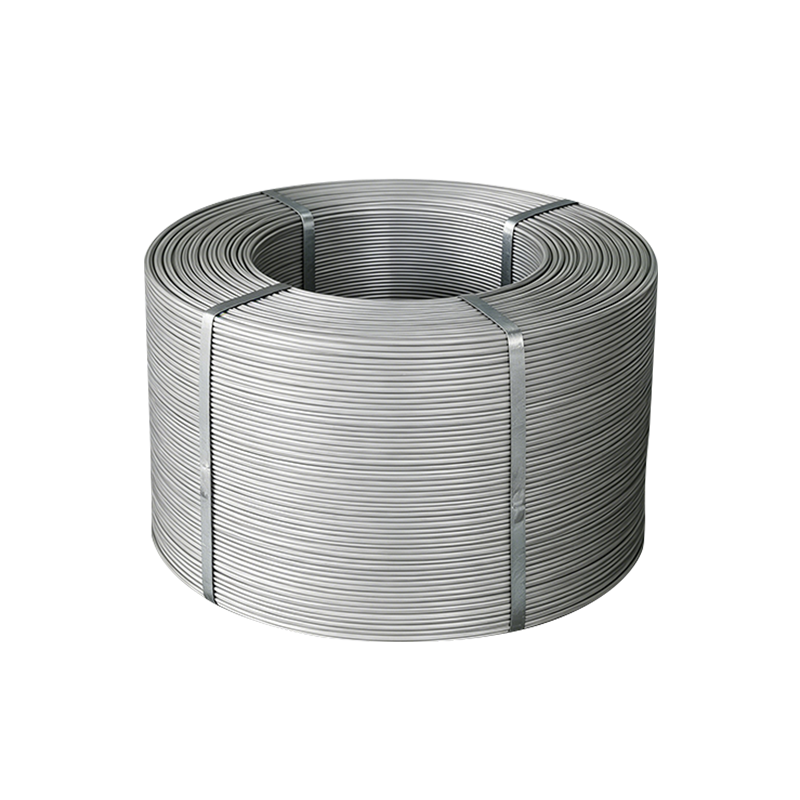
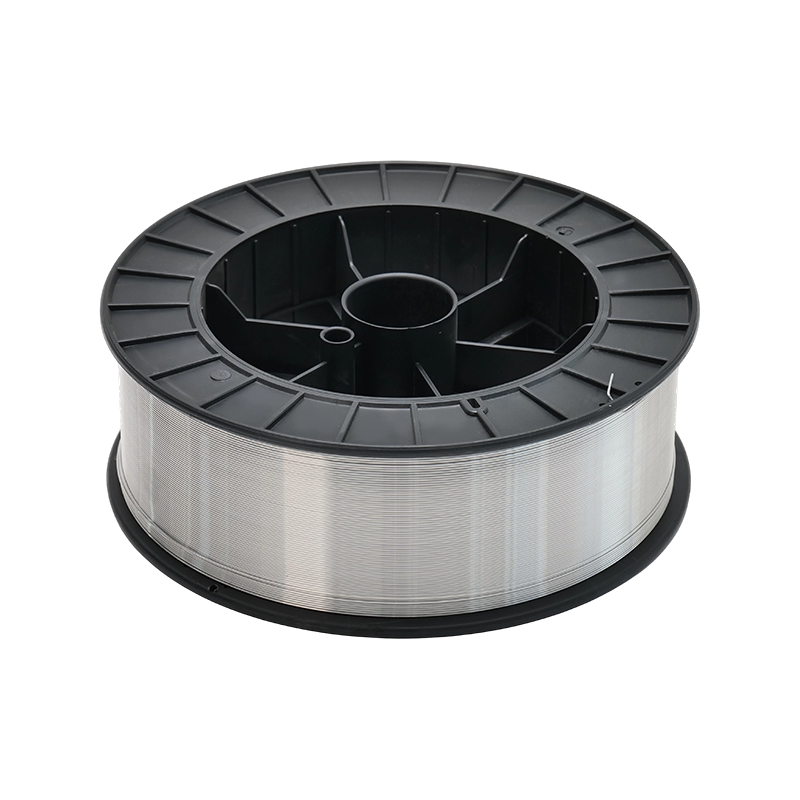
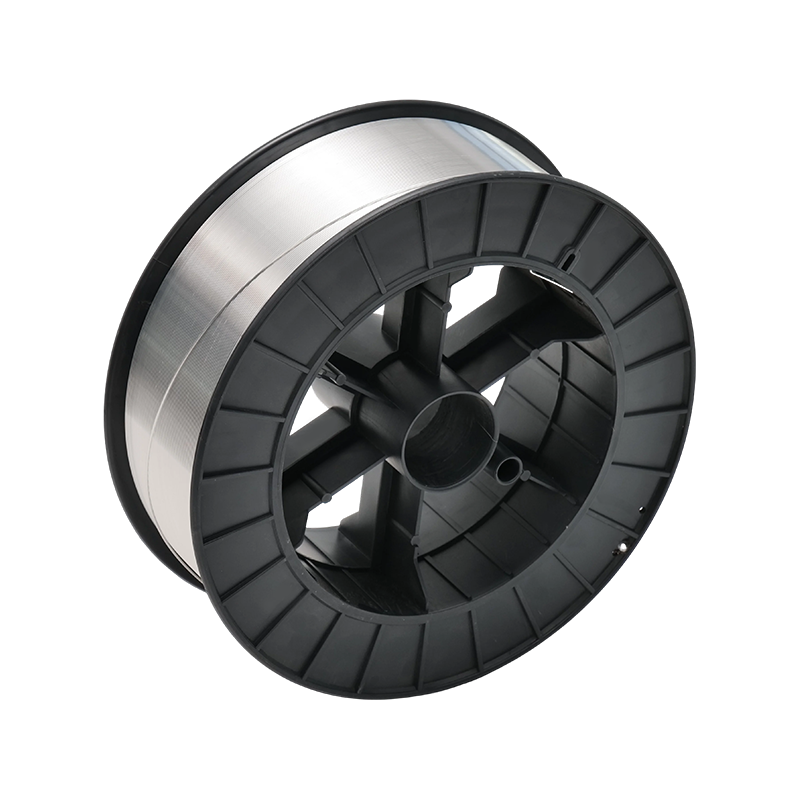
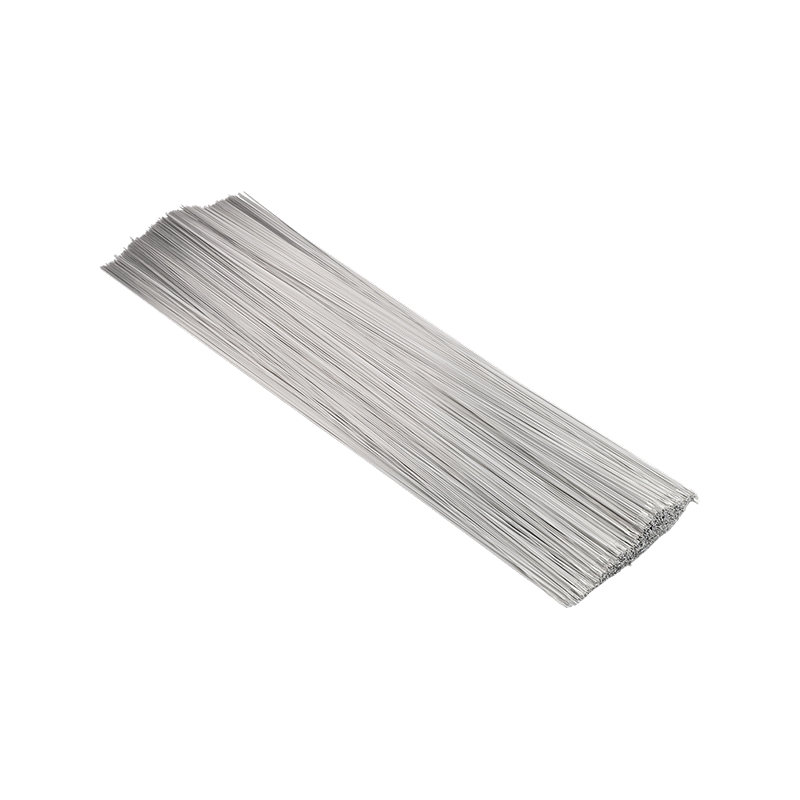
TIG wire is an important consumable for high-quality welding of aluminum and aluminum alloys. Used with a non-consumable tungsten electrode in argon arc welding, it enables fabricators to create clean, controlled, and precisely formed welds. The process is widely valued in applications where appearance, dimensional accuracy, corrosion resistance, and structural reliability are more important than the highest possible deposition rate.
Aluminum TIG wire is particularly suitable for welding thin sections, precision components, visible joints, complex assemblies, and parts requiring careful heat control. Compared with less controlled welding methods, TIG welding provides a stable arc, low spatter, excellent operator visibility, and the ability to regulate filler addition independently from the welding current. These characteristics make the selection of reliable filler wire essential.
Jiangsu Hetuo Aluminum Wire Co., Ltd. supplies TIG wire as part of its aluminum and aluminum alloy welding materials range. The company focuses on high-purity aluminum wire, high-strength aluminum alloy wire, aluminum alloy rods, welding wires, and precision aluminum profiles. Its manufacturing system is designed to support consistent composition, stable surface quality, accurate dimensional control, and dependable performance for domestic and international customers.
This article explains the role of TIG wire, its principal advantages, manufacturing considerations, quality-control requirements, typical applications, storage recommendations, and the strengths of an experienced aluminum wire manufacturer.
TIG Wire
Content
- 1 Understanding TIG Welding and Its Filler Wire
- 2 Why Aluminum TIG Wire Requires Careful Selection
- 3 Principal Advantages of High-Quality TIG Wire
- 4 Manufacturing Process for Aluminum TIG Wire
- 5 Quality Management and Production Strengths
- 6 Comparison with Less Controlled TIG Wire
- 7 Applications for Aluminum TIG Wire
- 8 How to Select the Appropriate TIG Wire
- 9 Recommended Handling and Storage
- 10 Welding Practices That Support Good Results
- 11 Advantages of Working with a Specialized Aluminum Wire Manufacturer
- 12 Quality, Sustainability, and Long-Term Value
- 13 Inspection Considerations for Buyers
- 14 Common Causes of Poor TIG Welds
- 15 Q&A About Aluminum TIG Wire
- 15.1 What is TIG wire used for?
- 15.2 Why is TIG wire called a filler wire?
- 15.3 Can one TIG wire be used for every aluminum alloy?
- 15.4 What makes high-quality TIG wire better than ordinary wire?
- 15.5 Is TIG wire suitable for thin aluminum?
- 15.6 How should aluminum TIG wire be stored?
- 15.7 What documents should a buyer request?
- 15.8 Why are ISO 9001 and IATF 16949 relevant?
- 15.9 Can TIG wire be used in automated welding?
- 15.10 What should be done if the base aluminum alloy is unknown?
- 15.11 Does a clean wire guarantee a defect-free weld?
- 15.12 Why is batch traceability important?
- 16 Conclusion
- 17 References
- 18 Product: TIG Wire
Understanding TIG Welding and Its Filler Wire
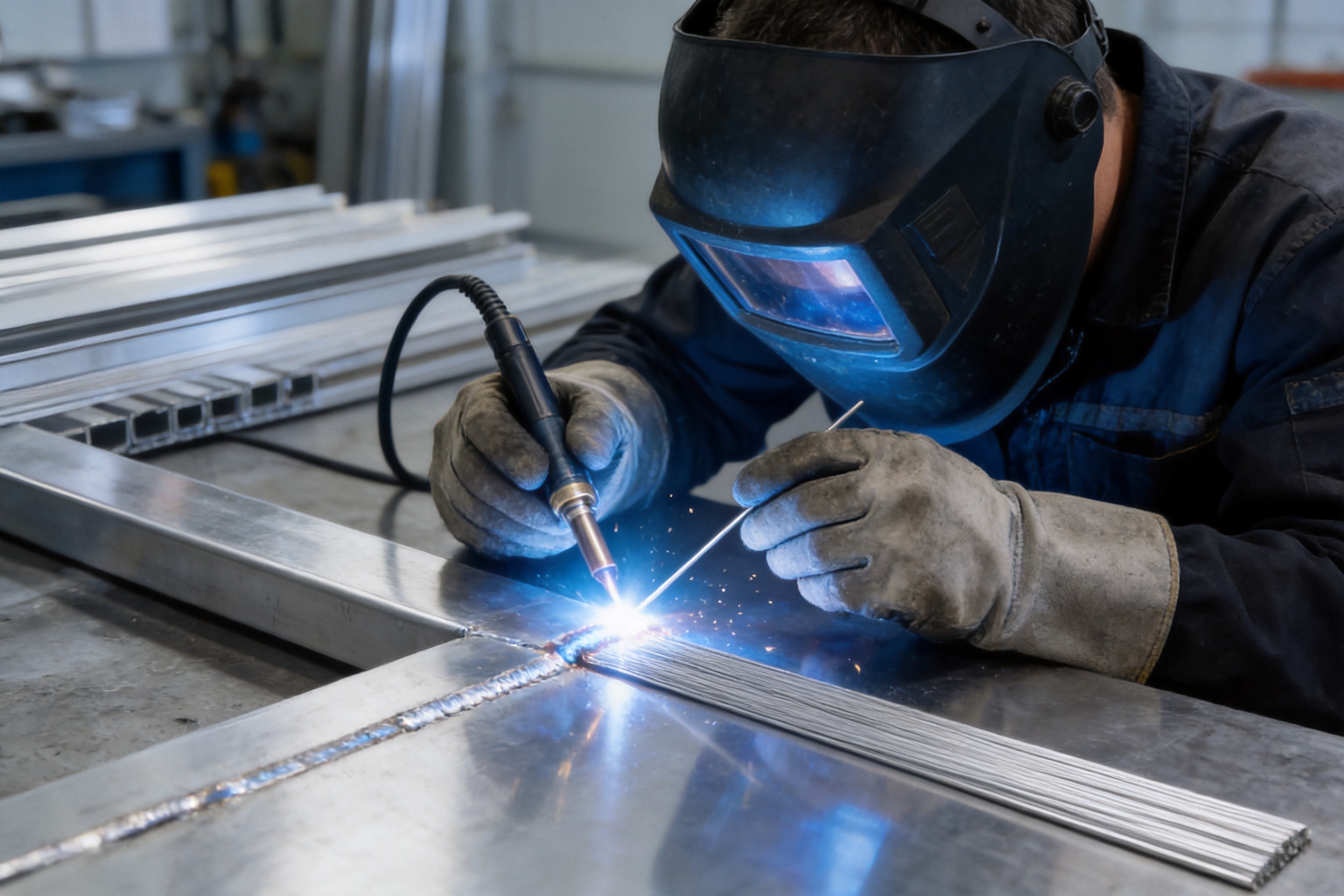
TIG stands for Tungsten Inert Gas welding. It is also known as gas tungsten arc welding, or GTAW. During the process, an electric arc is formed between a non-consumable tungsten electrode and the workpiece. An inert shielding gas, commonly argon or an argon-based mixture, protects the molten weld pool from atmospheric contamination.
Unlike consumable-electrode welding processes, the tungsten electrode does not normally melt into the joint. The operator introduces TIG wire separately when additional material is required. This arrangement allows the welder to control arc energy and filler-metal addition independently. The result can be a narrow, precise weld with carefully controlled reinforcement and penetration.
For aluminum and aluminum alloys, TIG wire must be compatible with the base material and the intended service environment. The filler wire influences weld fluidity, joint strength, ductility, corrosion behavior, cracking resistance, appearance, and post-weld processing. Selecting the wrong wire can lead to porosity, hot cracking, weak joints, excessive discoloration, or poor surface finish.
Reliable TIG wire is therefore more than a simple metal rod. It is a precision welding material manufactured to controlled requirements. Its chemical composition, diameter, straightness, cleanliness, surface condition, and packaging all contribute to welding performance.
Why Aluminum TIG Wire Requires Careful Selection
Aluminum has a high thermal conductivity and a relatively low melting temperature compared with many steels. It also forms a thin, stable oxide layer that melts at a much higher temperature than the underlying aluminum. These characteristics make aluminum welding technically demanding.
The oxide film must be adequately managed during welding. Alternating-current TIG equipment is often used to assist oxide removal while maintaining suitable heat input. Even when the welding machine is correctly adjusted, contaminated or inconsistent filler wire can reduce weld quality. Oil, moisture, dust, oxide particles, and foreign metallic residues may become trapped in the weld pool or contribute to porosity.
The filler wire must also melt smoothly and distribute evenly into the joint. Variations in diameter can change the rate at which wire enters the weld pool. Irregular surfaces may interfere with manual feeding or automated wire delivery. Poor straightness can cause inconsistent feeding and make it more difficult to maintain a stable weld bead.
For these reasons, professional buyers evaluate TIG wire according to more than nominal alloy designation. They also consider manufacturing controls, batch consistency, inspection methods, packaging, technical documentation, and supplier reliability.
Principal Advantages of High-Quality TIG Wire
Consistent Chemical Composition
Controlled chemical composition is one of the most important characteristics of aluminum TIG wire. Alloying elements affect strength, fluidity, corrosion resistance, heat treatment response, and weldability. A stable composition helps ensure that welding results remain repeatable from one production batch to another.
Consistent composition also supports more predictable procedure qualification. When the filler material remains within controlled limits, welding engineers can establish current, voltage, travel speed, shielding gas, and preheating parameters with greater confidence. This reduces the need for repeated adjustment and helps limit production variation.
Clean and Stable Surface Quality
Surface cleanliness directly affects weld integrity. TIG wire with a clean, uniform surface is less likely to introduce oil, dust, moisture, or unwanted particles into the weld pool. A clean surface also supports smooth feeding and stable melting.
Surface quality is especially important when the wire is used for visible welds, thin aluminum sheets, precision assemblies, or parts that will receive anodizing, painting, polishing, or other finishing operations. A stable surface helps reduce defects that could remain visible after finishing.
Reliable Dimensional Accuracy
Diameter control is essential for both manual and automatic TIG welding. A wire that is too large may deliver excessive filler metal and require more heat. A wire that is too small may melt too rapidly or fail to provide sufficient joint reinforcement. Consistent diameter allows the operator to maintain a more stable feeding rhythm.
Dimensional accuracy is also valuable in robotic, mechanized, and specialized TIG systems. Automated equipment depends on predictable wire delivery. Even minor dimensional variation can affect feeding resistance, deposition rate, and the final shape of the weld bead.
Good Welding Appearance
TIG welding is often selected because it can produce attractive welds. High-quality filler wire supports smooth bead formation, controlled wetting, and a clean transition between the weld metal and the base material. This is important in architectural components, equipment panels, transportation parts, food-processing equipment, and other products where appearance matters.
A good-looking weld is not automatically a strong weld, but appearance can provide useful evidence of stable welding conditions. Uniform ripples, consistent bead width, limited spatter, and a clean joint profile are generally easier to achieve when the filler wire is manufactured and handled correctly.
Support for Precise Heat Control
TIG welding is valued for its low and precisely controllable heat input. The operator can add filler wire only when necessary, rather than using a continuously melting electrode. This is useful for thin materials, small components, root passes, repair work, and joints where excessive heat could cause distortion.
Consistent TIG wire makes this control easier. When wire diameter and melting behavior remain stable, the operator can coordinate torch movement, filler addition, and current adjustment more effectively. This may reduce rework and improve the repeatability of skilled manual welding.
Reduced Risk of Welding Defects
No filler wire can compensate for incorrect joint preparation, poor shielding, incorrect polarity, or inadequate operator technique. However, a clean and consistent product can reduce material-related risks. Stable wire quality helps limit contamination-related porosity, irregular melting, inconsistent bead formation, and problems caused by dimensional variation.
Reliable quality is particularly valuable in safety-sensitive or high-value applications. When components are expensive or difficult to replace, preventing defects at the welding stage can produce substantial savings in labor, inspection, and material use.
Manufacturing Process for Aluminum TIG Wire
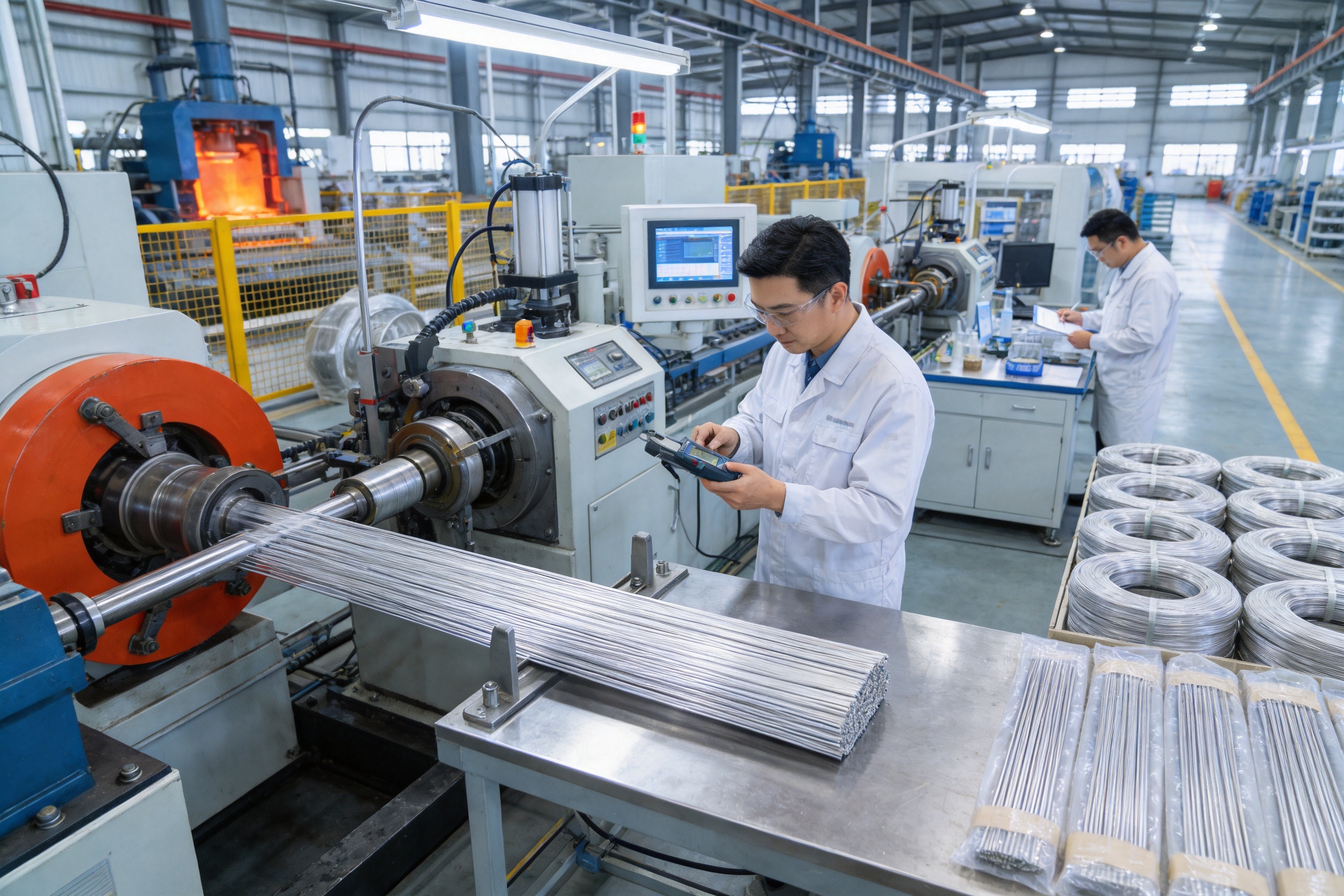
The performance of TIG wire begins with the manufacturing process. A professional aluminum wire producer must control material selection, melting or casting conditions, forming operations, heat treatment where applicable, surface preparation, drawing, straightening, inspection, and packaging.
Raw Material Selection
Production starts with carefully selected aluminum or aluminum alloy feedstock. The raw material must be suitable for the required chemical composition and intended welding application. Supplier documentation, incoming inspection, and material identification help prevent unsuitable material from entering production.
For high-purity aluminum products, control of metallic impurities is particularly important. For alloy welding wires, the balance of alloying elements must be managed according to the required grade and customer specification. Material segregation and clear batch identification support traceability throughout the production cycle.
Melting and Alloy Preparation
Where the production route requires melting, aluminum and alloying elements are prepared under controlled conditions. Temperature, holding time, mixing, and transfer operations must be managed carefully. Excessive exposure to contamination or unsuitable furnace conditions may affect cleanliness and composition.
Advanced production systems use process records to monitor key operating conditions. Sampling and laboratory analysis can verify whether the melt meets the intended chemical requirements before casting or further forming.
Casting and Initial Forming
The molten material is formed into suitable billets, rods, or other intermediate shapes. Controlled casting helps establish a consistent internal structure and supports later wire processing. Defects introduced during casting may become more difficult to remove during drawing, so this stage requires careful attention.
Initial forming operations reduce the cross-sectional area and prepare the material for precision wire production. The process must balance productivity with the need to maintain surface quality, dimensional stability, and suitable mechanical properties.
Drawing and Size Reduction
Wire drawing reduces the material to the required diameter through a series of dies. Each pass must be selected according to the alloy, starting size, target dimension, and desired surface condition. Excessive reduction in a single operation may damage the wire or create undesirable residual stress.
Lubrication and die condition are also important. Proper lubrication reduces friction and helps protect the wire surface. Worn or damaged dies can create scratches, dimensional variation, or other defects. Regular equipment maintenance is therefore part of effective wire manufacturing.
Heat Treatment and Property Control
Some aluminum alloys require controlled heat treatment to obtain the desired combination of strength, ductility, and forming behavior. Heat treatment parameters must be matched to the alloy and the customer’s requirements. Heating and cooling conditions should be recorded and monitored to support consistency.
The final wire properties must be appropriate for feeding, handling, and welding. Excessive hardness may make the wire difficult to straighten or feed, while insufficient strength may cause deformation during packaging or transport. The correct balance depends on the product specification and intended use.
Cleaning, Straightening, and Finishing
After drawing and any required treatment, the wire may undergo cleaning or surface preparation. The objective is to remove processing residues and provide a clean surface suitable for welding. The wire may then be straightened, cut to length, wound, or prepared in another customer-specified form.
For TIG applications, straightness and smooth feeding are especially important when the wire is supplied in cut lengths. Wires must be handled carefully so that finishing operations do not introduce bends, scratches, or contamination.
Inspection and Packaging
Final inspection may include visual examination, dimensional measurement, chemical analysis, mechanical testing, surface checks, and verification of packaging. The exact inspection plan depends on the product grade, order requirements, and intended application.
Packaging protects the wire from moisture, dust, impact, and mix-ups between grades. Labels should identify the product, size, batch information, quantity, and any relevant handling requirements. Correct packaging is part of product quality because even a well-manufactured wire can be damaged by poor storage or transportation.
Quality Management and Production Strengths
Jiangsu Hetuo Aluminum Wire Co., Ltd. was established in 2019 and has developed an aluminum alloy materials manufacturing system in Guannan Economic Development Zone, Lianyungang, Jiangsu Province, China. Its factory covers approximately 40,000 square meters and employs 60 people, including 30 professional managers and technicians.
The company’s workforce structure supports a combination of production experience, technical supervision, customer communication, and quality management. Professional managers and technicians can contribute to process planning, equipment operation, inspection coordination, product improvement, and technical support.
The company introduces advanced equipment and facilities for aluminum wire and alloy material production. Modern equipment can improve process stability, production efficiency, dimensional control, and data collection. However, equipment alone does not guarantee quality. It must be supported by disciplined procedures, trained personnel, maintenance programs, and clear inspection standards.
Quality inspection is implemented throughout production rather than only at the final stage. Incoming materials, intermediate products, finished wire, packaging, and shipment preparation can all be included in the quality-control system. This approach helps identify potential problems earlier, when corrective action is more efficient.
The company has obtained ISO 9001 and IATF 16949 quality management system certifications. ISO 9001 provides a framework for consistent quality management, documented processes, customer focus, corrective action, and continual improvement. IATF 16949 is associated with the automotive supply chain and emphasizes process control, risk management, traceability, defect prevention, and customer-specific requirements.
These certifications do not replace product-specific technical evaluation, but they demonstrate a structured approach to management and process control. For buyers comparing suppliers, a documented quality system can provide greater confidence in order handling, batch management, complaint response, and continuous improvement.
Comparison with Less Controlled TIG Wire
| Evaluation factor | High-quality TIG wire | Less controlled material | Potential production effect |
|---|---|---|---|
| Chemical composition | Controlled within defined requirements | Greater batch-to-batch variation may occur | Less predictable weld properties and procedure stability |
| Diameter | Consistent and checked during production | Possible variation or inconsistent sizing | Irregular filler addition and feeding behavior |
| Surface condition | Clean, smooth, and protected during handling | Possible oil, dust, oxide, or scratches | Higher risk of porosity and poor bead appearance |
| Traceability | Batch and product information can be documented | Limited identification or incomplete records | More difficult investigation and corrective action |
| Packaging | Designed to protect wire during transport and storage | Insufficient protection may be used | Risk of moisture, damage, or product mix-up |
| Process support | Technical communication and specification review | Limited assistance before or after delivery | Longer qualification time and more trial-and-error |
The principal advantage of a controlled supplier is consistency. A low purchase price may appear attractive, but inconsistent wire can increase total operating costs through rework, rejected parts, additional inspection, slower welding, and production interruptions. The appropriate comparison should therefore consider the total cost of quality rather than price alone.
Applications for Aluminum TIG Wire
Thin Aluminum Sheet and Plate
TIG welding is frequently selected for thin aluminum because the process allows careful control of arc energy. TIG wire can be added in small quantities to build the joint without overwhelming the material with excessive filler metal. This is useful for enclosures, panels, covers, brackets, and precision sheet-metal assemblies.
Thin materials are sensitive to distortion and burn-through. A suitable filler wire, correctly prepared joint, and controlled welding procedure can help the operator maintain the required shape and appearance.
Transportation Components
Aluminum is widely used in transportation because of its low density, corrosion resistance, and favorable strength-to-weight characteristics. TIG wire may be used for prototypes, repair work, low-volume assemblies, selected structural components, and parts requiring a carefully controlled weld.
Transportation manufacturers often require documentation, repeatability, and strict process discipline. A supplier operating under recognized quality management systems can be better positioned to support such expectations.
Industrial Equipment
Industrial equipment may include aluminum frames, housings, tanks, ducts, guards, platforms, heat-transfer components, and support structures. TIG welding is suitable where clean joints and precise control are required, particularly when the finished part must withstand vibration, moisture, chemical exposure, or repeated service.
The wire grade should be selected according to the base alloy and service requirements. Welding engineers should confirm compatibility through procedure qualification or application testing rather than relying only on general alloy similarity.
Architectural and Decorative Fabrication
Architectural aluminum products often contain visible welds. Balustrades, frames, furniture elements, display structures, lighting components, and decorative assemblies may require a refined surface finish. TIG wire can help skilled welders create controlled, attractive beads with limited spatter.
When the part will be anodized or otherwise finished, filler selection becomes especially important. Color variation between the weld and base material may be influenced by alloy composition, heat input, cleaning, and post-weld treatment.
Repair and Maintenance
TIG welding is useful for repairing aluminum components because it provides visibility and fine control. Operators can work slowly around damaged areas, add limited filler, and avoid unnecessary buildup. Reliable wire is valuable in repair work because the original component may be difficult to replace and the repair area may be highly visible.
Precision Profiles and Fabricated Assemblies
Aluminum profiles and precision extrusions may require welding during assembly. TIG wire can be used where distortion control and appearance are important. Proper joint preparation is essential because profile geometry may create narrow gaps, varying wall thicknesses, or difficult access conditions.
How to Select the Appropriate TIG Wire
Match the Filler to the Base Alloy
The first selection step is to identify the base aluminum or aluminum alloy accurately. Different alloys have different welding characteristics and service requirements. The selected filler should support the required strength, ductility, corrosion resistance, and cracking resistance.
When the base material is unknown or mixed, professional technical advice and preliminary testing are recommended. A general-purpose wire may be suitable for some fabrication work, but critical applications require a documented selection process.
Consider Joint Design and Thickness
Joint type, material thickness, gap size, welding position, and required reinforcement all influence wire selection. Thin sheet may require a smaller diameter for precise filler addition. Larger joints may require a larger wire or multiple passes.
The wire diameter should be compatible with the torch setup, operator technique, and welding machine. In automated systems, the feeding equipment and programmed deposition rate must also be considered.
Review Mechanical and Service Requirements
Welded components may be exposed to vibration, pressure, temperature changes, saltwater, chemicals, or repeated loading. The filler wire must be evaluated according to the final service environment. A visually attractive weld is not sufficient if it lacks the necessary engineering performance.
Check Surface and Packaging Requirements
Buyers should confirm whether the wire is supplied in cut lengths, coils, spools, or another form. Packaging should protect against contamination and moisture. Labels and certificates should correspond clearly to the product and batch.
Request Technical Documentation
Useful documentation may include chemical composition, dimensional information, inspection records, batch identification, certificates of conformity, and packaging details. Depending on the application, customers may also request material test reports, quality certificates, or samples for welding trials.
Recommended Handling and Storage
Correct handling protects the quality achieved during manufacturing. TIG wire should remain in its original packaging until it is ready for use. The storage area should be dry, clean, and protected from condensation, rain, dust, chemical vapors, and sudden temperature changes.
Wire should not be placed directly on a damp floor. It should be stored on clean shelves, pallets, or racks that prevent contact with water and allow air circulation. Packages should be handled carefully to avoid crushing, bending, or puncturing protective materials.
Before welding, operators should inspect the wire for visible contamination, corrosion, severe scratches, or unusual discoloration. If cleaning is required, the method should be compatible with the material and application. Abrasive products or unsuitable solvents may introduce additional contamination.
Only the quantity needed for the immediate operation should be exposed to the workshop environment. Unused wire should be covered or returned to suitable storage. Clear separation of alloy grades prevents accidental mixing, which is especially important when several aluminum products are used in the same facility.
Welding Practices That Support Good Results
High-quality TIG wire performs best when used with an appropriate welding procedure. The base material should be cleaned to remove grease, dirt, moisture, and surface contaminants. Oxide removal should be performed using dedicated tools that are not used on steel or other materials that could contaminate aluminum.
Shielding gas flow must be sufficient to protect the arc and weld pool without creating excessive turbulence. The torch should be positioned consistently, and drafts should be controlled. Poor shielding can cause porosity and oxidation even when the filler wire itself is clean.
Welding current, travel speed, arc length, tungsten preparation, and filler addition should be selected according to material thickness and joint design. Excessive arc length can reduce control and increase atmospheric exposure. Excessive heat input can increase distortion or alter the appearance of the weld.
For manual welding, the operator should feed the wire smoothly into the leading edge of the weld pool rather than repeatedly touching the tungsten electrode. Contact between filler wire and tungsten can contaminate the electrode and interrupt the welding process.
For automated or mechanized TIG welding, wire diameter, straightness, feeding resistance, and packaging format should be considered during equipment setup. A stable product reduces adjustments and supports consistent deposition.
Advantages of Working with a Specialized Aluminum Wire Manufacturer
A specialized manufacturer understands that aluminum wire quality depends on the relationship between alloy chemistry, forming technology, surface condition, packaging, and end-use requirements. This knowledge can be more valuable than a supplier that treats TIG wire as a generic commodity.
Jiangsu Hetuo Aluminum Wire Co., Ltd. concentrates on aluminum and aluminum alloy materials. Its product categories include high-purity aluminum wire, high-strength aluminum alloy wire, and aluminum and aluminum alloy welding materials. This focused product structure supports deeper experience with aluminum processing and related customer requirements.
The company can support customers that need more than standard supply. Product discussions may involve application conditions, target dimensions, packaging preferences, quality documentation, and delivery requirements. Early communication helps reduce the risk of selecting an unsuitable product or discovering specification issues after production begins.
The company’s 40,000-square-meter factory provides space for manufacturing operations, equipment installation, inspection activities, storage, and shipping coordination. Its 60-person team, including 30 professional managers and technicians, provides organizational and technical resources for production management.
International market experience is also important. Products are exported to high-end overseas markets, which requires attention to customer specifications, packaging, documentation, communication, and shipment consistency. Export-oriented manufacturing encourages suppliers to develop disciplined processes and responsive service systems.
The company’s stated objective is to provide lighter, stronger, and more sustainable aluminum alloy wire and welding material solutions. This objective reflects the broader role of aluminum in modern manufacturing, where reduced weight, material efficiency, durability, and recyclability can contribute to more sustainable product designs.
Quality, Sustainability, and Long-Term Value
Aluminum is valued for its relatively low density and its potential for recycling. When a welded aluminum assembly replaces a heavier component, it may reduce transportation weight or improve energy efficiency during service. The exact environmental benefit depends on the full product life cycle, including raw material production, manufacturing energy, service life, repairability, and recycling.
High-quality TIG wire contributes to sustainability by reducing avoidable waste. Stable filler wire can help decrease rejected welds, rework, discarded components, excess grinding, and repeated production trials. Better process consistency also improves the efficient use of shielding gas, electricity, labor, and base materials.
Long-term value should be assessed through total performance. A wire that supports reliable welding and fewer defects may provide greater value than a lower-priced product with inconsistent quality. Customers should consider yield, labor productivity, inspection cost, downtime, technical support, and field reliability when comparing suppliers.
Inspection Considerations for Buyers
Before approving a TIG wire supplier, buyers should define the technical and commercial requirements clearly. The specification should identify the alloy or grade, diameter, tolerance, product form, surface expectations, quantity, packaging, labeling, and required documents.
Sample evaluation is useful when a new supplier or product grade is introduced. Welding trials can assess feeding behavior, arc stability, bead appearance, wetting, penetration, porosity, and compatibility with the base material. Critical applications may require tensile testing, bend testing, radiographic examination, metallographic review, or other customer-specific verification.
Incoming inspection should confirm that the received product matches the purchase order. Packaging integrity, labels, batch numbers, wire dimensions, surface condition, and certificates should be reviewed. Proper records help maintain traceability and support a fast response if a problem is discovered later.
Supplier audits may examine raw-material control, equipment maintenance, process instructions, calibration, employee training, nonconforming-product control, corrective action, and shipment management. A manufacturer with ISO 9001 and IATF 16949 certification has an established framework for many of these activities, although customers should still verify requirements specific to their own applications.
Common Causes of Poor TIG Welds
Contaminated Filler Wire
Oil, dust, moisture, or foreign particles on the filler wire can enter the weld pool. This may contribute to porosity, inclusions, unstable melting, or an unattractive bead. Proper storage and clean handling are essential.
Incorrect Filler Selection
A filler that is not compatible with the base alloy or service condition may result in cracking, low strength, poor corrosion behavior, or an unacceptable appearance. Technical review should take place before production welding begins.
Inadequate Shielding
Insufficient or unstable shielding gas exposes the molten metal to the atmosphere. Drafts, incorrect gas flow, damaged hoses, poor torch position, and contaminated fittings can all affect shielding performance.
Excessive Heat Input
Too much heat can cause burn-through, distortion, excessive grain growth, or a wide and irregular weld bead. TIG allows precise control, but the operator must use suitable current, travel speed, and torch technique.
Poor Joint Preparation
Incorrect fit-up, excessive gaps, sharp edges, or inadequate cleaning can create problems before filler wire is introduced. Consistent preparation supports better penetration and reduces the amount of filler and heat required.
Improper Storage
Even a high-quality wire can be affected by humid, dusty, or chemically aggressive storage conditions. Protecting the product from the time of delivery until use is part of the customer’s quality system.
Q&A About Aluminum TIG Wire
What is TIG wire used for?
TIG wire is used as a separate filler material during tungsten inert gas welding. It is added to the joint when additional weld metal is needed. For aluminum and aluminum alloy fabrication, it helps produce controlled, precise, and visually clean welds.
Why is TIG wire called a filler wire?
The tungsten electrode used in TIG welding is non-consumable under normal operating conditions. The separate aluminum wire supplies the material needed to fill the joint, reinforce the weld, or bridge a controlled gap. For this reason, it is commonly called filler wire.
Can one TIG wire be used for every aluminum alloy?
No. Different aluminum alloys have different chemical and mechanical characteristics. The filler must be selected according to the base alloy, joint design, service environment, required strength, corrosion considerations, and applicable welding procedure.
What makes high-quality TIG wire better than ordinary wire?
High-quality TIG wire generally provides more consistent chemical composition, diameter, surface cleanliness, straightness, packaging, and traceability. These characteristics support stable feeding, predictable melting, attractive weld appearance, and fewer material-related defects.
Is TIG wire suitable for thin aluminum?
Yes. TIG welding is often selected for thin aluminum because the welder can control heat input and add filler independently. The wire diameter and welding parameters must be matched to the material thickness and joint design.
How should aluminum TIG wire be stored?
It should be stored in a clean, dry, covered environment away from moisture, condensation, dust, chemicals, and direct contact with the floor. The original packaging should remain intact until the wire is needed.
What documents should a buyer request?
Depending on the application, buyers may request chemical composition information, dimensional specifications, batch identification, certificates of conformity, inspection records, material test reports, and packaging details. Critical industries may also require customer-specific documentation.
Why are ISO 9001 and IATF 16949 relevant?
ISO 9001 demonstrates a structured quality management framework. IATF 16949 addresses additional process-control and risk-management expectations associated with the automotive supply chain. Together, they indicate that the manufacturer operates documented systems for quality assurance and continual improvement.
Can TIG wire be used in automated welding?
Yes. TIG wire can be used in mechanized and automated systems when its diameter, straightness, packaging form, and feeding characteristics are compatible with the equipment. Buyers should discuss the feeding method and dimensional requirements before ordering.
What should be done if the base aluminum alloy is unknown?
The material should be identified through documentation, marking, or technical testing before selecting filler wire. Welding a production component without knowing the base alloy can create avoidable risks related to cracking, strength, corrosion, and service performance.
Does a clean wire guarantee a defect-free weld?
No. Weld quality also depends on joint preparation, shielding gas, equipment condition, operator skill, welding parameters, base-material cleanliness, and post-weld inspection. Clean and consistent wire is one essential part of a complete welding-quality system.
Why is batch traceability important?
Traceability connects the finished wire to its raw materials, production records, inspection results, packaging, and shipment information. If a quality issue occurs, traceability helps the manufacturer and customer identify affected material and implement corrective action efficiently.
Conclusion
Aluminum TIG wire is a precision welding material for applications requiring control, cleanliness, accuracy, and dependable appearance. Used with a non-consumable tungsten electrode and inert shielding gas, it supports high-quality argon arc welding of aluminum and aluminum alloys.
The most important advantages of professional TIG wire include consistent chemical composition, controlled diameter, clean surface quality, stable feeding, good melting behavior, improved weld appearance, and reliable batch traceability. These advantages can help manufacturers reduce rework, improve productivity, and maintain more predictable welding procedures.
Jiangsu Hetuo Aluminum Wire Co., Ltd. combines specialized aluminum material production with an intelligent manufacturing system, advanced equipment, process-wide inspection, and experienced technical personnel. Its 40,000-square-meter factory and 60-person team, including 30 professional managers and technicians, provide a substantial foundation for production and customer support. ISO 9001 and IATF 16949 certifications further demonstrate its commitment to structured quality management and process control.
For customers purchasing TIG wire, the best supplier evaluation should include alloy compatibility, dimensional accuracy, surface condition, packaging, documentation, production capability, certification, and technical responsiveness. Choosing a controlled and specialized source helps ensure that the filler wire performs consistently from the first welding trial through regular production.
References
American Welding Society. Welding Handbook: Welding Processes, Volume 1. American Welding Society.
American Welding Society. Specification for Bare Aluminum and Aluminum-Alloy Welding Electrodes and Rods. American Welding Society.
International Organization for Standardization. Quality Management Systems—Requirements, ISO 9001.
International Automotive Task Force. Quality Management System Requirements for Automotive Production and Relevant Service Parts Organizations, IATF 16949.
International Organization for Standardization. Welding—Recommendations for Welding of Metallic Materials.
ASM International. ASM Handbook: Welding, Brazing, and Soldering.
Aluminum Association. Aluminum Standards and Data.