

 English
 中文简体
 русский
 Deutsch
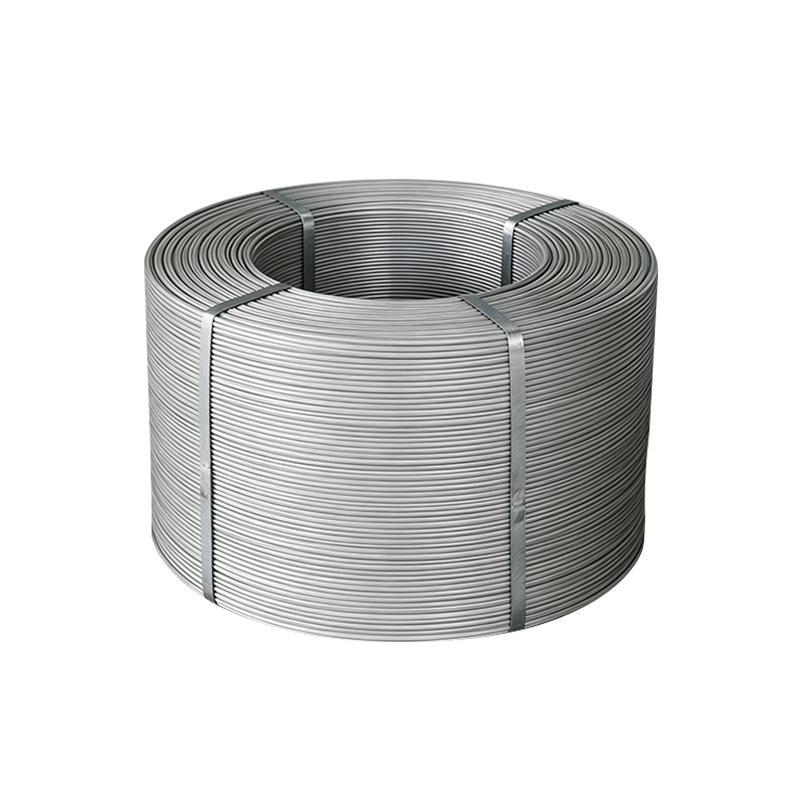
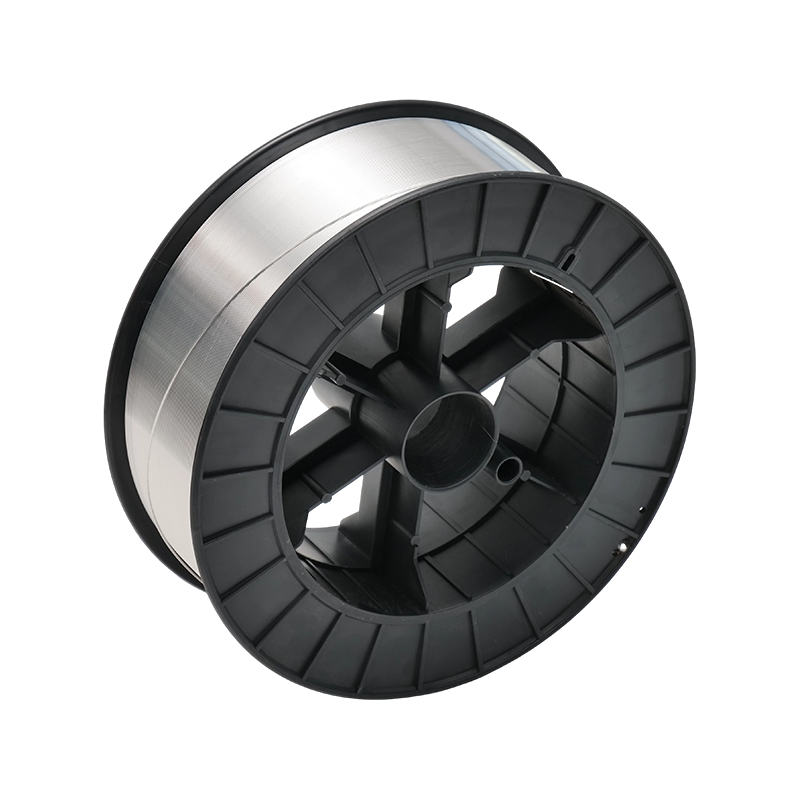
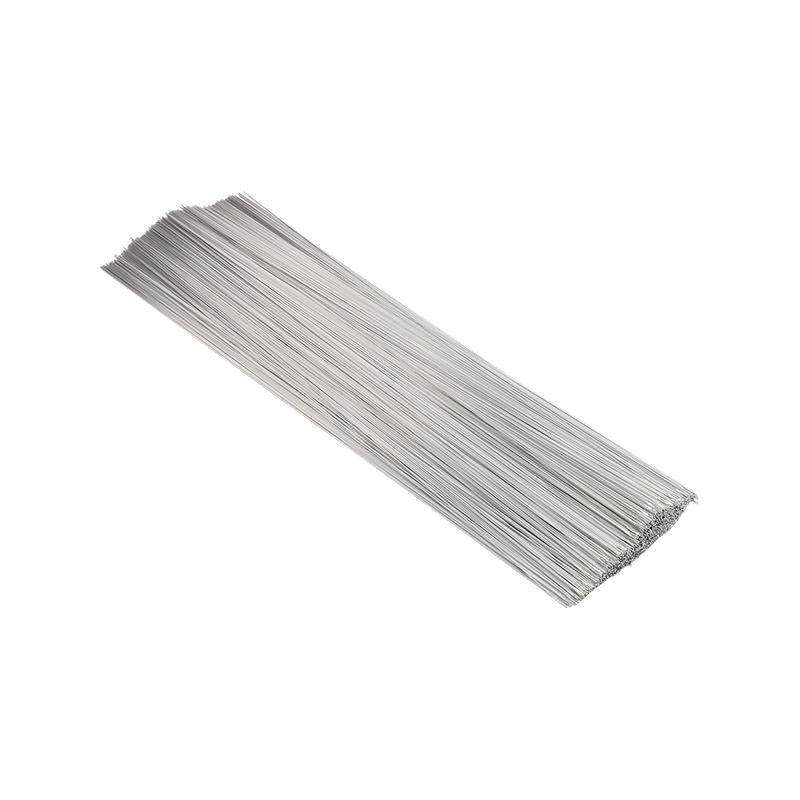
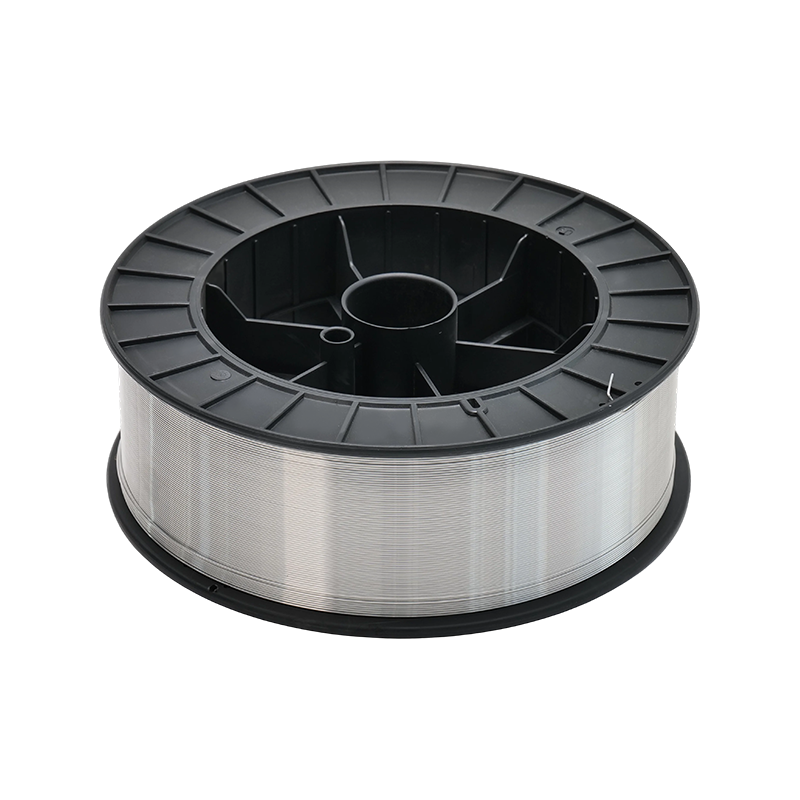
1090 aluminum wire is a high-purity aluminum material designed for applications in which surface performance, purity, corrosion resistance, and dependable processing are essential. With an aluminum content of at least 99.90%, this grade provides a clean and consistent material base for evaporation, thermal spraying, and related surface-treatment processes. It is especially suitable for improving the corrosion resistance of a substrate and extending the service life of finished components.
As industries place greater emphasis on lightweight construction, energy efficiency, surface durability, and reliable production, aluminum wire has become an important engineering material. However, not every aluminum wire provides the same level of purity or process stability. The chemical composition, production controls, wire quality, surface condition, and quality-management system all influence the final result. 1090 aluminum wire is developed to address these requirements with a carefully controlled composition and a manufacturing approach centered on consistency.
Jiangsu Hetuo Aluminum Wire Co., Ltd. manufactures 1090 aluminum wire within a production system covering high-purity aluminum wire, high-strength aluminum alloy wire, and aluminum and aluminum alloy welding materials. The company combines modern equipment, production inspection, technical personnel, and certified quality-management systems to supply aluminum wire for demanding industrial users in China and overseas markets.
1090 Aluminum Wire
Content
- 1 What Is 1090 Aluminum Wire?
- 2 Key Chemical Composition
- 3 Primary Applications of 1090 Aluminum Wire
- 4 Advantages of 1090 Aluminum Wire
- 5 Comparison with Other High-Purity Aluminum Grades
- 6 Manufacturing Strengths and Production Controls
- 7 Product Quality Considerations for Buyers
- 8 Recommended Handling and Storage
- 9 Process Optimization for Evaporation and Spraying
- 10 Why Choose a Specialized Aluminum Wire Manufacturer?
- 11 Quality and Service Benefits for Global Customers
- 12 Frequently Asked Questions
- 12.1 What is the aluminum purity of 1090 aluminum wire?
- 12.2 What is 1090 aluminum wire mainly used for?
- 12.3 How does 1090 compare with 1070 aluminum wire?
- 12.4 Is 1090 purer than 1A95?
- 12.5 Can 1090 aluminum wire be used for all thermal-spray systems?
- 12.6 Does high purity guarantee corrosion resistance?
- 12.7 What quality certifications does the manufacturer have?
- 12.8 What should be included in an inquiry for 1090 aluminum wire?
- 12.9 How should the wire be stored?
- 12.10 Can the manufacturer support other aluminum wire products?
- 13 Conclusion
- 14 References
- 15 Product: 1090 Aluminum Wire
What Is 1090 Aluminum Wire?
1090 aluminum wire is a commercially pure aluminum wire grade containing a minimum aluminum content of 99.90%. The remaining portion consists of controlled trace elements and unavoidable impurities, including small quantities of silicon, iron, copper, manganese, magnesium, zinc, titanium, and other elements. Because the total level of alloying elements is low, the material retains the characteristic properties of high-purity aluminum.
The grade is commonly selected when chemical cleanliness and a stable aluminum surface are more important than the higher strength associated with precipitation-hardenable or heavily alloyed aluminum materials. Its relatively simple composition supports consistent melting, wire production, evaporation behavior, and surface deposition performance when the material is processed under suitable conditions.
In practical use, 1090 aluminum wire serves as a consumable material rather than merely a structural wire. It may be fed into evaporation equipment or thermal-spray equipment, where the wire is melted or atomized and transferred to a substrate. The deposited aluminum layer can help protect the substrate from environmental exposure, including moisture, oxidation, and corrosive atmospheric conditions.
The grade is therefore relevant to manufacturers seeking a balance between purity, process reliability, corrosion-protection performance, and material efficiency. Its value is not limited to the wire itself. The quality of the finished coating or deposited layer depends on the consistency of the feedstock, and 1090 aluminum wire is intended to provide a dependable foundation for that process.
Key Chemical Composition
The supplied product information identifies 1090 aluminum wire as having an aluminum purity of Al ≥99.90%. The listed composition limits are substantially lower for most residual elements than those of the 1070 grade. This distinction is important in applications that depend on a clean evaporation source or a stable spray material.
| Grade | Silicon, maximum | Iron, maximum | Copper, maximum | Manganese, maximum | Magnesium, maximum | Zinc, maximum | Titanium, maximum | Aluminum, minimum |
|---|---|---|---|---|---|---|---|---|
| 1070 | 0.20% | 0.25% | 0.04% | 0.03% | 0.03% | 0.04% | 0.03% | 99.70% |
| 1090 | 0.07% | 0.07% | 0.02% | 0.01% | 0.01% | 0.03% | 0.01% | 99.90% |
| 1A95 | 0.03% | 0.03% | 0.01% | — | — | 0.00% | 0.01% | 99.95% |
The table shows why 1090 aluminum wire is positioned between the 1070 and 1A95 grades in terms of nominal aluminum purity. Compared with 1070, 1090 contains less silicon, iron, copper, manganese, magnesium, zinc, and titanium within the stated limits. Compared with 1A95, it provides a slightly lower aluminum purity, while remaining a high-purity grade suitable for many evaporation and spraying applications.
Actual performance also depends on the production route, surface cleanliness, wire geometry, packaging, storage, and the operating parameters of the customer’s equipment. Chemical composition is a fundamental requirement, but it should be evaluated together with process control and application-specific testing.
Primary Applications of 1090 Aluminum Wire
Evaporation Processes
One of the main applications for 1090 aluminum wire is evaporation. In an evaporation process, aluminum wire is introduced into equipment where it is heated until it becomes vapor or is otherwise transferred to a target surface. The aluminum then forms a thin, continuous, or semi-continuous protective layer on the substrate.
High purity is beneficial in this type of process because excessive impurities may influence melting behavior, vapor generation, deposition stability, surface appearance, or coating uniformity. A controlled 1090 feedstock can help reduce variation caused by inconsistent raw materials. It also gives process engineers a reliable material reference when setting temperature, feed speed, energy input, and deposition conditions.
Evaporated aluminum coatings are used in various industrial contexts where a reflective, conductive, decorative, or protective surface is required. The exact application may vary by customer and equipment design, but the general objective is to transfer aluminum efficiently and uniformly while limiting contamination and process interruptions.
Thermal Spraying
1090 aluminum wire is also used in spraying applications. In wire-based thermal spraying, the aluminum wire is fed into a spray system, melted by an energy source, and propelled toward a prepared substrate. The individual molten particles flatten and solidify on impact, gradually creating a protective coating.
Aluminum spray coatings are widely associated with corrosion protection because aluminum can form a stable oxide film when exposed to air. This natural surface behavior can contribute to the durability of the coating. Depending on the substrate and service environment, an aluminum coating may help reduce direct exposure to moisture, salts, oxygen, and other corrosive agents.
For spraying, wire feed consistency is important. Variations in diameter, surface condition, or chemical composition can affect arc stability, melting behavior, spray rate, particle formation, and coating deposition. A high-purity wire with controlled manufacturing conditions supports more predictable operation and helps users maintain their established process parameters.
Corrosion-Protection Systems
The product is mainly intended to improve the surface corrosion resistance of a substrate and extend service life. It can be considered for components and structures exposed to atmospheric or industrial environments where the base material requires additional protection.
The final corrosion performance is influenced by coating thickness, surface preparation, porosity, adhesion, sealing, service temperature, environmental chemistry, and maintenance practices. 1090 aluminum wire does not replace the need for correct coating design. Instead, it provides a high-purity aluminum feedstock for a properly engineered protective system.
Surface Engineering and Industrial Maintenance
Aluminum wire can support surface-engineering projects in which a metal layer is applied to improve the service characteristics of an existing component. Rather than replacing an entire part, a manufacturer or maintenance provider may use a deposited coating to restore, protect, or upgrade the surface.
This approach can support resource efficiency by extending the useful life of equipment. It may also reduce downtime when a component can be treated or recoated instead of discarded. The suitability of 1090 aluminum wire should be confirmed through application testing, especially when the component operates under severe abrasion, high temperature, immersion, or chemical exposure.
Advantages of 1090 Aluminum Wire
High Aluminum Purity
The most direct advantage of 1090 aluminum wire is its minimum aluminum content of 99.90%. High purity is particularly valuable when the material is melted, evaporated, sprayed, or deposited onto another surface. It helps provide a more uniform material response and can reduce the influence of undesirable elements.
Compared with the listed 1070 grade, 1090 provides a higher nominal aluminum content and lower limits for several important residual elements. This gives users an option for applications where 1070 may not provide the desired purity level, while avoiding the need to select a still higher-purity grade when 1090 already meets the project requirements.
Controlled Impurity Levels
The maximum levels of silicon and iron in 1090 are each listed at 0.07%, compared with 0.20% silicon and 0.25% iron for 1070. Copper, manganese, magnesium, and titanium are also limited to lower values than those shown for 1070. Such control supports more consistent process behavior and improves the predictability of the material in high-purity applications.
Trace elements can influence melting, fluidity, oxide formation, electrical behavior, and coating characteristics. Their effect varies according to the equipment and process, but controlled chemistry remains an important part of feedstock quality. The 1090 grade gives engineers a clearly defined composition range for material selection and process qualification.
Support for Corrosion-Resistant Coatings
Aluminum is widely used for protective coatings because of its ability to form a stable oxide layer. When deposited correctly, an aluminum coating can provide a barrier and sacrificial protection mechanism for certain substrates and service environments. 1090 aluminum wire supplies the aluminum required for these systems in a form suitable for wire-fed processing.
The use of a high-purity wire can be advantageous where coating cleanliness and stable surface chemistry are important. It may help manufacturers achieve repeatable deposition results across production batches, provided that all other process variables are controlled properly.
Consistent Feedstock for Automated Equipment
Modern evaporation and thermal-spray systems often depend on controlled, continuous wire feeding. Feed interruptions, inconsistent melting, or surface contamination can reduce productivity and cause coating defects. A professionally manufactured wire is intended to support stable feeding and predictable consumption.
Jiangsu Hetuo Aluminum Wire Co., Ltd. operates an intelligent manufacturing system designed to support repeatable production. Advanced equipment and inspection procedures are used throughout production to monitor product quality. This manufacturing approach is important for customers who need reliable material across multiple batches rather than a one-time supply.
Lightweight and Resource-Efficient Material
Aluminum has a relatively low density compared with many engineering metals. This characteristic can reduce the mass of the consumable required for a given volume of deposited material and supports lightweight engineering objectives. In surface protection applications, the coating can improve service life without requiring a heavy replacement component.
Using a coating to extend the life of an existing substrate may also support more efficient use of raw materials. The overall environmental benefit depends on the complete process, including energy consumption, coating efficiency, component lifetime, maintenance frequency, and end-of-life recycling.
Compatibility with International Supply Requirements
Industrial customers increasingly require stable documentation, traceability, quality procedures, and consistent communication from their suppliers. The company’s ISO 9001 and IATF 16949 certifications demonstrate that its management system is structured around recognized quality requirements.
Certification alone does not determine the performance of every coil or spool, but it indicates that the manufacturer has formalized processes for quality management, production control, corrective action, and continual improvement. This is an important advantage when purchasing materials for export, repeat production, or qualification-sensitive applications.
Comparison with Other High-Purity Aluminum Grades
Material selection should be based on the complete application rather than aluminum content alone. 1070, 1090, and 1A95 are all high-purity aluminum grades, but they differ in their nominal purity and stated impurity limits. Understanding these differences helps buyers select a grade that matches the required process performance and cost position.
1090 Compared with 1070
1090 offers a higher minimum aluminum content than 1070: 99.90% compared with 99.70% in the supplied composition information. It also lists lower maximum levels for silicon and iron, as well as lower limits for several other elements. This may make 1090 more suitable when material purity is a stronger priority.
1070 may remain appropriate for applications where its purity and composition satisfy the customer’s technical requirements. However, when the process is sensitive to residual elements or when a cleaner aluminum source is preferred, 1090 provides a meaningful upgrade within the high-purity aluminum category.
1090 Compared with 1A95
1A95 has the highest listed aluminum content among the three grades, at 99.95%. Its lower impurity limits may be selected for specialized processes demanding very high purity. 1090, at 99.90% minimum aluminum, may offer a practical balance between purity and application requirements.
The best choice depends on the customer’s equipment, coating specification, performance target, and purchasing strategy. Selecting 1A95 when 1090 would adequately meet the process requirement may increase material cost without providing a proportional benefit. Conversely, using 1090 for a process qualified specifically around 1A95 may require additional testing.
| Selection Factor | 1090 Aluminum Wire | 1070 Aluminum Wire | 1A95 Aluminum Wire |
|---|---|---|---|
| Nominal aluminum purity | Al ≥99.90% | Al ≥99.70% | Al ≥99.95% |
| Position within the listed grades | High-purity, balanced option | High-purity, lower nominal purity | Very-high-purity option |
| Typical selection logic | Controlled purity for evaporation and spraying | Applications accepting a lower purity level | Processes requiring the highest listed purity |
| Main performance consideration | Purity and process consistency | Application adequacy and economy | Maximum chemical cleanliness |
This comparison is a general guide. Buyers should review the applicable technical standard, customer drawing, coating specification, equipment manual, and test requirements before placing an order.
Manufacturing Strengths and Production Controls
Integrated Intelligent Manufacturing System
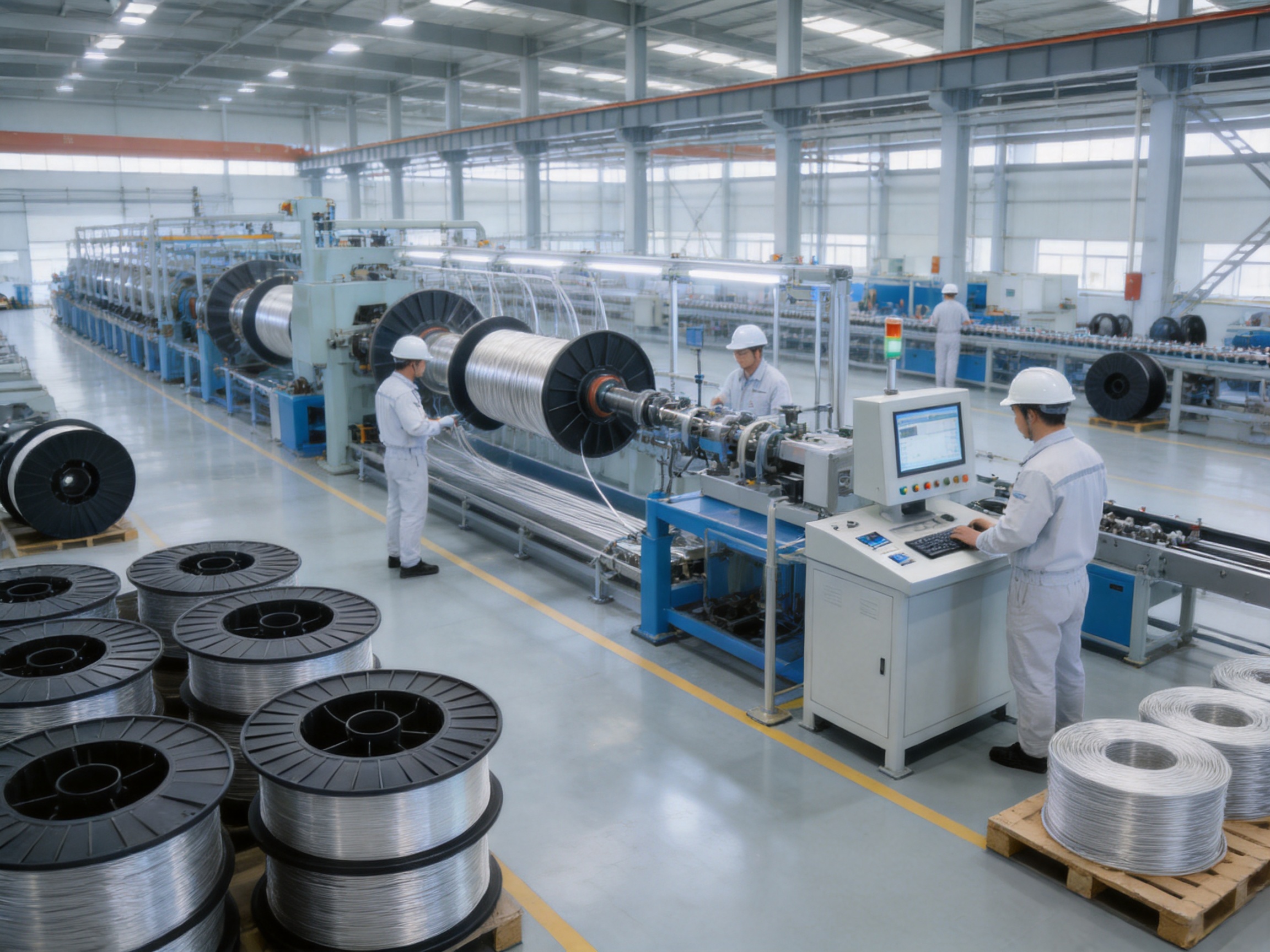
Jiangsu Hetuo Aluminum Wire Co., Ltd. has established an intelligent manufacturing system covering high-purity aluminum wire, high-strength aluminum alloy wire, and aluminum and aluminum alloy welding materials. This product scope gives the company experience across several aluminum material categories and allows it to organize production around different customer requirements.
An intelligent manufacturing system can support production scheduling, process monitoring, equipment coordination, inspection records, and information management. These capabilities are valuable for maintaining consistency when customers require repeat orders, multiple grades, or controlled production batches.
Advanced Equipment and Facilities
The company introduces advanced equipment and facilities for aluminum alloy material production. In high-purity wire manufacturing, suitable equipment contributes to stable melting, forming, drawing, surface treatment, winding, and packaging. The precise equipment configuration may differ according to product grade and specification, but the general objective is to reduce variation and improve production efficiency.
Advanced equipment is most effective when it is supported by trained operators, documented procedures, preventive maintenance, and systematic inspection. The company’s manufacturing model combines equipment investment with technical personnel and quality-management practices, creating a foundation for reliable product delivery.
Quality Inspection Throughout Production
Quality inspection is implemented throughout the production process rather than being limited to a final visual check. Chemical composition is a critical control point for 1090 aluminum wire, but other aspects of quality may also require attention, including surface condition, wire formation, dimensional consistency, winding quality, cleanliness, and packaging integrity.
In-process inspection helps identify deviations earlier, allowing corrective action before a large quantity of material is completed. Final inspection provides an additional confirmation that the finished product matches the customer’s order requirements. This layered approach is particularly important for products used in automated spraying and evaporation systems, where a feedstock defect may affect an entire production run.
Qualified Technical and Management Personnel
The company has 60 employees, including 30 professional managers and technicians. This personnel structure supports coordination among production, quality, engineering, customer service, and supply functions. Technical staff are important for interpreting customer requirements, improving processes, investigating quality issues, and supporting product development.
High-purity aluminum wire requires attention to details that may not be visible to the buyer. A trained technical team can help control raw-material selection, production parameters, testing procedures, packaging methods, and application communication. This capability strengthens the supplier’s role as a technical manufacturing partner rather than simply a commodity distributor.
ISO 9001 and IATF 16949 Certifications
The company has obtained ISO 9001 and IATF 16949 quality-management system certifications. ISO 9001 provides a general framework for quality management, customer focus, process control, documented information, risk-based thinking, and continual improvement.
IATF 16949 is associated with the automotive supply chain and includes additional expectations relating to process effectiveness, risk management, defect prevention, traceability, and customer-specific requirements. While 1090 aluminum wire may be used in many industries, these quality-system practices can benefit customers who value disciplined manufacturing and documented control.
For buyers, certification should be considered together with product specifications, inspection certificates, samples, audits, and application testing. A certified management system supports confidence in the process, while product-specific verification confirms suitability for the intended use.
Large Production Site
The company’s factory covers 40,000 square meters in the Guannan Economic Development Zone of Lianyungang, Jiangsu Province. A substantial production site can provide space for manufacturing equipment, raw-material storage, inspection areas, finished-goods handling, packaging, and logistics coordination.
Factory capacity is valuable when customers require stable supply, production planning, and the ability to support growing order volumes. It also allows a manufacturer to organize different product categories and quality-control functions within a structured industrial environment.
Product Quality Considerations for Buyers
When purchasing 1090 aluminum wire, buyers should evaluate more than the grade name. The purchase specification should identify the required aluminum purity, applicable standard, wire diameter or dimensional tolerance, delivery condition, spool or coil format, surface requirements, packaging, and inspection documentation.
Chemical Composition Verification
Chemical analysis is the first step in confirming that the material meets the 1090 designation. Buyers may request a mill test certificate or inspection report identifying the measured composition and confirming compliance with the agreed specification.
For high-purity applications, it is useful to define which analytical method will be used, how trace elements are reported, and whether the stated limits apply to each heat, batch, or shipment. Clear documentation reduces misunderstandings between the manufacturer and the customer.
Wire Surface Condition
Surface cleanliness is important for evaporation and spraying. Oil, dust, oxide fragments, moisture, foreign particles, and handling contamination may influence feeding or deposition performance. The required cleanliness level should be agreed according to the customer’s process.
Proper packaging protects the wire after production. Buyers should consider whether the product will be stored for an extended period, shipped through humid environments, or transferred between different facilities. Packaging should help prevent mechanical damage and unwanted exposure before use.
Dimensional and Feeding Requirements
Evaporation and spray equipment may require a particular wire diameter, roundness, straightness, winding condition, or spool configuration. These requirements are not specified in the supplied product information and should therefore be confirmed directly with the manufacturer before ordering.
Consistent dimensions help feeding systems maintain stable speed and energy input. If the wire is too variable, the equipment may experience feed interruptions, uneven melting, or inconsistent deposition. Matching the wire to the equipment is an essential part of process qualification.
Packaging and Traceability
Industrial buyers should request clear batch identification, production information, net weight, gross weight, grade, and packaging details. Traceability enables users to connect a finished coating or production result with a specific wire batch.
Traceability is especially useful when customers operate multiple production lines or supply components to regulated industries. It can support root-cause analysis, inventory management, incoming inspection, and repeat-order control.
Recommended Handling and Storage
1090 aluminum wire should be handled in a way that protects its surface and preserves the condition established during manufacturing. Operators should avoid dropping coils or spools, dragging wire across dirty surfaces, or using tools that may introduce steel particles or other contaminants.
Storage areas should be clean, dry, and protected from direct exposure to rain, condensation, corrosive chemicals, and excessive temperature changes. If aluminum wire is moved from a cold warehouse to a warm production area, condensation may occur. Allowing the package to reach ambient temperature before opening can help reduce moisture-related problems.
Wire should remain in its original packaging until it is ready for use whenever practical. Once opened, unused material should be protected from dust and humidity. The storage period and packaging method should follow the supplier’s recommendations and the customer’s internal material-control procedures.
Before feeding the wire into equipment, operators should inspect the package, verify the grade and batch, check for visible contamination, and confirm that the wire is not damaged or tangled. These basic steps can reduce avoidable processing problems.
Process Optimization for Evaporation and Spraying
The performance of 1090 aluminum wire is influenced by the complete process. Equipment settings should be developed according to the wire diameter, feed rate, heat source, substrate, coating thickness, and required surface properties. A change in one variable may affect the others.
For evaporation, important considerations may include wire feed speed, heating power, vapor generation, chamber conditions, substrate position, and deposition rate. Operators should monitor whether the material is transferred smoothly and whether the resulting layer meets the required thickness and appearance.
For thermal spraying, factors may include wire feed speed, arc or heat-source stability, atomization conditions, spray distance, traverse speed, substrate preparation, and coating thickness. The substrate should be suitably cleaned and prepared so that the deposited aluminum can form a strong and continuous coating.
Coating inspection may include visual examination, thickness measurement, adhesion testing, porosity evaluation, surface roughness measurement, and corrosion testing. The appropriate test method depends on the final application and the governing technical standard.
Manufacturers should conduct trials when introducing a new grade or changing suppliers. A controlled comparison between existing material and 1090 aluminum wire can reveal differences in consumption, deposition rate, coating quality, equipment stability, and total process cost.
Why Choose a Specialized Aluminum Wire Manufacturer?
A specialized manufacturer can provide greater product focus than a general metal trader. Aluminum wire for evaporation and spraying must be produced, inspected, packaged, and supplied according to requirements that differ from those of ordinary structural wire.
Jiangsu Hetuo Aluminum Wire Co., Ltd. focuses on aluminum wire, aluminum alloy wire, and aluminum/aluminum alloy welding materials. This specialization supports technical familiarity with aluminum composition, wire production, alloy selection, welding consumables, and industrial customer needs.
The company was established in 2019 and has developed its manufacturing capabilities around customer requirements and product quality. Its factory location in Lianyungang, Jiangsu Province, provides an industrial base for production and logistics, while its export experience supports supply to overseas customers.
The company’s product portfolio includes high-purity aluminum wire as well as high-strength aluminum alloy wire and welding materials. This portfolio allows customers to discuss several aluminum material needs with one manufacturer, while still selecting the grade most appropriate for each application.
Quality and Service Benefits for Global Customers
International customers generally require more than a technically acceptable product. They also need stable communication, quotation accuracy, production updates, export packaging, documentation, and responsive technical support. A supplier’s ability to coordinate these functions can influence the total purchasing experience.
The company provides international contact channels and serves customers in high-end overseas markets. Its quality certifications and manufacturing infrastructure support the expectations of customers seeking formal processes and repeatable supply.
Before placing an order, customers should provide as much technical information as possible. This may include the intended process, equipment model, wire diameter, coil or spool preference, required purity, annual demand, packaging requirements, inspection standards, and destination-country regulations.
Detailed requirements allow the manufacturer to confirm feasibility and prepare a more accurate offer. They also help prevent the common problem of ordering a material solely by grade name when the actual application requires additional dimensional or packaging specifications.
Frequently Asked Questions
What is the aluminum purity of 1090 aluminum wire?
The supplied product information specifies an aluminum content of at least 99.90%. The remaining portion consists of controlled trace elements and other permitted residual content within the stated chemical composition limits.
What is 1090 aluminum wire mainly used for?
It is mainly used for evaporation and spraying applications. The resulting aluminum layer can improve the surface corrosion resistance of a substrate and help extend the service life of the protected component.
How does 1090 compare with 1070 aluminum wire?
1090 has a higher listed minimum aluminum content than 1070, at 99.90% versus 99.70%. It also has lower stated maximum limits for several residual elements, including silicon and iron. This makes it a suitable option when greater purity and controlled chemistry are required.
Is 1090 purer than 1A95?
No. Based on the supplied composition table, 1A95 has a higher listed minimum aluminum content of 99.95%, while 1090 has a minimum of 99.90%. However, 1090 may provide an appropriate balance of purity and practical performance for many evaporation and spraying applications.
Can 1090 aluminum wire be used for all thermal-spray systems?
Suitability depends on the equipment, wire diameter, feeding method, heat source, coating specification, and substrate. Customers should confirm the required wire dimensions and conduct process trials before full-scale production.
Does high purity guarantee corrosion resistance?
High purity supports consistent material behavior, but it does not by itself guarantee the performance of a finished coating. Corrosion resistance also depends on surface preparation, coating thickness, adhesion, porosity, sealing, environmental exposure, and maintenance.
What quality certifications does the manufacturer have?
Jiangsu Hetuo Aluminum Wire Co., Ltd. has obtained ISO 9001 and IATF 16949 quality-management system certifications. These certifications support structured quality control and continual improvement practices.
What should be included in an inquiry for 1090 aluminum wire?
An inquiry should include the required grade, wire diameter, tolerance, quantity, coil or spool format, application, packaging requirements, inspection documents, delivery destination, and any applicable customer or industry standard.
How should the wire be stored?
The wire should be kept in a clean, dry environment and protected from moisture, condensation, dust, corrosive chemicals, and mechanical damage. Original packaging should remain intact until the material is ready for use.
Can the manufacturer support other aluminum wire products?
Yes. The company’s manufacturing system covers high-purity aluminum wire, high-strength aluminum alloy wire, and aluminum and aluminum alloy welding materials. Customers can discuss related aluminum material requirements with the manufacturer.
Conclusion
1090 aluminum wire is a high-purity aluminum feedstock designed for evaporation, spraying, and surface-protection applications. With aluminum content of at least 99.90% and controlled levels of silicon, iron, copper, manganese, magnesium, zinc, titanium, and other elements, it offers a practical combination of purity and process consistency.
Compared with the listed 1070 grade, 1090 provides higher nominal aluminum purity and lower limits for several residual elements. Although 1A95 offers a higher listed purity level, 1090 can be a balanced choice when the customer requires reliable high-purity aluminum without selecting the highest grade for every application.
The product’s value is strengthened by the manufacturer’s production capabilities. Jiangsu Hetuo Aluminum Wire Co., Ltd. operates a 40,000-square-meter factory, employs professional managers and technicians, uses advanced equipment, carries out quality inspection throughout production, and maintains ISO 9001 and IATF 16949 certifications.
For customers seeking aluminum wire for corrosion-resistant coatings, the final purchasing decision should consider chemistry, dimensions, surface condition, packaging, traceability, equipment compatibility, and application testing. When these factors are properly controlled, 1090 aluminum wire can support stable processing, durable surface protection, extended component service life, and more efficient aluminum material use.
References
1. Product information for 1090 Aluminum Wire, Jiangsu Hetuo Aluminum Wire Co., Ltd.
2. Chemical composition data for 1070, 1090, and 1A95 high-purity aluminum grades, as supplied in the product specification.
3. ISO 9001, Quality Management Systems — Requirements.
4. IATF 16949, Quality Management System Requirements for Automotive Production and Relevant Service Parts Organizations.
5. General technical principles for thermal spraying, wire-fed spraying, surface preparation, and protective metallic coatings.
6. General materials-engineering references concerning aluminum purity, aluminum oxidation, corrosion protection, evaporation, and thermal-spray coating processes.