

 English
 中文简体
 русский
 Deutsch
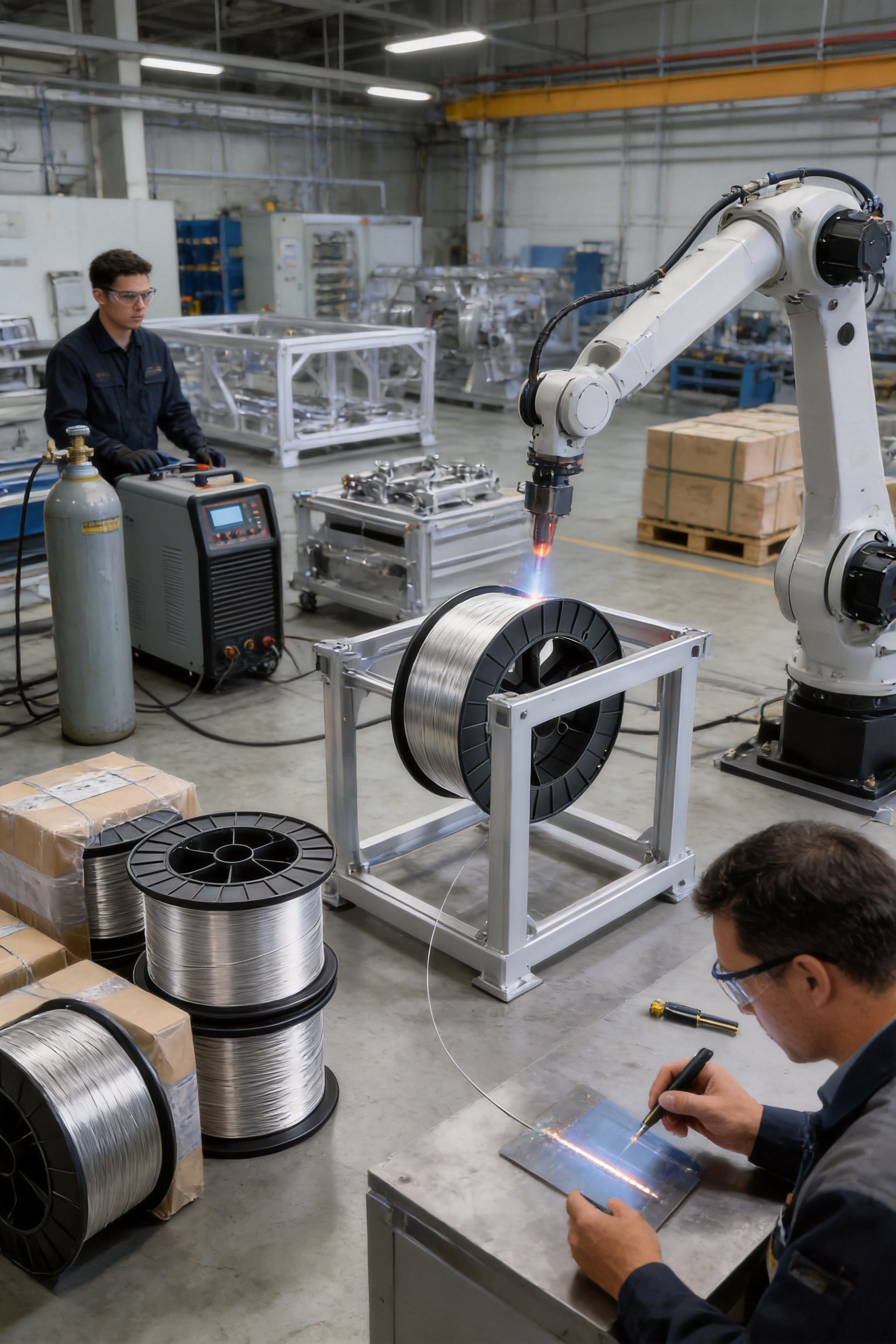
MIG wire is a key consumable for producing strong, efficient, and visually consistent welds in aluminum and aluminum alloy structures. Used with gas metal arc welding equipment and a suitable shielding gas, it provides a continuous electrode that melts into the joint and forms the finished weld. For manufacturers working with lightweight structures, transportation components, fabricated equipment, machinery, and general metal assemblies, the selection of MIG wire directly influences productivity, weld appearance, joint performance, and production cost.
Aluminum welding presents a combination of opportunities and technical challenges. Aluminum is lightweight, corrosion resistant, electrically conductive, and easy to form, but its high thermal conductivity, low melting temperature compared with its oxide layer, and sensitivity to contamination require carefully controlled welding conditions. A reliable MIG wire must therefore work consistently with the welding system, feeding equipment, shielding gas, base alloy, and joint design.
This article examines the role of MIG wire in aluminum and aluminum alloy welding, its principal advantages, important selection factors, recommended handling practices, quality considerations, and the manufacturing strengths of Jiangsu Hetuo Aluminum Wire Co., Ltd. The discussion also explains how controlled production, inspection systems, advanced equipment, and application-focused service contribute to a more dependable welding material.
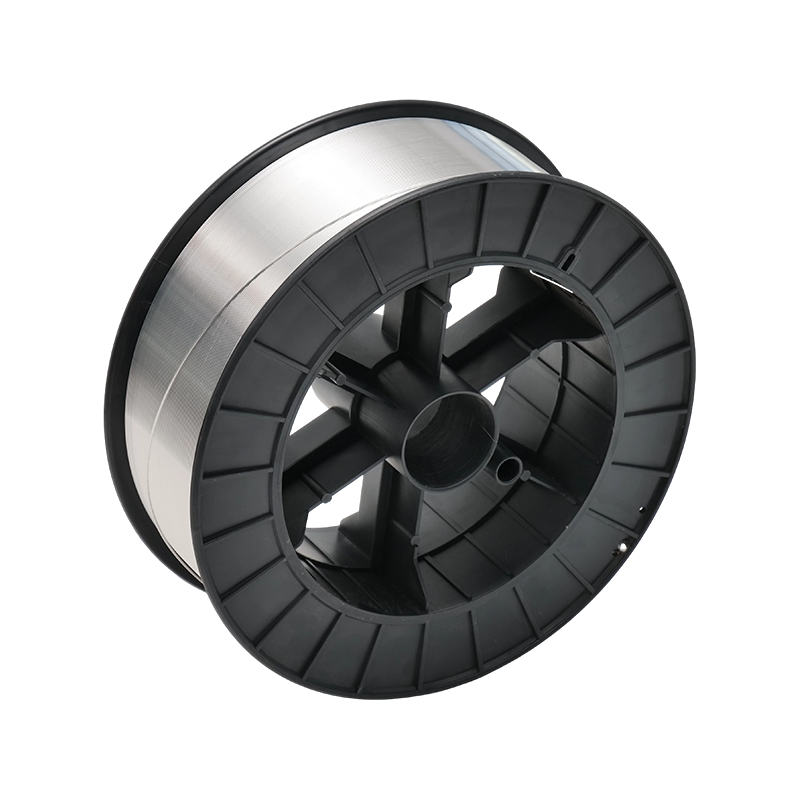
MIG Wire
Content
- 1 What Is Aluminum MIG Wire?
- 2 Why Aluminum Welding Requires a Specialized Wire
- 3 Principal Advantages of MIG Wire for Aluminum and Aluminum Alloys
- 4 Product Performance Factors That Matter in Production
- 5 Manufacturing Strengths Behind Consistent MIG Wire
- 6 Advantages Compared with Less Controlled Alternatives
- 7 Recommended Selection Procedure for Aluminum MIG Wire
- 8 Handling and Storage Recommendations
- 9 Common Welding Problems and Corrective Considerations
- 10 Applications of Aluminum MIG Wire
- 11 Why Manufacturer Experience Matters
- 12 Quality, Sustainability, and Long-Term Value
- 13 Purchasing Checklist for MIG Wire Buyers
- 14 Q&A About Aluminum MIG Wire
- 14.1 What is MIG wire used for?
- 14.2 Can aluminum MIG wire be used for every aluminum alloy?
- 14.3 Why is argon commonly used with aluminum MIG wire?
- 14.4 Why does wire diameter matter?
- 14.5 What causes aluminum MIG wire to feed poorly?
- 14.6 How should MIG wire be stored?
- 14.7 What quality systems support the manufacturer’s production?
- 14.8 What products does the manufacturer supply besides MIG wire?
- 14.9 Is MIG wire suitable for automated welding?
- 14.10 What should be tested before full production?
- 14.11 How can buyers compare suppliers beyond price?
- 15 Conclusion
- 16 References
- 17 Product: MIG Wire
What Is Aluminum MIG Wire?
Aluminum MIG wire is a continuous welding electrode designed for gas metal arc welding of aluminum and aluminum alloys. During the welding process, the wire is fed through a welding torch while an electric arc forms between the wire and the workpiece. The arc melts the wire and a portion of the base metal. Shielding gas protects the molten weld pool from atmospheric oxygen, nitrogen, and moisture that could otherwise contribute to porosity, oxidation, and unstable arc behavior.
The term MIG is commonly associated with metal inert gas welding. In aluminum applications, argon is frequently used as the primary shielding gas, although specific applications may use gas blends or different shielding arrangements. The correct wire diameter, alloy composition, current range, wire feed speed, contact tip, liner, and shielding gas flow must be selected together. A wire cannot be evaluated independently from the entire welding system.
Aluminum MIG wire is supplied in spools or other continuous forms suited to automated, semi-automatic, and manual welding equipment. Depending on the application, it may be selected for compatibility with a particular aluminum base alloy, mechanical performance, corrosion resistance, crack resistance, color matching, or ease of feeding. The best choice balances the required weld properties with the operating conditions of the finished component.
For production users, consistent wire quality is especially important. Variations in diameter, surface condition, chemical composition, or winding can influence feeding stability and arc performance. A well-produced wire helps reduce interruptions, spatter, inconsistent deposition, and unnecessary rework.
Why Aluminum Welding Requires a Specialized Wire
Aluminum has a naturally occurring oxide film that forms rapidly when the metal is exposed to air. This oxide layer has a significantly higher melting temperature than the underlying aluminum. If surface preparation and welding parameters are not properly controlled, the oxide can interfere with arc stability, fusion, and weld cleanliness.
Aluminum also conducts heat rapidly away from the welding zone. As a result, the welding system must deliver sufficient energy to establish and maintain the molten pool without causing excessive distortion or burn-through. The wire must melt predictably and transfer smoothly under the selected current and voltage conditions.
Another important consideration is the comparatively soft nature of aluminum wire. It may be more sensitive to feeding resistance than harder steel wire. The welding machine therefore requires a suitable liner, drive roll, contact tip, spool tension, and torch configuration. A wire with a clean surface and controlled dimensional consistency can make the feeding system easier to adjust.
Hydrogen is another concern in aluminum welding. Moisture, oil, dirt, and other contaminants can introduce hydrogen into the weld pool, increasing the possibility of porosity. Proper storage, clean handling, suitable shielding, and correct surface preparation are essential. A high-quality wire contributes to this objective by providing a controlled surface condition and stable chemical characteristics.
These characteristics explain why general-purpose assumptions about welding consumables are not sufficient for aluminum. A product designed specifically for aluminum and aluminum alloy applications can provide more predictable behavior than an unsuitable substitute.
Principal Advantages of MIG Wire for Aluminum and Aluminum Alloys
Continuous Deposition and High Productivity
The continuous format of MIG wire allows welding operators to deposit material without repeatedly stopping to replace individual electrodes. This is particularly valuable in long welds, repetitive production, frames, panels, vessels, profiles, and fabricated assemblies. Fewer interruptions can improve arc-on time and help manufacturers maintain a more consistent production rhythm.
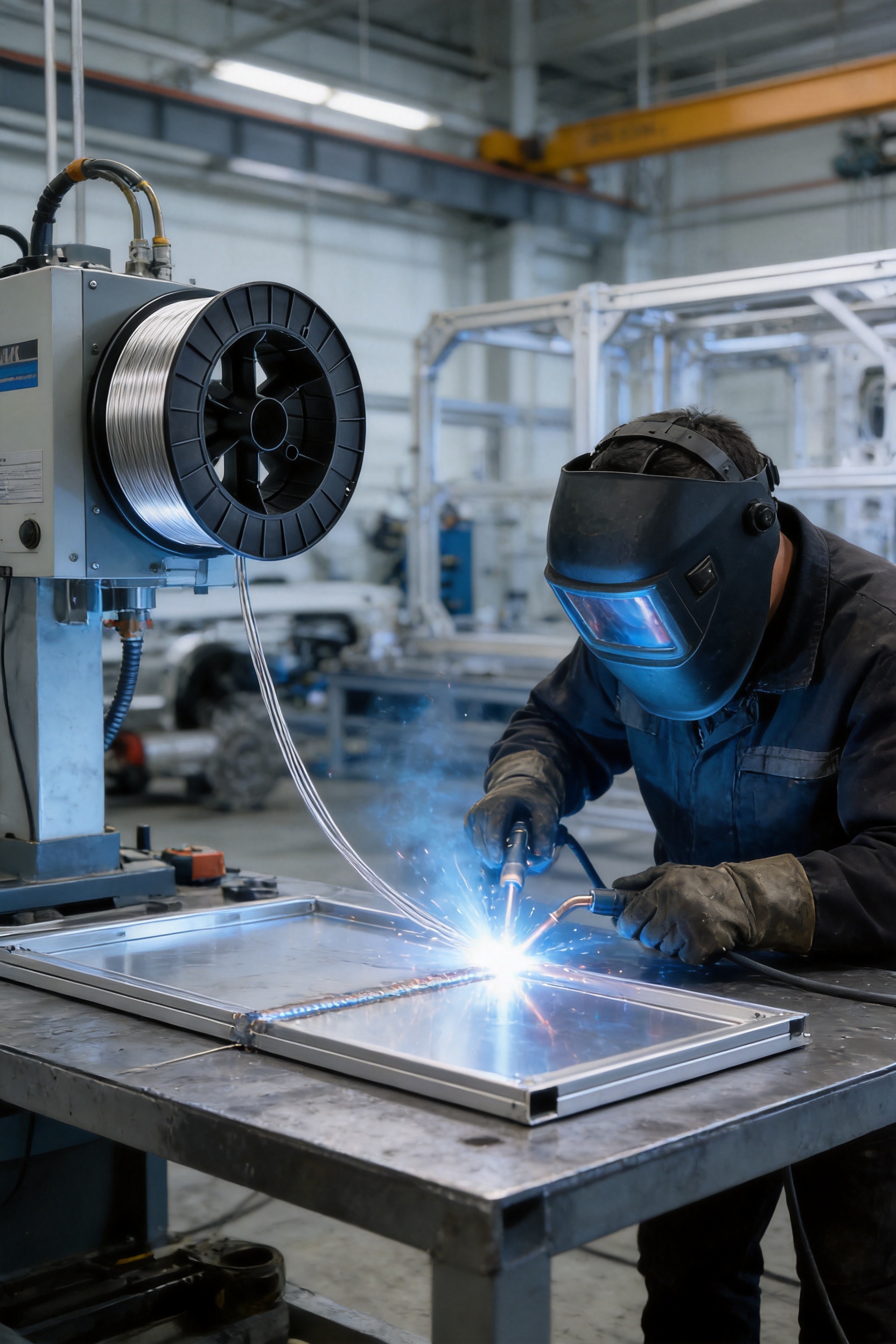
Continuous wire is also well suited to mechanized and robotic welding. Once the wire feed, current, voltage, travel speed, shielding gas, and torch position are established, the process can be repeated with a high degree of consistency. This supports production environments where output, repeatability, and documented process control are important.
Efficient Use of Lightweight Materials
Aluminum alloys are widely used where weight reduction is important. Components made from aluminum can provide a favorable strength-to-weight ratio, corrosion resistance, and good machinability or formability. MIG welding enables manufacturers to join these materials efficiently without adding unnecessary weight through oversized fasteners or complex joining arrangements.
When the selected wire is compatible with the base material and joint requirements, it can produce a weld that supports the intended structural or functional performance of the assembly. The combination of lightweight base materials and efficient continuous wire deposition is valuable in transportation equipment, industrial structures, fabricated housings, heat-related equipment, and other applications.
Flexible Application Across Manual and Automated Welding
Aluminum MIG wire can support manual welding by trained operators as well as semi-automatic and automated systems. In manual work, the operator can adjust travel speed and torch angle according to joint geometry. In automated production, the wire serves as a consistent input for programmed welding cycles.
This flexibility allows one type of consumable to support different production scales. Small manufacturers may use it for repair and custom fabrication, while larger factories may integrate it into dedicated production lines. The final performance depends on choosing an appropriate wire specification and carefully establishing the welding procedure.
Good Arc Stability When Properly Matched
A wire with consistent diameter, clean surface condition, and controlled composition can support a stable arc when used with compatible equipment. Stable arc behavior helps maintain a predictable weld pool, reduce interruptions, and improve bead uniformity.
Arc stability is affected by many variables, including wire feed speed, current, voltage, electrode stick-out, torch angle, shielding gas flow, contact tip condition, and workpiece cleanliness. However, a consistent consumable gives the welding operator a dependable starting point and reduces one source of variation in the process.
Potential for Attractive Weld Appearance
In addition to structural performance, weld appearance may be important for visible products and finished assemblies. Suitable aluminum MIG wire can help produce a smooth, uniform bead when the joint preparation, parameter settings, shielding, and operator technique are appropriate.
Good appearance does not replace engineering evaluation, but it can indicate that the arc and molten pool are being controlled effectively. Consistent wire deposition can also reduce the amount of grinding, cleaning, or cosmetic correction required after welding.
Compatibility with Diverse Aluminum Alloy Applications
Aluminum alloys differ in chemical composition, strength, heat treatment, corrosion behavior, and weldability. MIG wire is available in different alloy families and sizes to meet different application requirements. The selection should consider the base alloy, required weld strength, service environment, crack sensitivity, corrosion expectations, and any relevant industry or customer specification.
A knowledgeable manufacturer can help users identify a suitable product family rather than treating all aluminum wire as interchangeable. This application-based approach is especially valuable when a customer is moving from prototype work to stable mass production.
Product Performance Factors That Matter in Production
Dimensional Consistency
Wire diameter affects current density, deposition rate, feeding behavior, and the usable welding parameter range. Excessive variation can lead to changes in arc response and inconsistent deposition. Dimensional control is therefore an important part of production quality.
For automated systems, dimensional consistency is even more significant because the equipment operates according to programmed values. A wire that changes noticeably in diameter may create fluctuations that are difficult to compensate for during a continuous production cycle.
Surface Cleanliness
The wire surface should be protected from oil, dirt, moisture, and other contaminants. Contaminants can interfere with feeding, increase the risk of porosity, and compromise weld appearance. Clean packaging and controlled storage help preserve the condition of the product after manufacturing.
Users should also keep the spool covered when it is not in service. Open exposure to humid or dusty environments can reduce the benefits of a carefully manufactured consumable.
Controlled Alloy Composition
The composition of the wire influences weld metal strength, ductility, corrosion behavior, crack resistance, and compatibility with the base alloy. A manufacturer must control the composition within the required specification and maintain traceability through the production process.
For customers serving demanding industries, composition records and inspection documentation may be necessary. These records provide confidence that the supplied material is consistent from one production batch to another.
Reliable Spooling and Payoff
Even a chemically suitable wire can create production problems if it does not unwind smoothly. Poor winding may result in tangles, uneven tension, interruptions, and excessive operator intervention. A properly wound spool supports a steady payoff and reduces the possibility of feeding stoppages.
Spooling quality is particularly important for long production runs and robotic applications. Stable payoff helps protect equipment utilization and reduces the risk of a defect caused by an unexpected wire feed interruption.
Packaging and Identification
Packaging should protect the wire during transportation, storage, and handling. Product identification should make it possible to distinguish the alloy, diameter, batch, quantity, and other relevant information. Clear identification supports warehouse organization and reduces the chance of using an unsuitable wire on a critical job.
For international customers, packaging must also be strong enough for long-distance shipment and variable handling conditions. Proper protection contributes to the product’s usable life and helps preserve its surface condition before welding.
Manufacturing Strengths Behind Consistent MIG Wire
The performance of a welding wire begins before it reaches the welding torch. It depends on raw material selection, process design, equipment capability, in-process inspection, final testing, packaging, and logistics. Jiangsu Hetuo Aluminum Wire Co., Ltd. has developed its production capabilities around high-purity aluminum wire, high-strength aluminum alloy wire, and aluminum and aluminum alloy welding materials.
Established in 2019, the company operates in the Guannan Economic Development Zone of Lianyungang, Jiangsu Province, China. Its factory covers approximately 40,000 square meters and employs 60 people, including professional managers and technicians. This combination of manufacturing space, technical personnel, and process organization supports an industrial approach to aluminum wire production.
The company introduces advanced equipment and facilities into its manufacturing system. Modern equipment helps improve process repeatability, production efficiency, and the ability to control important product characteristics. In aluminum wire production, equipment capability is relevant to drawing, forming, surface management, spooling, inspection, and packaging.
The manufacturing system is designed to cover different product groups rather than a single narrow application. High-purity aluminum wire, high-strength aluminum alloy wire, precision profiles, welding wires, and alloy rods each require attention to different characteristics. Experience across these product categories can support a broader understanding of aluminum materials and their industrial use.
Process Control from Material Preparation to Finished Product
A dependable MIG wire production process begins with suitable raw materials. The starting material must be selected according to the intended alloy composition, purity requirements, mechanical characteristics, and final application. Material identification and controlled preparation help reduce the risk of composition errors.
During processing, the material may pass through forming, drawing, sizing, surface treatment, and winding operations. Each stage can affect the finished wire. Drawing and sizing influence diameter and roundness, while surface management influences cleanliness and feeding behavior. Winding affects the way the product pays off during welding.
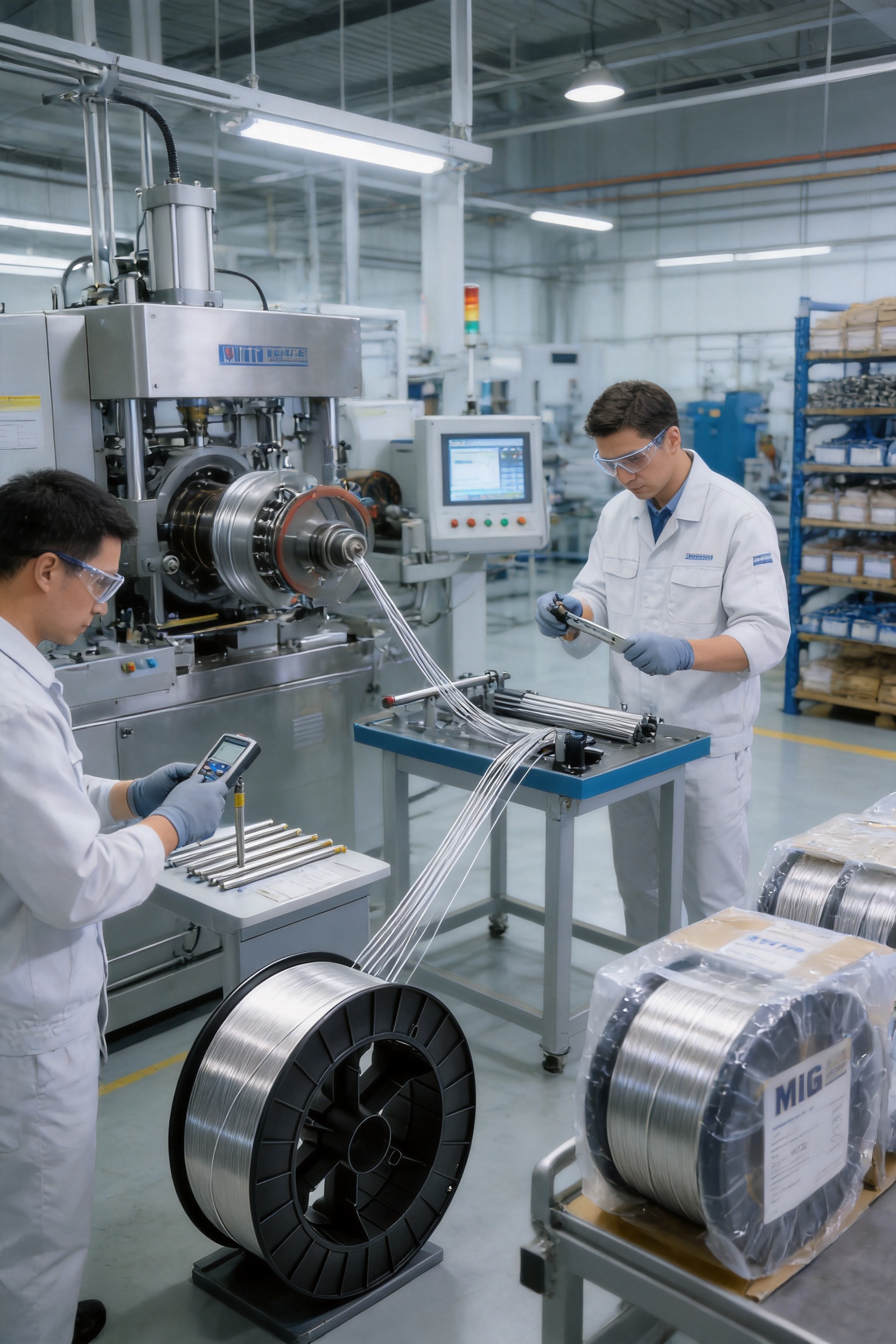
In-process inspection allows deviations to be detected before they affect a large quantity of finished product. Measurements may be used to evaluate dimensions, appearance, surface condition, and other product characteristics required by the applicable specification. The exact inspection plan should be matched to the product and customer requirements.
Quality Management Systems
Jiangsu Hetuo Aluminum Wire Co., Ltd. has obtained ISO 9001 and IATF 16949 quality management system certifications. These certifications reflect the company’s commitment to organized quality management, documented processes, continual improvement, and customer-focused control.
ISO 9001 provides a widely recognized framework for quality management. It emphasizes process control, customer requirements, corrective action, risk-based thinking, and continual improvement. For a welding material supplier, these principles can support more stable production and more consistent communication with customers.
IATF 16949 is associated with the automotive supply chain and places strong emphasis on process discipline, defect prevention, traceability, risk management, and customer-specific requirements. Although the final suitability of a wire still depends on the application and technical specification, a quality system aligned with this standard can be valuable for customers who require rigorous supplier management.
Inspection Throughout Production
The company states that it implements strict quality inspection throughout production. Continuous inspection is more effective than relying only on a final check because it provides opportunities to identify and correct deviations at earlier stages. This approach can help reduce waste, prevent repeated defects, and improve batch consistency.
For MIG wire, quality control may include verification of raw materials, alloy composition, wire dimensions, surface appearance, winding condition, packaging integrity, and final product identification. Depending on the customer’s requirements, additional documentation or testing may be arranged.
A comprehensive inspection philosophy also supports export markets. International customers often need confidence that the product they receive will match the approved sample and remain consistent across repeated orders. Traceable production and documented inspection make that confidence easier to establish.
Advantages Compared with Less Controlled Alternatives
Not all welding wires provide the same level of production reliability. Low-cost alternatives may appear attractive when evaluated only by purchase price, but hidden costs can arise from unstable feeding, inconsistent diameter, spool tangles, porosity, poor weld appearance, and increased rework. A more controlled product can offer better total value by reducing these risks.
Lower Risk of Production Interruptions
Consistent spooling and suitable surface condition can reduce interruptions caused by feeding problems. In a high-volume facility, even short stoppages can affect labor utilization, equipment output, and delivery schedules. Reducing preventable interruptions can therefore be more valuable than minimizing the initial consumable price alone.
More Predictable Welding Parameters
When the wire’s dimensions and composition are controlled, welding engineers can establish parameters with greater confidence. Predictable consumables make it easier to qualify a welding procedure, train operators, and transfer settings between similar machines or production lines.
Reduced Rework and Scrap Exposure
Welding defects may require repair, re-inspection, cleaning, or scrapping of a component. The financial impact can include material loss, additional labor, delayed production, and potential damage to customer relationships. A stable wire does not eliminate all welding defects, but it helps control one important part of the process.
Better Support for Export and Industrial Customers
Customers in overseas markets often require clear product identification, reliable packaging, consistent documentation, and quality system support. A manufacturer experienced in supplying international markets can be better prepared to address these expectations.
Jiangsu Hetuo Aluminum Wire Co., Ltd. exports its products to high-end overseas markets and aims to provide aluminum alloy wire and welding material solutions for global industries. Its customer-oriented approach is intended to connect product development and manufacturing with practical application requirements.
Recommended Selection Procedure for Aluminum MIG Wire
Step One: Identify the Base Alloy
The first step is to identify the aluminum or aluminum alloy being welded. The material designation, temper, thickness, heat treatment, and service environment may all affect wire selection. If the base material is unknown, laboratory analysis or supplier assistance may be required.
Step Two: Define the Weld Requirements
Consider the required strength, ductility, corrosion resistance, appearance, crack resistance, operating temperature, and post-weld treatment. A wire that is suitable for a decorative assembly may not be suitable for a highly loaded structural component. Likewise, a wire selected for corrosion-sensitive service should be reviewed for compatibility with the surrounding material.
Step Three: Review Joint Design and Position
Joint type, gap, thickness, welding position, and accessibility influence wire diameter and welding parameters. Thin sheet may require a smaller diameter and carefully controlled heat input, while thick sections may benefit from a larger wire and higher deposition rate.
Step Four: Confirm Equipment Compatibility
Check whether the welding machine, torch, liner, drive rolls, contact tip, and spool system are suitable for aluminum wire. Aluminum wire is softer than many ferrous welding wires, so excessive feeding resistance can cause deformation or bird-nesting near the drive rolls.
Step Five: Establish Shielding Gas and Parameters
Argon is commonly used for aluminum MIG welding. Gas flow must be sufficient to protect the weld pool without creating turbulence. Current, voltage, wire feed speed, travel speed, torch angle, and electrode extension should be adjusted through procedure trials rather than assumed from a general chart.
Step Six: Conduct Qualification and Production Trials
Before full-scale production, perform representative trials using the actual base material, joint design, equipment, and operator or robotic program. Evaluate arc stability, bead appearance, penetration, fusion, porosity, distortion, and mechanical performance as required.
Trial results should be documented so that the approved wire and welding conditions can be repeated. If the application is safety-critical or regulated, the relevant welding procedure qualification and inspection requirements should be followed.
Handling and Storage Recommendations
Proper storage protects the investment made in a high-quality welding consumable. Spools should be kept in a clean, dry environment and protected from condensation, water, oil, dust, and chemical contamination. Sudden temperature changes can create moisture on cold material, so the product should be allowed to reach room temperature before opening packaging when necessary.
Operators should handle spools carefully to prevent deformation of the reel or damage to the wire. The wire should not be dragged across dirty surfaces or handled with contaminated gloves. Once installed on the welding machine, the spool should be shielded from unnecessary exposure to humid air and shop contaminants.
The wire feeding path should also be maintained. Liners, contact tips, drive rolls, and guides must be clean and properly matched to the wire diameter. Worn components can create resistance or inconsistent feeding even when the wire itself meets specification.
At the end of a production shift, unused wire should be protected according to the supplier’s storage recommendations. Clear labeling helps prevent alloy or diameter mix-ups when multiple wires are used in the same facility.
Common Welding Problems and Corrective Considerations
Porosity
Porosity may be associated with moisture, contamination, inadequate shielding, excessive turbulence, poor surface preparation, or unsuitable welding parameters. Inspect the base material and wire, verify gas flow and connections, clean the joint, and confirm that the torch is positioned correctly.
Wire Feeding Instability
Feeding problems can result from excessive spool tension, an unsuitable liner, incorrect drive-roll pressure, a worn contact tip, sharp bends in the torch cable, or damaged wire. Correcting the equipment setup is important before concluding that the wire is unsuitable.
Burn-Through
Burn-through may occur when heat input is excessive for the material thickness or joint gap. Reducing current or wire feed speed, increasing travel speed, using pulsed transfer where appropriate, or improving joint fit-up may help. The selected wire diameter should also be reviewed.
Lack of Fusion
Lack of fusion can be caused by insufficient heat input, excessive travel speed, an incorrect torch angle, oxide contamination, or poor joint preparation. Aluminum oxide must be removed appropriately, and the welding parameters should provide sufficient energy to fuse the joint surfaces.
Irregular Bead Appearance
Uneven bead shape may indicate unstable wire feeding, changing travel speed, inconsistent torch distance, inadequate shielding, or unsuitable parameter settings. A controlled wire helps, but operator technique and machine setup remain essential.
Applications of Aluminum MIG Wire
Aluminum MIG wire can be used in a wide range of fabrication and repair applications. Typical areas include aluminum frames, industrial equipment, lightweight structures, transportation components, containers, enclosures, profiles, machinery parts, and general metal fabrication.
It is also relevant to manufacturers producing assemblies in which weight reduction, corrosion resistance, and efficient joining are important. The precise application depends on the wire alloy, base material, design requirements, and applicable industry standard.
For smaller workshops, MIG wire offers a practical method for joining aluminum without the repeated electrode changes associated with manual consumable electrodes. For larger manufacturers, continuous wire supports mechanization, automation, and data-based process management.
Where appearance is important, a well-controlled wire can support clean and uniform welds that require less finishing. Where productivity is the primary objective, consistent deposition and reliable payoff can help reduce nonproductive time.
Why Manufacturer Experience Matters
Choosing a welding wire supplier is not only a matter of comparing alloy names and prices. The supplier’s ability to control production, respond to technical requirements, preserve batch consistency, and support international delivery also matters.
Jiangsu Hetuo Aluminum Wire Co., Ltd. combines aluminum material specialization with an organized manufacturing platform. Its product scope includes high-purity aluminum wire, high-strength aluminum alloy wire, and aluminum and aluminum alloy welding materials. This specialization gives the company a foundation for serving customers with different requirements across the aluminum materials sector.
The company’s 40,000-square-meter factory and technical workforce provide capacity for organized manufacturing and quality inspection. Its ISO 9001 and IATF 16949 certifications demonstrate attention to structured quality management. Its stated focus on customer needs supports an application-oriented approach in which the final product is selected according to the customer’s process and performance goals.
For buyers, these strengths can improve supplier confidence in several ways. They can support repeatable product quality, clearer technical communication, more systematic handling of customer requirements, and better preparation for export orders. They may also make it easier to develop long-term supply arrangements rather than treating each purchase as an isolated transaction.
Quality, Sustainability, and Long-Term Value
Aluminum is frequently selected for its ability to reduce component weight and support long service life. When it is joined effectively, the resulting assembly can provide durable performance while using a relatively lightweight material system. Reliable welding consumables contribute to this objective by helping manufacturers produce sound joints with fewer defects and less waste.
Quality control also has an environmental dimension. Scrap, rejected components, repeated welding, excessive grinding, and premature replacement all consume additional material and energy. A stable MIG wire cannot solve every sustainability challenge, but it can support more efficient production and reduce avoidable process losses.
Long-term value also includes equipment utilization, operator productivity, inspection effort, and customer satisfaction. A wire that performs consistently can contribute to a lower total cost of ownership even when its purchase price is not the lowest available.
Manufacturers should evaluate sustainability and value through the complete production cycle. This includes raw material efficiency, product reliability, packaging, transportation, storage, welding performance, rework rates, and service life.
Purchasing Checklist for MIG Wire Buyers
Before placing an order, buyers should confirm the required alloy, diameter, spool type, net weight, packaging method, applicable standard, and documentation requirements. The customer should also provide information about the base alloy, welding process, shielding gas, equipment, joint design, and expected production volume.
Additional questions may include whether sample quantities are available, how batch traceability is managed, what inspection records are supplied, and how the product is protected during export shipment. These details can prevent misunderstandings and support a smoother qualification process.
It is also useful to evaluate supplier responsiveness. Technical questions should receive clear and practical answers. If the application is unusual, the supplier should be willing to review the operating conditions rather than recommending a product without understanding the process.
| Evaluation Item | Why It Matters | Recommended Buyer Action |
|---|---|---|
| Base alloy compatibility | Influences weld strength, crack resistance, corrosion behavior, and service performance. | Provide the exact base material designation and application requirements. |
| Wire diameter | Affects current range, deposition rate, feeding, and suitability for material thickness. | Match the diameter to the joint, equipment, and production method. |
| Surface condition | Can influence porosity, feeding stability, and weld appearance. | Review storage, packaging, and cleanliness requirements. |
| Spooling quality | Supports continuous payoff and reduces interruptions during welding. | Confirm spool format and inspect trial spools before full production. |
| Quality documentation | Provides evidence of composition, inspection, and batch consistency. | Request certificates or records appropriate to the application. |
| Manufacturing capability | Determines whether the supplier can maintain repeatability and support volume requirements. | Review factory capabilities, certifications, and production experience. |
| Export packaging | Protects the wire during transportation and storage. | Confirm packaging specifications for the shipping route and environment. |
Q&A About Aluminum MIG Wire
What is MIG wire used for?
MIG wire is used as a continuous consumable electrode in gas metal arc welding. For aluminum applications, it melts in the arc and becomes part of the weld joint while shielding gas protects the molten metal from atmospheric contamination.
Can aluminum MIG wire be used for every aluminum alloy?
No. Different aluminum alloys have different composition, strength, corrosion, and weldability requirements. The wire should be selected according to the base alloy, joint design, service conditions, and required weld performance.
Why is argon commonly used with aluminum MIG wire?
Argon is an inert shielding gas that can protect the molten aluminum weld pool from atmospheric contamination. The appropriate gas flow and welding setup must still be established for the specific equipment, material, and joint.
Why does wire diameter matter?
Wire diameter affects the usable current range, deposition rate, feeding behavior, arc characteristics, and suitability for different material thicknesses. A diameter that is too large or too small can make the process more difficult to control.
What causes aluminum MIG wire to feed poorly?
Possible causes include excessive spool tension, an unsuitable liner, incorrect drive-roll pressure, a worn contact tip, sharp torch bends, contamination, or damaged wire. Aluminum’s relative softness makes correct feeding equipment especially important.
How should MIG wire be stored?
Store it in a clean, dry environment away from moisture, dust, oil, and chemicals. Keep the packaging closed until the product is needed, and protect the spool from condensation and unnecessary exposure to humid air.
What quality systems support the manufacturer’s production?
Jiangsu Hetuo Aluminum Wire Co., Ltd. has obtained ISO 9001 and IATF 16949 quality management system certifications. The company also states that it carries out quality inspection throughout production.
What products does the manufacturer supply besides MIG wire?
The company specializes in high-purity aluminum wire, high-strength aluminum alloy wire, aluminum and aluminum alloy welding materials, high-grade aluminum alloy rods, welding wires, and precision profiles.
Is MIG wire suitable for automated welding?
Yes. Continuous wire is well suited to semi-automatic, mechanized, and robotic welding. Automation requires stable wire dimensions, reliable spooling, compatible equipment, and carefully qualified welding parameters.
What should be tested before full production?
Users should evaluate arc stability, wire feeding, bead appearance, penetration, fusion, porosity, distortion, and required mechanical or visual properties using representative materials and joint designs. The results should be documented as part of the approved welding procedure.
How can buyers compare suppliers beyond price?
Buyers should consider alloy consistency, dimensional control, surface condition, spooling quality, packaging, certifications, traceability, technical support, delivery capability, and the supplier’s experience with export and industrial customers.
Conclusion
Aluminum MIG wire is an important production material for joining aluminum and aluminum alloys efficiently and consistently. Its continuous deposition format supports productivity, automation, and repeatable welding. When the wire is correctly matched to the base alloy and welding system, it can contribute to stable arc performance, attractive weld appearance, efficient material use, and reduced rework.
The advantages of a reliable wire extend beyond the welding arc. Dimensional consistency, surface cleanliness, controlled alloy composition, dependable spooling, strong packaging, and traceable inspection all influence the user’s total production experience. These characteristics are especially important in export manufacturing, automated welding, and applications where quality requirements are demanding.
Jiangsu Hetuo Aluminum Wire Co., Ltd. positions its MIG wire and related products within a broader aluminum materials manufacturing system. Established in 2019, the company operates a 40,000-square-meter factory, employs professional managers and technicians, uses advanced equipment, and applies quality inspection throughout production. Its ISO 9001 and IATF 16949 certifications further support its focus on process control and customer satisfaction.
For manufacturers seeking a dependable aluminum welding material, the most effective approach is to evaluate the complete supply chain: material suitability, production capability, inspection, packaging, technical support, and long-term consistency. A properly selected MIG wire can help transform aluminum’s lightweight and corrosion-resistant advantages into practical, durable, and efficient welded products.
References
American Welding Society. Welding Handbook: Welding Processes and Materials.
American Welding Society. Specification for Bare Aluminum and Aluminum-Alloy Welding Electrodes and Rods.
International Organization for Standardization. ISO 9001: Quality Management Systems—Requirements.
International Automotive Task Force. IATF 16949: Quality Management System Requirements for Automotive Production and Relevant Service Parts Organizations.
International Organization for Standardization. Welding—Fusion-Welded Joints in Aluminium and Its Alloys—Quality Levels for Imperfections.
Materials science and welding engineering references concerning aluminum alloy weldability, gas metal arc welding, shielding gas control, weld porosity, and consumable selection.