

 English
 中文简体
中文简体 русский
 Deutsch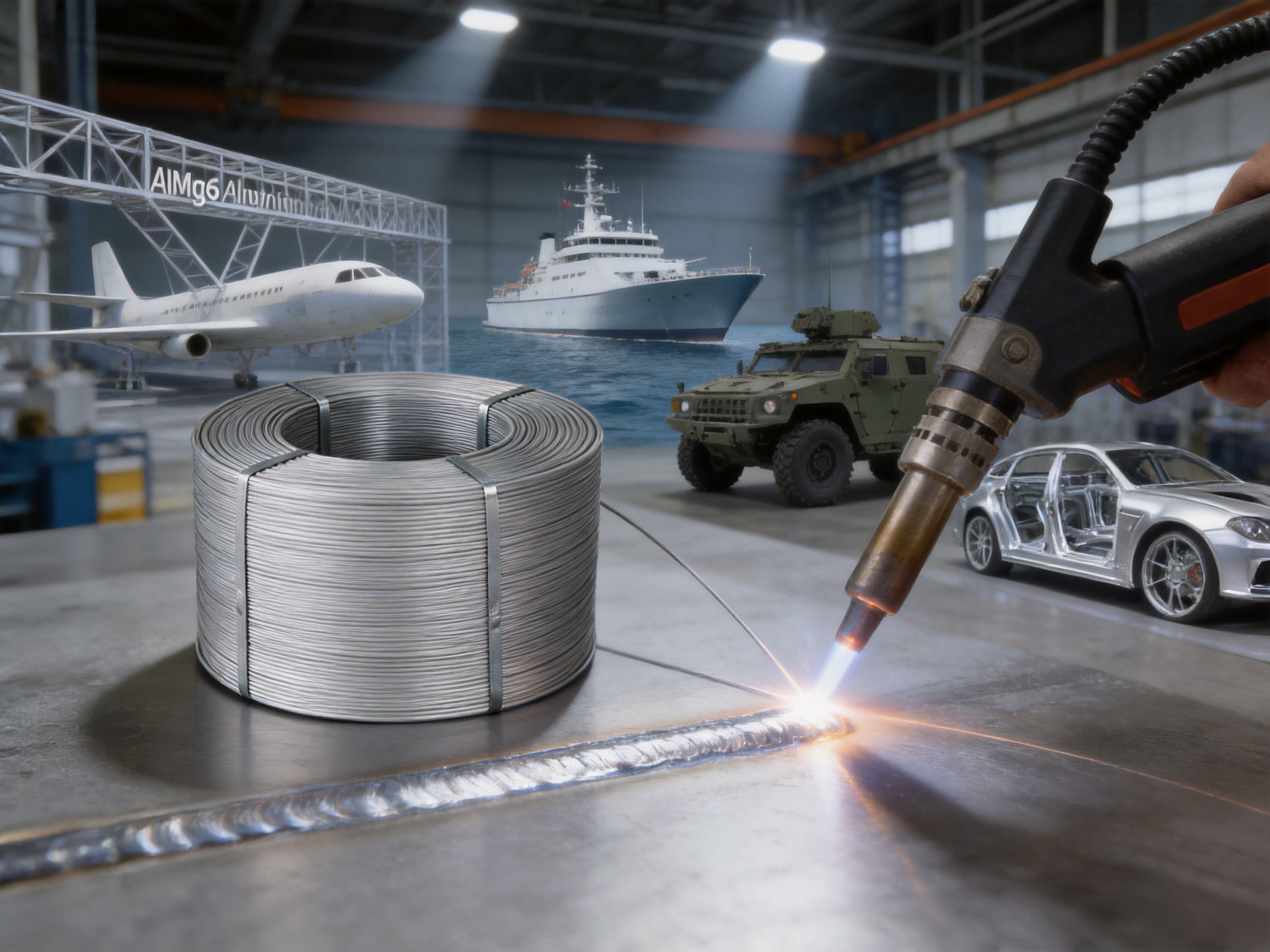
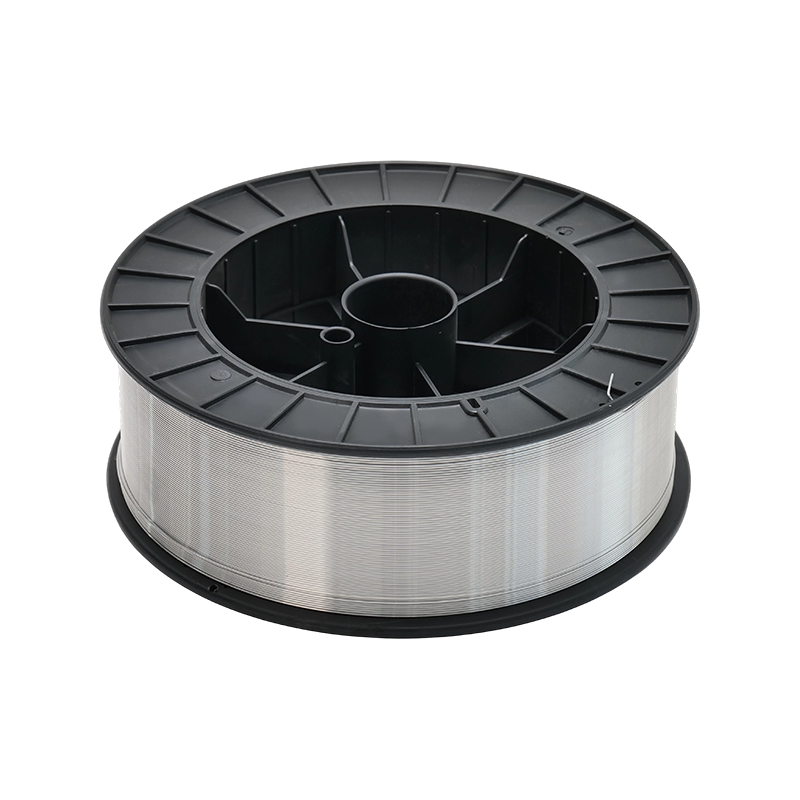
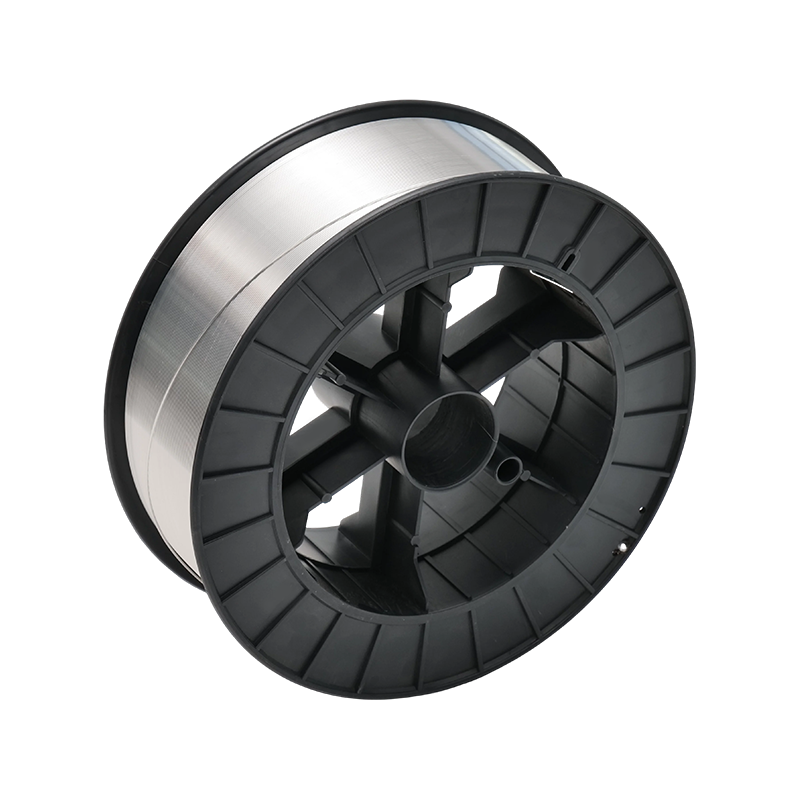
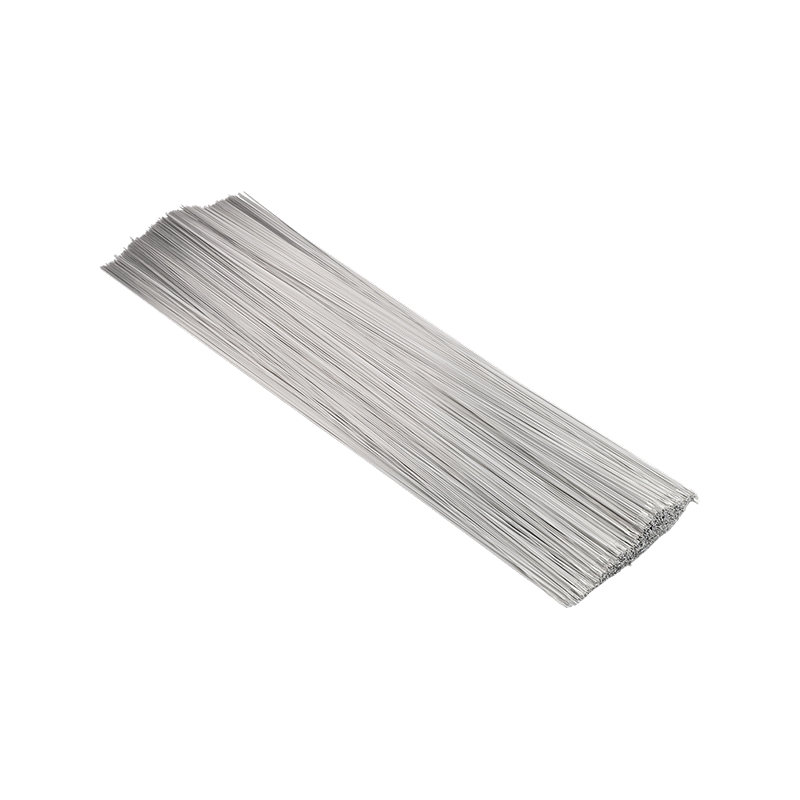
AlMg6 aluminum alloy wire is a magnesium-rich aluminum alloy wire developed for applications that require a balanced combination of strength, corrosion resistance, weldability, and relatively low weight. With magnesium content typically specified at 5.8–6.8%, the alloy belongs to the high-strength aluminum alloy wire family and is suitable for demanding industrial environments where ordinary aluminum wire may not provide sufficient mechanical performance or durability.
This material is mainly used in aviation, aerospace, military equipment, ships, automobiles, tanks, and other engineered structures. Its value comes not from a single property, but from the way several properties work together. AlMg6 offers a favorable strength-to-weight ratio, good resistance to exfoliation corrosion, useful welding characteristics, and the adaptability required for the manufacture of wire, welding consumables, and precision aluminum alloy components.
Jiangsu Hetuo Aluminum Wire Co., Ltd. manufactures AlMg6 aluminum alloy wire within an industrial production system covering high-purity aluminum wire, high-strength aluminum alloy wire, and aluminum and aluminum alloy welding materials. The company combines alloy preparation, wire processing, quality inspection, and production management to serve customers requiring stable composition and dependable material performance.
Content
- 1 What Is AlMg6 Aluminum Alloy Wire?
- 2 Specified Chemical Composition
- 3 Principal Advantages of AlMg6 Wire
- 4 Applications in Demanding Industries
- 5 AlMg6 Compared with Other Aluminum Alloy Wires
- 6 Advanced Manufacturing Process
- 7 Quality Control and Inspection
- 8 Why Manufacturing Capability Matters to Customers
- 9 How AlMg6 Wire Supports Sustainable Engineering
- 10 Selection and Purchasing Guidance
- 11 Processing Recommendations
- 12 Application and Performance Considerations
- 13 Advantages of Working with a Specialized Aluminum Wire Supplier
- 14 Q&A About AlMg6 Aluminum Alloy Wire
- 14.1 What is the main strengthening element in AlMg6?
- 14.2 What does “AlMg6” mean?
- 14.3 Where is AlMg6 aluminum alloy wire used?
- 14.4 Is AlMg6 suitable for marine environments?
- 14.5 How does AlMg6 compare with 5356 welding wire?
- 14.6 Is AlMg6 stronger than 4043?
- 14.7 Can AlMg6 wire be used with any aluminum alloy?
- 14.8 What quality documents should customers request?
- 14.9 What does ISO 9001 certification indicate?
- 14.10 What does IATF 16949 certification add for automotive customers?
- 14.11 How should AlMg6 wire be stored?
- 14.12 Can customized AlMg6 wire be ordered?
- 14.13 Why is surface quality important for welding wire?
- 15 Conclusion
- 16 References
- 17 Product: AlMg6 Aluminum Alloy Wire
What Is AlMg6 Aluminum Alloy Wire?
AlMg6 is an aluminum-magnesium alloy whose principal strengthening element is magnesium. Unlike heat-treatable aluminum alloys that depend primarily on precipitation hardening, aluminum-magnesium alloys obtain much of their strength through solid-solution strengthening, controlled processing, work hardening, and appropriate temper or delivery condition. This makes AlMg6 particularly useful in applications where corrosion resistance and weldability are as important as strength.
The “Al” in the designation indicates that aluminum is the balance or base metal. “Mg” identifies magnesium as the principal alloying addition, while the number “6” generally corresponds to a nominal magnesium level of approximately six percent. The supplied composition for the product specifies magnesium at 5.8–6.8%, manganese at 0.5–0.8%, titanium at 0.1–0.2%, beryllium at 0.002–0.005%, zinc at up to 0.20%, copper at up to 0.10%, iron at up to 0.40%, and silicon at up to 0.40%, with aluminum as the remainder.
These elements are carefully balanced. Magnesium increases strength and contributes to the alloy’s useful resistance to marine and atmospheric corrosion. Manganese can support strength and structural stability. Titanium is commonly used in aluminum alloy production as a grain-refining addition. Small, controlled quantities of beryllium may be used in certain alloy systems and production practices to reduce undesirable oxidation behavior during melting or welding-related processing. The limits on iron, silicon, copper, and zinc help control unwanted phases and preserve the intended performance profile.
Because small variations in chemistry can influence wire drawing, weldability, corrosion behavior, and final mechanical properties, chemical composition is one of the most important control points in AlMg6 production. A reliable supplier must therefore manage alloying additions, melt homogeneity, filtration, casting, thermal history, surface quality, and final inspection as connected stages rather than isolated operations.
Specified Chemical Composition
The following table presents the composition supplied for AlMg6 aluminum alloy wire. Values should be interpreted as the stated specification for the product and confirmed against the applicable purchase standard, inspection certificate, and customer drawing before use in a regulated or safety-critical application.
| Element | Specified content | Function or production significance |
|---|---|---|
| Silicon (Si) | 0.40% maximum | Controlled to limit undesirable phases and preserve intended alloy behavior |
| Iron (Fe) | 0.40% maximum | Limited because excessive iron-bearing phases may affect ductility and toughness |
| Copper (Cu) | 0.10% maximum | Kept low to support corrosion resistance and welding performance |
| Manganese (Mn) | 0.5–0.8% | Contributes to strengthening and structural stability |
| Magnesium (Mg) | 5.8–6.8% | Primary strengthening element and major contributor to corrosion resistance |
| Chromium (Cr) | Not specified | Controlled according to the applicable material standard or customer requirement |
| Nickel (Ni) | Not specified | Controlled according to the applicable material standard or customer requirement |
| Zinc (Zn) | 0.20% maximum | Limited to maintain the designated alloy balance |
| Titanium (Ti) | 0.1–0.2% | Supports grain refinement and process consistency |
| Zirconium (Zr) | Not specified | Not listed in the supplied AlMg6 composition |
| Beryllium (Be) | 0.002–0.005% | Present within a tightly controlled range in the supplied specification |
| Other elements | 0.05% single maximum; 0.15% total maximum | Restricts incidental elements and protects alloy consistency |
| Aluminum (Al) | Remainder | Base metal of the alloy |
The supplied product information also includes a broader comparison table covering grades such as 2A10, 2219, 4043, 4047, 5183, 5154, 5356, AlMg3, AlMg5, AlMg61, 7050, and 7075. These grades serve different engineering purposes. Copper-rich grades such as 2219 and 2A10 are associated with high-temperature or aerospace-oriented applications, while silicon-rich 4043 and 4047 grades are widely selected for welding characteristics and melting behavior. Magnesium-bearing grades such as 5183, 5356, AlMg5, and AlMg6 are generally considered when strength, corrosion resistance, and compatibility with aluminum-magnesium base materials are important.
Composition comparisons should not be treated as a simple ranking. A grade with higher tensile strength may have lower corrosion resistance or reduced weldability. A wire with a lower melting range may be easier to use for a particular welding operation but may not provide the same joint strength or seawater resistance. The correct comparison depends on the base material, service environment, welding process, required mechanical properties, fabrication method, and applicable standard.
Principal Advantages of AlMg6 Wire
High Strength with Low Density
The principal benefit of AlMg6 is its ability to provide substantially greater strength than commercially pure aluminum while retaining aluminum’s low density. This combination is valuable wherever designers want to reduce structural weight without accepting an equivalent reduction in load-bearing capability.
Weight reduction can provide several practical benefits. In transportation equipment, lower mass may support improved fuel economy, greater payload, or reduced energy consumption. In aerospace applications, every kilogram saved can contribute to increased range or useful capacity. In ships and military vehicles, lighter components can support improved mobility and system efficiency. In structural assemblies, the use of a high-strength aluminum alloy may reduce the need for oversized sections, provided that design calculations and applicable standards confirm suitability.
The final strength of wire is influenced by more than nominal chemistry. Diameter, reduction schedule, drawing practice, heat treatment, temper, straightening, and surface condition can all affect performance. For this reason, AlMg6 should be purchased with clear requirements for delivery condition and test documentation rather than by composition alone.
Good Resistance to Exfoliation Corrosion
AlMg6 is described as having good exfoliation corrosion resistance. Exfoliation corrosion is a form of localized corrosion that can develop in susceptible wrought aluminum products, particularly where metallurgical structure, residual stress, environmental exposure, and unfavorable grain-boundary conditions combine. It can cause layered or leaf-like lifting of material and is especially concerning in thin sections, plate, extrusions, and structures exposed to marine or humid environments.
The aluminum-magnesium alloy system is often selected for environments where general atmospheric, saltwater, or industrial corrosion resistance is important. This makes AlMg6 attractive for shipbuilding, marine equipment, vehicle structures, storage systems, and outdoor machinery. Nevertheless, corrosion performance depends on the complete product and service conditions. Surface contamination, galvanic contact with dissimilar metals, crevices, weld zones, heat input, and protective coatings must all be considered in engineering design.
Good intrinsic corrosion resistance does not eliminate the need for correct storage and fabrication. Wire should be kept clean and dry, and finished assemblies should be designed to prevent water traps and unnecessary galvanic couples. When the wire is used as welding material, post-weld cleaning and appropriate joint design can contribute significantly to the long-term durability of the finished structure.
Useful Weldability
Weldability is another important strength of AlMg6. Aluminum-magnesium materials are widely used in welded structures because they can be joined using common aluminum welding processes when appropriate shielding gas, polarity, current, wire feed, joint preparation, and heat management are selected.
AlMg6 wire can be considered for applications involving aluminum-magnesium base materials and other compatible aluminum alloys. The final filler selection must be made by a qualified welding engineer because filler metal performance depends on the parent alloy, design temperature, corrosion environment, strength requirements, crack sensitivity, anodizing requirements, and applicable welding code.
Good weldability does not mean that aluminum welding is effortless. Aluminum has high thermal conductivity, a tenacious oxide layer, a relatively low melting temperature compared with its oxide, and a high coefficient of thermal expansion. These characteristics require careful surface preparation and process control. Wire cleanliness is particularly important because oil, moisture, oxide particles, and foreign metallic contamination can lead to porosity, unstable arc behavior, or weld defects.
Balanced Ductility and Formability
High-strength alloys must still retain sufficient ductility for manufacturing. AlMg6 is valued because it offers a practical balance between strength and the ability to be processed into wire and used in fabrication. Properly controlled rolling, drawing, intermediate treatment, and surface finishing help produce wire that feeds consistently and performs reliably during downstream operations.
The required balance may vary by application. A wire intended for welding equipment may prioritize smooth feeding, stable surface condition, and controlled spool winding. A wire intended for further forming may require a particular temper or dimensional tolerance. A wire used in precision components may require tighter straightness, diameter, and surface requirements. Manufacturing must therefore be matched to the customer’s end use rather than based only on the alloy designation.
Good Compatibility with Lightweight Design
AlMg6 supports the continuing industrial movement toward lighter and more resource-efficient structures. Aluminum alloys can reduce the mass of vehicles, ships, machinery, and engineered systems, while their corrosion resistance may extend service life and reduce maintenance requirements. When the alloy is processed efficiently and used in an appropriately designed structure, these advantages can contribute to a lower lifecycle burden.
Lightweight design is not simply a matter of replacing steel with aluminum. Engineers must evaluate stiffness, fatigue, thermal expansion, joining methods, galvanic compatibility, fire performance, wear, and repair practices. AlMg6 is most effective when it is selected as part of a complete materials and manufacturing strategy.
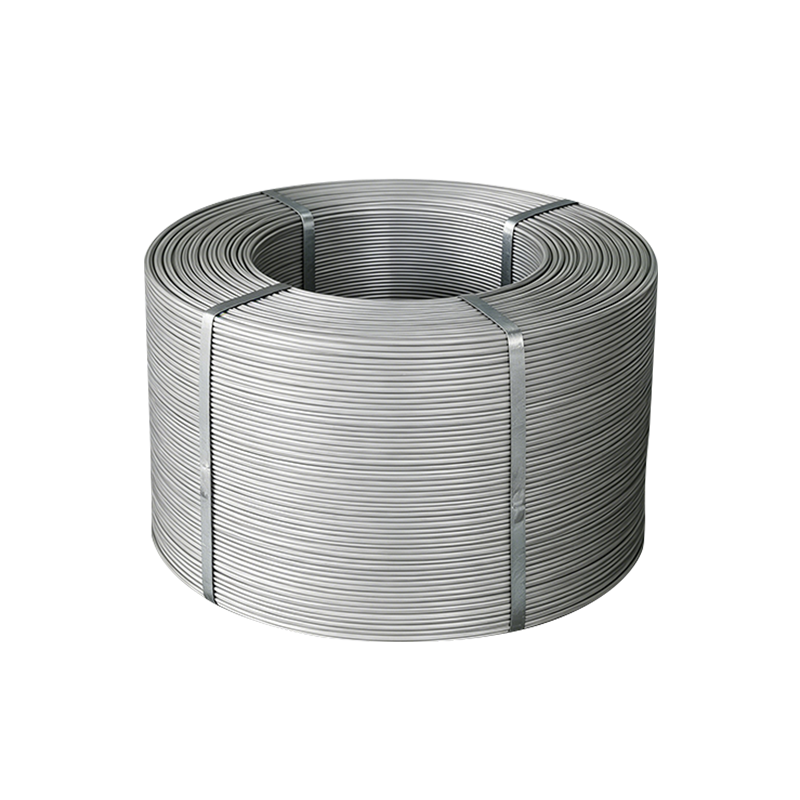
AlMg6 Aluminum Alloy Wire
Applications in Demanding Industries
Aviation and Aerospace
Aviation and aerospace structures place strict demands on material weight, strength, fatigue behavior, corrosion resistance, dimensional stability, and traceability. Aluminum-magnesium wire can be used in suitable fabrication, repair, joining, and component-manufacturing applications where the alloy system is approved for the intended service.
Its low density helps reduce mass, while magnesium strengthening provides greater mechanical capability than high-purity aluminum. Corrosion resistance is also essential because aircraft and aerospace equipment may experience humidity, temperature cycling, salt exposure, de-icing chemicals, and complex maintenance conditions.
For aerospace use, technical approval is essential. The wire must be evaluated against the required aerospace specification, lot traceability, chemical analysis, mechanical test results, surface condition, packaging, and welding procedure qualification. General product descriptions cannot replace customer-specific qualification.
Military Equipment and Tanks
Military vehicles and tanks may require materials that combine mobility, structural strength, corrosion resistance, repairability, and weight control. AlMg6 can contribute to lightweight structures, auxiliary assemblies, protective housings, transportation systems, and welded components where its performance characteristics are compatible with the design.
Military equipment often operates in severe conditions, including vibration, dust, salt spray, field repair, temperature variation, and impact loading. The selected wire must therefore support robust welding procedures and consistent production quality. The wire’s surface condition, winding quality, and dimensional stability can be especially important when repairs or fabrication are performed under time-sensitive conditions.
Shipbuilding and Marine Equipment
Marine structures benefit from aluminum alloys that offer low density and resistance to atmospheric and saltwater exposure. AlMg6 is suitable for consideration in shipbuilding and marine equipment when the selected alloy and welding procedure comply with the relevant marine requirements.
Weight reduction is a major benefit in marine engineering. A lighter vessel may require less propulsion energy, provide greater payload capacity, or achieve improved handling characteristics. At the same time, marine environments create corrosion risks that demand careful joint design, drainage, coating selection, and isolation from dissimilar metals.
Welding wire quality can influence the integrity of hull sections, decks, frames, brackets, tanks, and equipment supports. Stable feeding and low contamination are necessary to reduce porosity and rework. Finished welds should be inspected according to the applicable quality plan, which may include visual, dimensional, non-destructive, or mechanical testing.
Automotive Manufacturing
Automotive manufacturers increasingly use aluminum alloys to reduce vehicle weight and improve energy efficiency. AlMg6 wire may be used in suitable welded structures, body-related components, vehicle frames, tanks, brackets, repair materials, and specialty assemblies, depending on the exact alloy and process requirements.
Automotive production places strong emphasis on repeatability. Wire must be delivered with consistent diameter, smooth feeding characteristics, reliable spool geometry, and stable chemistry. Automated welding cells can expose minor variations that might not be apparent in manual welding, so process consistency is a commercial advantage as well as a technical requirement.
The use of aluminum alloy wire can also support repair and maintenance operations. However, repair welding must consider the original base material, heat-affected zone, residual stress, corrosion protection, and post-repair inspection. A wire selected for production welding is not automatically suitable for every repair situation.
AlMg6 Compared with Other Aluminum Alloy Wires
Customers often compare AlMg6 with AlMg5, AlMg3, 5356, 5183, 4043, 4047, 2219, 7050, and 7075. These materials should be viewed as alternatives for specific requirements rather than direct substitutes in every application.
AlMg6 Compared with AlMg3 and AlMg5
AlMg3 and AlMg5 contain lower magnesium ranges than AlMg6. In general, increasing magnesium within a suitable aluminum-magnesium alloy family can increase strength, although the relationship is affected by processing condition, impurity control, work hardening, and product form.
AlMg3 may be selected when moderate strength, corrosion resistance, and good formability are needed. AlMg5 provides a higher magnesium level and may offer a stronger performance profile. AlMg6 is appropriate when the application requires the higher magnesium range specified for the grade, together with the associated strength and corrosion-resistance objectives.
However, higher magnesium content can change forming behavior, welding response, and sensitivity to processing conditions. The best grade depends on the actual application, not simply on selecting the alloy with the highest magnesium percentage.
AlMg6 Compared with 5356
5356 is a well-known aluminum-magnesium welding alloy containing approximately 4.5–5.5% magnesium in the supplied comparison data, together with manganese, chromium, titanium, and other controlled elements. It is widely used as a filler metal for compatible aluminum alloys and is recognized for useful strength and corrosion resistance.
AlMg6 has a higher specified magnesium range of 5.8–6.8%. This difference may be beneficial when a higher-magnesium alloy system is needed, but it also means that the two wires should not be interchanged without reviewing welding procedure requirements, base-metal compatibility, code restrictions, corrosion considerations, and design strength.
5356 may be favored for established welding procedures, broad availability, or a specific certification requirement. AlMg6 may be preferred where the customer requires its particular chemical composition or where the application is based on an aluminum-magnesium alloy with a higher magnesium content.
AlMg6 Compared with 5183
5183 contains approximately 4.3–5.2% magnesium in the supplied table and is commonly considered for high-strength aluminum welding applications. It also includes manganese and chromium within controlled ranges. The choice between 5183 and AlMg6 depends on the approved procedure, joint design, service environment, mechanical requirements, and customer standard.
AlMg6 can provide a distinct composition for customers seeking a six-percent magnesium alloy. 5183 may be advantageous where its established welding qualifications, classification, or supply chain make it the preferred material. Neither should be regarded as universally superior; the correct selection is application-specific.
AlMg6 Compared with 4043 and 4047
4043 and 4047 are silicon-rich aluminum alloy wires. Their higher silicon content can promote favorable melting and fluidity characteristics and may help reduce weld cracking in certain combinations. 4047 contains particularly high silicon content compared with AlMg6.
These silicon-rich wires can be attractive for applications requiring a lower melting range, improved fluidity, or specific cosmetic and crack-resistance characteristics. By contrast, AlMg6 is a magnesium-rich alloy intended for applications where strength, aluminum-magnesium compatibility, and corrosion resistance are central priorities.
When welding aluminum-magnesium base materials, a magnesium-rich filler may be more appropriate than a silicon-rich filler, but the final decision requires technical review. Weld appearance, anodizing response, joint strength, crack sensitivity, and service exposure all influence the choice.
AlMg6 Compared with 2219, 7050, and 7075
2219, 7050, and 7075 are copper- or zinc-rich alloy systems associated with high-strength applications. They may offer very high strength in suitable tempers, but their corrosion resistance and welding behavior differ from those of aluminum-magnesium alloys.
AlMg6 generally offers a more favorable balance for welded, marine, and corrosion-exposed structures. 7050 and 7075 may be selected for high-strength machined or structural components where the design and heat treatment support their use. 2219 may be selected for particular aerospace and elevated-temperature applications. These alloys should not be compared solely by tensile strength because joining method, corrosion environment, fatigue, repairability, and fabrication cost are equally important.
Advanced Manufacturing Process
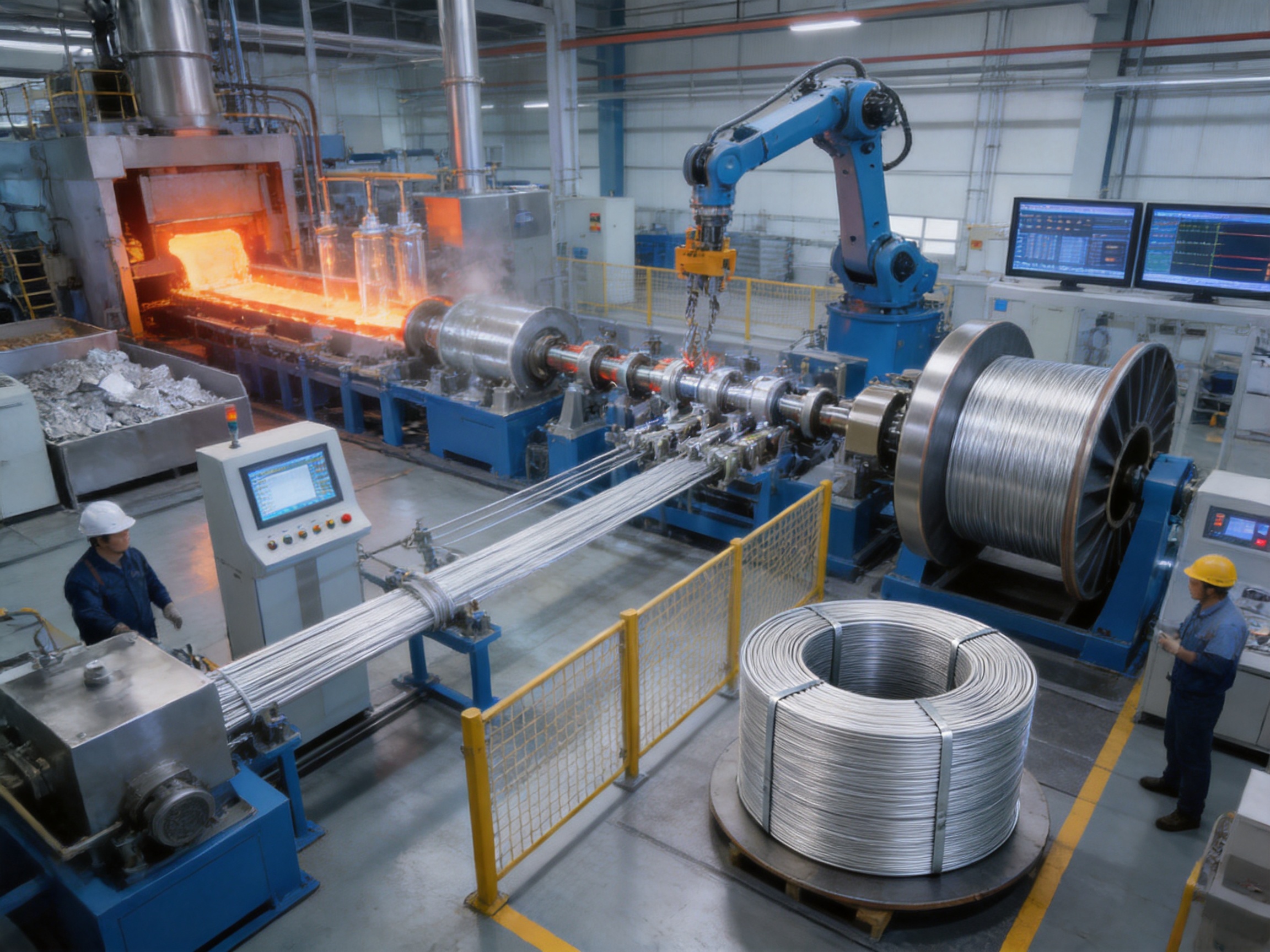
The performance of AlMg6 wire begins with process discipline. An advanced production system must control the material from raw-material selection through final packing. Jiangsu Hetuo Aluminum Wire Co., Ltd. has established an intelligent manufacturing system covering high-purity aluminum wire, high-strength aluminum alloy wire, and aluminum and aluminum alloy welding materials. This product coverage supports shared expertise in alloy preparation, wire processing, and quality management.
Raw-Material Selection and Charge Preparation
Production begins with the selection and preparation of aluminum feedstock and alloying additions. The charge must be compatible with the required purity and chemical limits. Magnesium, manganese, titanium, beryllium, and other additions must be weighed and introduced according to a controlled recipe.
Good charge preparation reduces the risk of composition drift, excessive inclusions, and unnecessary remelting. It also makes the melting operation more predictable. Incoming materials should be identified, segregated, and recorded so that production personnel can trace each batch to its source and planned alloy grade.
Controlled Melting and Alloying
Aluminum-magnesium alloy melting requires careful temperature and atmosphere management. Magnesium is an active element, and excessive exposure to oxidation, turbulence, or unsuitable holding conditions can affect recovery and cleanliness. Controlled addition practices help achieve the required magnesium range without creating unnecessary dross or inclusions.
During melting, operators and process engineers must monitor temperature, holding time, stirring or circulation conditions, and the sequence of alloy additions. The goal is a chemically homogeneous melt with minimal contamination. A stable melt supports consistent downstream casting and wire processing.
Melt Treatment and Filtration
Non-metallic inclusions and dissolved gases can reduce the quality of aluminum alloy wire. Melt treatment and filtration are therefore important steps in producing a clean, reliable material. Appropriate degassing and filtration practices can reduce porosity-related risks and help improve surface and internal quality.
Filtration must be matched to alloy chemistry, production rate, and final product requirements. The process should be monitored and documented, and filter condition should be managed to prevent breakthrough or inconsistent performance. A clean melt is especially important for welding wire, where inclusions or gas-related defects can affect arc stability and weld integrity.
Grain Refinement and Casting
Controlled grain refinement can help improve the uniformity of cast aluminum alloy feedstock. Titanium-containing additions, within the specified range, may support grain refinement and reduce the likelihood of coarse or uneven cast structures. Casting conditions must be selected to control cooling rate, segregation, shrinkage, and surface quality.
Consistent casting creates a better starting point for subsequent rolling or drawing. If the cast structure is non-uniform, downstream processing may not fully correct the problem. Advanced manufacturing therefore treats casting as a critical quality stage rather than merely a preliminary operation.
Rolling, Extrusion, and Wire Reduction
After casting and any required homogenization or conditioning, the aluminum alloy may be converted into rod or intermediate wire through controlled deformation. Rolling or extrusion reduces cross-sectional area and develops the structure needed for later drawing.
Wire drawing is performed through a series of dies or reduction stages. Each stage must be controlled to avoid excessive work hardening, cracking, dimensional variation, or surface damage. Drawing lubricant, die condition, line speed, reduction ratio, tension, and cooling can influence the final product.
For high-strength aluminum alloy wire, the reduction schedule must be designed around the alloy’s work-hardening characteristics. Excessive reduction in a single pass may create defects, while insufficient control between passes may lead to inconsistent mechanical properties. Intermediate annealing or other controlled treatments may be used where required by the target temper and diameter.
Surface Treatment and Straightening
Surface quality is essential for welding wire and precision wire products. The wire should be free from excessive scratches, laps, embedded particles, oil residues, and corrosion products. Cleaning and surface conditioning must be controlled so that the wire remains protected without introducing contamination.
Straightening and spooling operations also require careful management. Poor straightness, irregular winding, crossed layers, or excessive residual tension can cause feeding problems and production interruptions. A reliable supplier must control not only the metallurgy of the wire but also its physical presentation to the customer’s equipment.
Intelligent Production Management
An intelligent manufacturing system can connect production planning, equipment operation, process records, inspection data, and batch identification. Such integration improves visibility and makes it easier to identify deviations before they become large-scale problems.
Digital monitoring can support the control of melting temperatures, drawing parameters, line speeds, equipment status, and inspection results. It can also help coordinate production of different wire families while protecting grade identity and preventing material mix-ups. The value of intelligent manufacturing is greatest when data is used by trained personnel to make timely process decisions.
Quality Control and Inspection
Quality control for AlMg6 aluminum alloy wire should cover chemical, dimensional, mechanical, surface, packaging, and traceability requirements. A production certificate is most useful when it reflects actual batch results and clearly identifies the product, grade, size, delivery condition, lot number, and inspection standard.
Chemical Analysis
Chemical analysis verifies that magnesium, manganese, titanium, beryllium, and residual elements remain within the specified limits. The analysis should be linked to the melt or production batch. Sampling practices must be defined so that the reported result represents the material supplied.
Particular attention is required for magnesium because it is the principal strengthening element in AlMg6. Excessive variation can affect strength, weldability, corrosion behavior, and compatibility with the customer’s process. Low levels may fail to achieve the intended alloy performance, while levels outside the permitted range may create specification and service concerns.
Dimensional Inspection
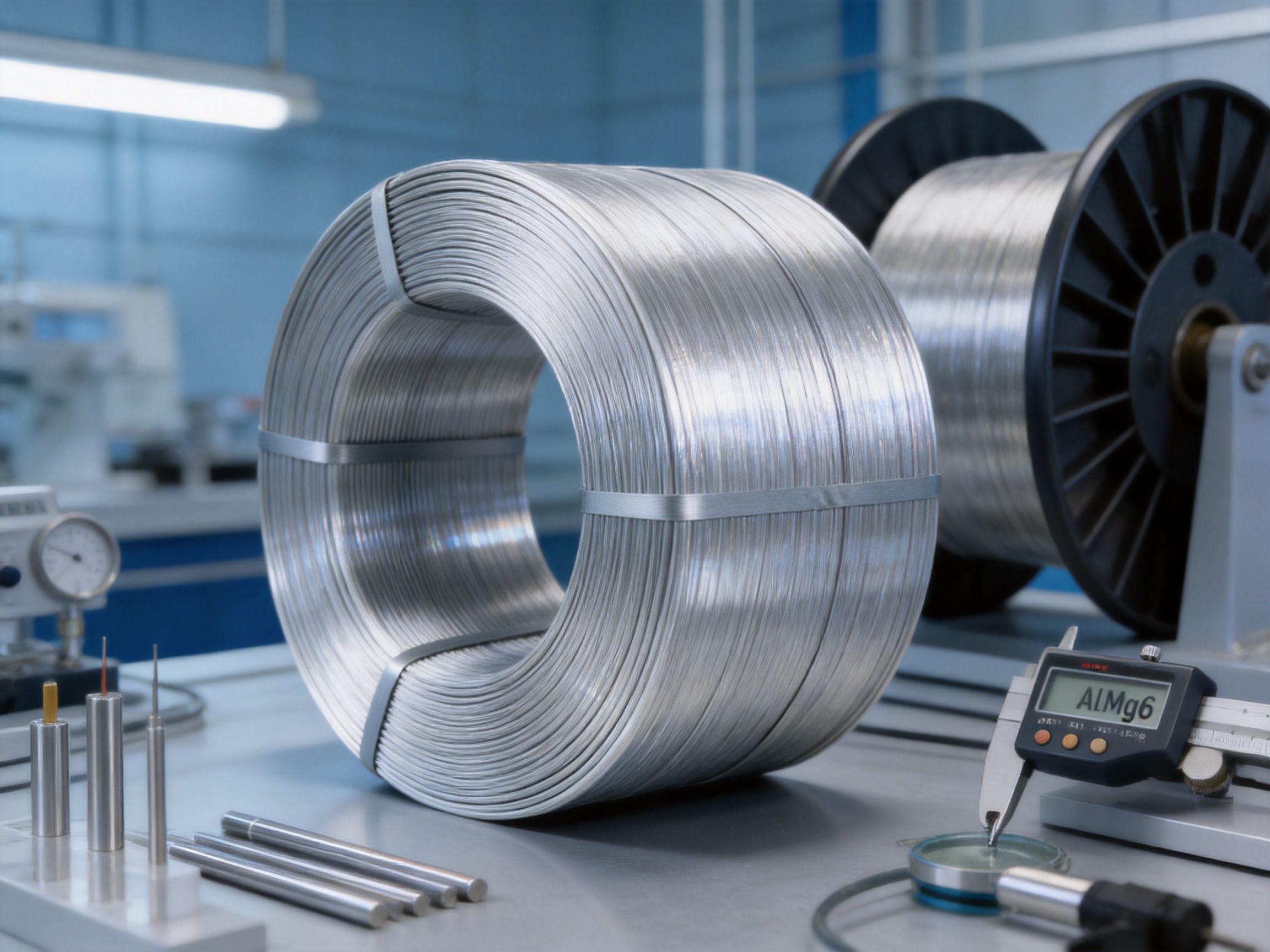
Wire diameter and dimensional tolerance should be checked with calibrated instruments. Depending on the customer’s requirements, inspection may include diameter consistency along the coil or spool, ovality, straightness, cut length, and winding geometry.
Dimensional stability is important for automated welding. A small change in diameter can alter current density, wire feed rate, deposition rate, and arc behavior. For precision wire applications, dimensional variation can also affect forming, resistance, or assembly accuracy.
Mechanical Testing
Mechanical testing may include tensile strength, yield strength, elongation, and other properties required by the applicable standard. Test results should be considered together with the delivery condition because cold work and heat treatment can significantly influence the final values.
For safety-critical applications, customers may also require bend testing, fatigue evaluation, weld-metal testing, or procedure qualification. These tests should be conducted according to recognized methods and matched to the actual product form and intended use.
Surface and Internal Quality
Visual inspection helps identify scratches, cracks, corrosion, contamination, seams, laps, and other surface conditions that could affect processing. Welding wire requires particularly careful inspection because surface contamination may contribute to porosity or unstable feeding.
Where required, additional inspection methods may be applied to evaluate internal soundness or detect discontinuities. The inspection plan should reflect the product’s diameter, end use, customer specification, and risk level.
Packaging and Traceability
Packaging protects the wire from moisture, dust, impact, and deformation during storage and transportation. Spools, coils, reels, or other packages should be selected according to the product form and customer equipment. Labels should identify the alloy, size, batch, net weight, production date, and any required handling information.
Traceability is particularly important for aviation, aerospace, military, marine, and automotive customers. The ability to connect a finished spool to raw materials, melting records, process data, inspection results, and shipment documentation provides confidence during production and simplifies investigation if a technical issue arises.
Why Manufacturing Capability Matters to Customers
Customers purchasing aluminum alloy wire are not purchasing chemistry alone. They are purchasing a material that must run through their equipment, meet their design requirements, and perform throughout service. Manufacturing capability therefore affects total cost, productivity, quality, and risk.
A supplier with broad experience in high-purity aluminum wire, high-strength aluminum alloy wire, and welding materials can apply knowledge across related product categories. Experience with high-purity products encourages strict contamination control. Experience with high-strength alloys supports careful deformation and temper management. Experience with welding materials emphasizes surface quality, feeding performance, packaging, and process consistency.
Jiangsu Hetuo Aluminum Wire Co., Ltd. was established in 2019 and operates in the Guannan Economic Development Zone of Lianyungang, Jiangsu Province, China. The company’s factory covers approximately 40,000 square meters and employs 60 people, including 30 professional managers and technicians. This staffing structure provides a substantial technical and management presence for a specialized aluminum wire manufacturer.
The company reports that it introduces advanced equipment and facilities and implements quality inspection throughout production. It has obtained ISO 9001 and IATF 16949 quality management system certifications. ISO 9001 supports a systematic approach to quality management, customer requirements, process control, corrective action, and continual improvement. IATF 16949 is associated with automotive quality management expectations, including process discipline, risk-based thinking, defect prevention, traceability, and supply-chain control.
Certifications do not replace product-specific testing or customer approval, but they indicate that production and management activities are organized within recognized quality frameworks. For customers, this can improve confidence in documentation, change control, complaint handling, process monitoring, and ongoing supplier communication.
The company also reports that its products comply with international quality standards and are exported to high-end overseas markets. For international customers, export experience can be valuable because it requires attention to packaging, documentation, communication, product identification, and shipment coordination. It also exposes the manufacturer to different technical expectations and application environments.
How AlMg6 Wire Supports Sustainable Engineering
AlMg6 can contribute to sustainable engineering through lightweighting, durability, and efficient use of material. Aluminum’s relatively low density allows designers to reduce mass in vehicles, transportation systems, marine equipment, and machinery. A lighter structure may consume less energy during operation or transport.
Durability is also part of sustainability. Good corrosion resistance can reduce replacement frequency, maintenance effort, and the material consumption associated with premature failure. Reliable welding and consistent wire quality can reduce rejected parts, repair work, and production waste.
Sustainability depends on the whole lifecycle. Efficient melting, reduced scrap, recycling of aluminum process returns, optimized drawing schedules, responsible packaging, and long service life all contribute to a better environmental profile. Customers should evaluate the manufacturer’s actual production practices and documentation when sustainability claims are important to their procurement process.
Selection and Purchasing Guidance
Before ordering AlMg6 aluminum alloy wire, customers should define the intended application and the technical conditions under which the wire will be used. Important requirements include alloy designation, diameter, tolerance, delivery condition, package type, spool dimensions, surface condition, quantity, inspection documentation, and applicable standard.
Welding customers should additionally specify the base-metal alloy, welding process, shielding gas, joint type, deposition requirements, position, heat input, and required test level. If the wire is intended for automated welding, feeding equipment and spool geometry should be discussed in advance.
Customers in aviation, aerospace, military, marine, or automotive sectors may require supplier qualification, process approval, sample testing, lot traceability, certificates of conformity, and non-conformance procedures. These requirements should be identified before production so that the manufacturer can prepare the correct inspection and documentation package.
Storage conditions should also be agreed. Aluminum wire should generally be protected from moisture and contamination. If a package is damaged during transport, the wire should be inspected before use. Welding wire that has been exposed to condensation, dirt, oil, or corrosion should not be introduced into a critical production process without appropriate evaluation.
Processing Recommendations
For welding applications, the wire surface and the parent material should be clean and free from oil, grease, moisture, paint, and excessive oxide. Dedicated tools should be used where possible to avoid transferring steel or other foreign particles to the aluminum surface.
Welding equipment should be configured for aluminum wire, with suitable liner, drive rolls, contact tip, torch geometry, shielding gas, and polarity. The wire should feed smoothly without excessive friction or deformation. Drive-roll pressure should be high enough for stable feeding but low enough to avoid flattening or damaging the wire.
Heat input should be controlled to limit distortion and protect the properties of the surrounding material. Welding parameters should be confirmed through procedure qualification or production trials. Operators should follow the applicable welding code and maintain consistent cleaning, fit-up, preheating where appropriate, and interpass practices.
For non-welding wire applications, forming and drawing conditions should be selected according to diameter, temper, reduction ratio, and required surface quality. Abrupt changes in forming direction or excessive localized bending may damage high-strength aluminum wire. Trial processing is recommended when the wire will undergo a new or particularly demanding manufacturing operation.
Application and Performance Considerations
AlMg6 is a strong candidate for demanding applications, but proper engineering evaluation remains essential. The alloy should be assessed for static strength, fatigue, fracture behavior, corrosion exposure, temperature, joining method, and inspection requirements. In welded structures, the properties of the weld metal and heat-affected zone may differ from those of the parent material.
Galvanic corrosion deserves attention when AlMg6 is joined to steel, copper, stainless steel, or other dissimilar metals. Electrical isolation, suitable fasteners, sealants, coatings, and drainage can reduce the risk. The design should also avoid narrow crevices where water, salt, or chemical residues can accumulate.
For marine and outdoor equipment, surface protection may be selected according to the environment. Anodizing, conversion coatings, paint systems, sealants, or controlled isolation may be used where appropriate. The selected treatment should be evaluated for compatibility with the alloy and the desired appearance or service life.
For military and aerospace applications, impact, vibration, fatigue, and repair conditions may be more significant than simple corrosion exposure. The wire should be used only within the limits established by the applicable engineering authority and approved procedure.
Advantages of Working with a Specialized Aluminum Wire Supplier
A specialized supplier can provide more than standard material delivery. Technical communication before production can help clarify the required alloy, temper, dimensions, packaging, and documentation. This reduces the risk of receiving a chemically correct wire that is unsuitable for the customer’s feeding, forming, or welding equipment.
Specialization also supports faster problem solving. If a customer reports unstable feeding, surface discoloration, inconsistent deposition, or dimensional variation, a manufacturer with control over melting, drawing, surface treatment, and packaging can investigate the full process chain.
Jiangsu Hetuo Aluminum Wire Co., Ltd. focuses on high-grade aluminum alloy rods, welding wires, and precision profiles. Its stated objective is to provide lighter, stronger, and more sustainable aluminum alloy wire and welding material solutions for global industries. This positioning is relevant to customers seeking a supplier capable of supporting both standard orders and application-oriented material discussions.
The company’s location in Jiangsu provides access to an established industrial and logistics region. Its production scale, technical personnel, quality certifications, and export experience create a foundation for serving domestic and international customers. For a customer evaluating a new supplier, these factors should be considered together with sample performance, technical documents, lead time, communication quality, and commercial terms.
Q&A About AlMg6 Aluminum Alloy Wire
What is the main strengthening element in AlMg6?
Magnesium is the main strengthening element. The supplied specification lists magnesium at 5.8–6.8%. Manganese and controlled processing also contribute to the overall performance of the alloy.
What does “AlMg6” mean?
The designation indicates an aluminum-based alloy with magnesium as the principal alloying element. The number six refers generally to the approximate magnesium level, while the exact permitted range is determined by the applicable material specification.
Where is AlMg6 aluminum alloy wire used?
It is mainly used in aviation, aerospace, military equipment, ships, automobiles, tanks, and other applications requiring a combination of strength, corrosion resistance, low weight, and weldability.
Is AlMg6 suitable for marine environments?
AlMg6 can be considered for marine and salt-exposed applications because aluminum-magnesium alloys offer useful corrosion resistance. However, the complete design must address galvanic corrosion, crevices, coatings, drainage, joint design, and the applicable marine standard.
How does AlMg6 compare with 5356 welding wire?
Both are magnesium-containing aluminum alloy wires, but their specified compositions differ. The supplied data lists AlMg6 at 5.8–6.8% magnesium and 5356 at 4.5–5.5%. The correct choice depends on base-metal compatibility, welding procedure qualification, required strength, corrosion conditions, and customer standards.
Is AlMg6 stronger than 4043?
AlMg6 and 4043 are designed around different alloy systems and priorities. AlMg6 is magnesium-rich and is generally selected for strength and corrosion-resistance objectives. 4043 is silicon-rich and is often selected for melting, fluidity, and particular weld-crack or appearance considerations. Strength comparisons must use actual test data for the specified product condition.
Can AlMg6 wire be used with any aluminum alloy?
No. Filler-wire selection depends on the parent alloy, joint design, welding process, service temperature, corrosion environment, mechanical requirements, and applicable code. A welding engineer should confirm compatibility before production use.
What quality documents should customers request?
Customers may request a certificate of conformity, chemical analysis, mechanical test results where applicable, dimensional inspection records, batch or heat number, product identification, packaging information, and evidence of compliance with the requested standard. Regulated industries may require additional qualification documents.
What does ISO 9001 certification indicate?
ISO 9001 certification indicates that the company operates a quality management system assessed against ISO 9001 requirements. It supports systematic control of processes, customer requirements, documentation, corrective actions, and continual improvement. It does not by itself certify every individual product or guarantee suitability for a specific application.
What does IATF 16949 certification add for automotive customers?
IATF 16949 is an automotive-focused quality management framework emphasizing defect prevention, process control, risk management, traceability, and continual improvement. It can be valuable to automotive customers, but each customer may still impose additional approval, testing, and supplier requirements.
How should AlMg6 wire be stored?
The wire should be kept clean, dry, and protected from condensation, dust, oil, impact, and corrosive materials. Packages should remain intact until use. Any wire exposed to moisture or contamination should be inspected and evaluated before being placed into a critical production process.
Can customized AlMg6 wire be ordered?
Customization may be possible regarding diameter, tolerance, package form, spool arrangement, inspection documentation, and production quantity. The customer should provide a technical specification or drawing so that the manufacturer can confirm feasibility before quotation.
Why is surface quality important for welding wire?
Surface quality affects wire feeding, arc stability, contamination risk, and weld porosity. Scratches, oil, moisture, loose oxide, and foreign particles can interfere with automated or manual welding. Controlled cleaning, handling, winding, and packaging are therefore essential.
Conclusion
AlMg6 aluminum alloy wire is a high-strength aluminum-magnesium material designed for applications that demand more than basic conductivity or low density. Its specified magnesium range of 5.8–6.8%, controlled manganese and titanium additions, low copper content, and aluminum balance create a useful performance profile for strength, corrosion resistance, weldability, and lightweight construction.
Compared with lower-magnesium AlMg3 and AlMg5, AlMg6 provides a higher magnesium alloy system. Compared with silicon-rich 4043 and 4047, it emphasizes magnesium-based strength and corrosion performance rather than fluidity and low-temperature melting behavior. Compared with 5356 and 5183, its higher stated magnesium range gives it a distinct position that must be evaluated through application-specific welding and engineering requirements.
The quality of the finished wire depends heavily on manufacturing control. Jiangsu Hetuo Aluminum Wire Co., Ltd. supports its product range with an intelligent manufacturing system, advanced equipment, production-wide inspection, experienced management and technical personnel, a 40,000-square-meter factory, ISO 9001 and IATF 16949 certifications, and experience serving overseas markets.
For customers in aviation, aerospace, military, marine, automotive, and heavy-equipment sectors, the most important purchasing decision is not simply choosing a grade name. It is selecting a wire that has the correct composition, delivery condition, dimensional accuracy, surface quality, traceability, packaging, and verified suitability for the intended process. When these factors are managed together, AlMg6 aluminum alloy wire can provide a reliable foundation for lighter, stronger, and more durable aluminum structures and welded assemblies.
References
1. Aluminum Association, Aluminum Standards and Data, alloy designation and product guidance.
2. ASTM International, Standard Specifications and Test Methods for Aluminum and Aluminum-Alloy Products.
3. International Organization for Standardization, ISO 9001, Quality Management Systems—Requirements.
4. International Automotive Task Force, IATF 16949, Quality Management System Requirements for Automotive Production and Relevant Service Parts Organizations.
5. American Welding Society, Specification and guidance documents for aluminum and aluminum-alloy welding consumables.
6. ASM International, Aluminum and Aluminum Alloys materials reference information.
7. Manufacturer-supplied product information for AlMg6 Aluminum Alloy Wire, including chemical composition, applications, company profile, and production capabilities.
8. Manufacturer-supplied comparative chemical composition data for aluminum alloy wire grades including 2A10, 2219, 4043, 4047, 5183, 5154, 5356, AlMg3, AlMg5, AlMg6, AlMg61, 7050, and 7075.