

 English
 中文简体
中文简体 русский
 Deutsch
Aluminum MIG wire is a critical welding consumable for manufacturers that need clean welds, stable arc performance, efficient deposition, and reliable joint quality across aluminum and aluminum alloy components. As aluminum continues to replace heavier materials in transportation, machinery, electrical equipment, construction, and industrial fabrication, the demand for consistent aluminum welding materials has become more important than ever. MIG wire, especially aluminum and aluminum alloy MIG wire, supports high-productivity welding processes where repeatability, surface quality, and metallurgical reliability are essential.
The MIG Wire described here belongs to the category of aluminum and aluminum alloy welding materials. It is mainly used for melting electrode argon arc welding, a process in which the wire serves as the consumable electrode and filler metal while an inert shielding gas protects the weld pool from atmospheric contamination. For aluminum, this shielding is especially important because molten aluminum reacts easily with oxygen, hydrogen, and other contaminants. A well-manufactured MIG wire can help welders obtain smoother feeding, more stable arc behavior, cleaner bead formation, and stronger final welds.
Jiangsu Hetuo Aluminum Wire Co., Ltd. is positioned as a specialized manufacturer of aluminum wire, aluminum alloy wire, high-purity aluminum wire, high-strength aluminum alloy wire, and aluminum/aluminum alloy welding materials. Established in 2019 and located in the Economic Development Zone of Guannan County, Lianyungang City, Jiangsu Province, China, the company has developed an intelligent manufacturing system and a quality-oriented production philosophy. With a factory covering 40,000 square meters and a team of 60 employees, including 30 professional managers and technicians, the company combines equipment investment, process discipline, and quality inspection to serve high-end industrial markets.
For buyers of aluminum MIG wire, the difference between an ordinary consumable and a reliable industrial-grade wire is not limited to the wire diameter or packaging. It is determined by alloy consistency, surface cleanliness, wire cast and helix, feeding stability, spooling quality, tensile uniformity, moisture control, and quality traceability. These factors directly affect welding productivity and the final quality of welded structures. When wire feeding is smooth, the arc is consistent and the operator can maintain steady travel speed. When the chemical composition is controlled, the weld metal has predictable mechanical properties and corrosion resistance. When the surface is clean and properly finished, porosity risk can be reduced and weld appearance can be improved.
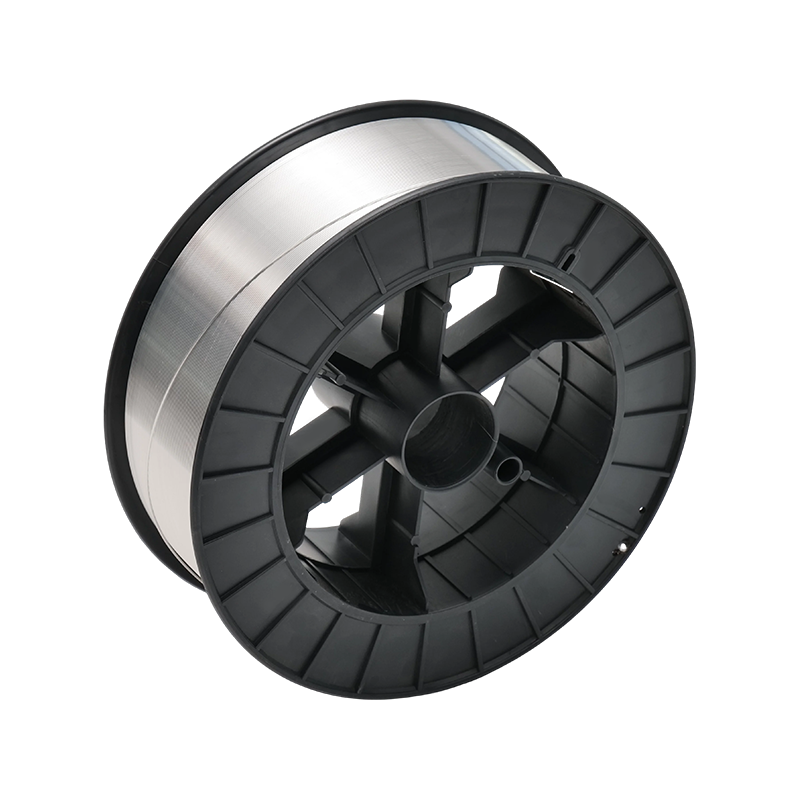
MIG Wire
Content
- 1 Understanding Aluminum MIG Wire and Its Role in Modern Welding
- 2 Key Product Advantages
- 3 Advantages Over Ordinary Competitor Products
- 4 Manufacturing Strength Behind the Product
- 5 Process Control from Raw Material to Finished Wire
- 6 How High-Quality MIG Wire Improves Welding Results
- 7 Application Areas and Industrial Value
- 8 Why Supplier Capability Matters
- 9 Quality Certifications and Their Practical Meaning
- 10 Technical Considerations for Selecting Aluminum MIG Wire
- 11 Operational Benefits for Fabricators
- 12 Sustainability and the Future of Aluminum Welding Materials
- 13 Company Strengths Supporting Global Customers
- 14 Practical Recommendations for Users
- 15 Q&A Section
- 15.1 What is the main use of this MIG Wire?
- 15.2 Why is aluminum MIG wire quality so important?
- 15.3 How does this product differ from ordinary low-cost welding wire?
- 15.4 What company capabilities support the quality of the wire?
- 15.5 Can this MIG wire be used in automated welding?
- 15.6 What should users do to prevent porosity in aluminum MIG welding?
- 15.7 Why are ISO 9001 and IATF 16949 certifications meaningful for buyers?
- 15.8 What industries may benefit from high-quality aluminum MIG wire?
- 16 Conclusion
- 17 References
- 18 Product: MIG Wire
Understanding Aluminum MIG Wire and Its Role in Modern Welding
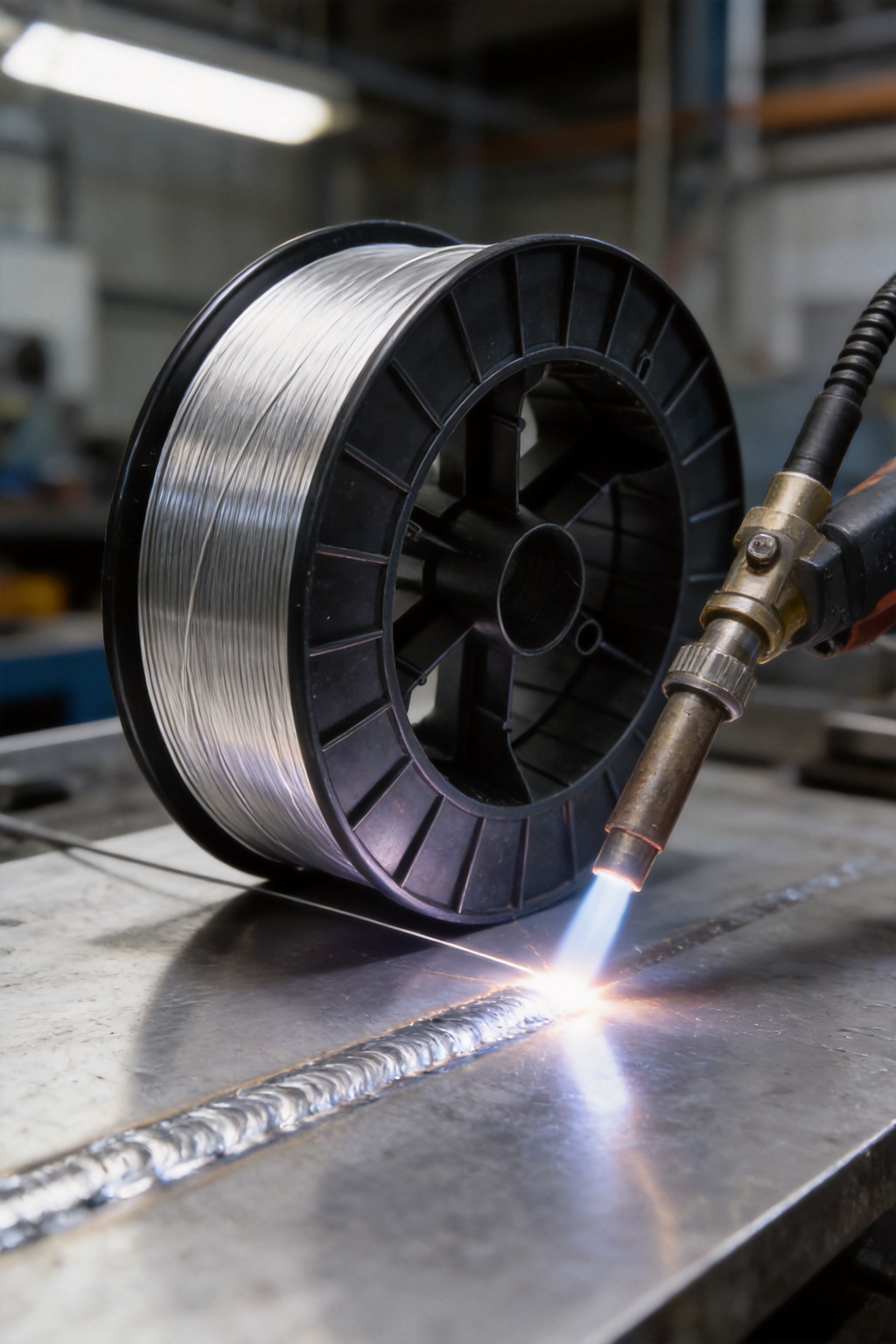
MIG welding, commonly associated with gas metal arc welding, uses a continuously fed wire electrode to create the weld. In aluminum welding, inert gas such as argon is commonly used to protect the welding zone. The product described as MIG Wire is mainly used for melting electrode argon arc welding, meaning it supports a process where the consumable aluminum wire melts into the weld pool while an argon atmosphere helps prevent oxidation and contamination.
Aluminum welding presents unique challenges compared with carbon steel welding. Aluminum has high thermal conductivity, a relatively low melting point, and a persistent oxide layer on its surface. The oxide layer melts at a much higher temperature than the base aluminum, which means improper preparation or unsuitable wire quality can lead to lack of fusion, inclusions, unstable arc behavior, or poor bead appearance. Therefore, aluminum MIG wire must be manufactured with careful control of composition, surface condition, and mechanical characteristics.
In industrial welding, the wire must travel from the spool through liners, drive rolls, contact tips, and torch assemblies without bird-nesting, shaving, irregular friction, or deformation. Aluminum is softer than steel, so poor wire uniformity can quickly create feeding problems. A premium aluminum MIG wire should have controlled diameter tolerance, smooth surface finish, stable winding, appropriate stiffness, and consistent metallurgical properties. These features help operators reduce downtime, improve welding rhythm, and obtain repeatable welds.
Because aluminum is widely used in lightweight structures, pressure-resistant assemblies, electrical components, machinery frames, rail transit parts, automotive systems, marine products, and general fabrication, welding consumables must support both performance and efficiency. MIG wire is often selected because it allows continuous welding, higher deposition rate than many manual processes, and compatibility with automated or semi-automatic welding systems. When the wire is consistent, fabricators can integrate it into robotic welding cells, production lines, and precision assembly operations with greater confidence.
Key Product Advantages
The competitive value of high-quality aluminum MIG wire is best understood by considering how it performs throughout the entire welding cycle. A wire that looks acceptable on the spool may still create problems if the alloy chemistry is inconsistent, if the surface contains residue, if the winding is loose, or if the wire is too soft for stable feeding. The MIG Wire offered within the aluminum and aluminum alloy welding materials category is designed to address these practical needs by emphasizing process reliability and welding performance.
One important advantage is stable arc performance. In MIG welding, arc instability can cause spatter, inconsistent penetration, lack of fusion, or excessive operator correction. Aluminum welding already requires attention to heat input and cleaning, so the wire must not add uncertainty to the process. A well-produced wire supports steady electrical contact, uniform melting, and consistent transfer characteristics, which help welders maintain bead profile and minimize defects.
Another advantage is improved feedability. Aluminum wire is vulnerable to bending, shaving, and compression under drive roll pressure. If the wire has inconsistent hardness, poor cast, or rough surface quality, it may feed unevenly or jam. This increases downtime and wastes consumables. Precision-manufactured MIG wire can move through feeding systems more smoothly, especially in production environments where long welding runs, push-pull torches, or automated systems are used.
Surface cleanliness is also essential. Aluminum wire surface quality influences arc ignition, weld pool cleanliness, and porosity risk. Moisture, oil, dust, oxide residue, and drawing lubricant contamination may contribute to weld defects. A manufacturing process that includes careful drawing, cleaning, inspection, and packaging helps deliver wire that is better suited for demanding industrial use.
In addition, consistent alloy control can provide better predictability in weld metal performance. Aluminum alloy welding wires are selected according to base metal, service conditions, required strength, corrosion environment, color match after anodizing, crack sensitivity, and post-weld requirements. If the wire chemistry fluctuates, the weld behavior and final performance may also fluctuate. A reliable producer controls raw material selection and production parameters to support consistent results.
Advantages Over Ordinary Competitor Products
In the welding consumables market, many wires may appear similar by product name, but their manufacturing quality can differ significantly. Ordinary competitor products may focus mainly on low price, while industrial users require low total cost. Total cost includes not only the purchase price of the spool but also wire waste, machine downtime, rework, defect repair, operator productivity, inspection failure rate, and customer satisfaction. A premium aluminum MIG wire can reduce hidden welding costs by improving process stability.
Compared with low-grade or inconsistent wire, a carefully manufactured MIG wire can offer more reliable feeding. In real production, feeding problems can interrupt welding, damage contact tips, cause burnback, or require operators to stop and adjust equipment. Every interruption affects productivity. Consistent wire diameter, controlled mechanical properties, and proper winding allow the wire to run more smoothly through feeding mechanisms. This is especially valuable for factories that use automated welding, where wire-related stoppages can interrupt an entire production cell.
Another competitive advantage is quality traceability. In industries where welding quality is audited or documented, users need confidence that consumables come from a controlled manufacturing system. Jiangsu Hetuo Aluminum Wire Co., Ltd. has obtained ISO 9001 and IATF 16949 quality management system certifications. These certifications indicate a commitment to systematic quality control, documentation, continuous improvement, and process discipline. For customers, this means the wire is supported by a manufacturer that understands industrial quality expectations.
Competitors without strong process control may produce wire with inconsistent surface conditions. Aluminum welding is sensitive to contamination, and even small variations can influence porosity or bead appearance. Advanced manufacturing and inspection help reduce this risk. By applying quality inspection throughout production, the company aims to ensure that wire shipped to customers meets international quality standards and performs reliably in demanding applications.
In addition, the company’s broader product structure gives it an advantage. It produces high-purity aluminum wire, high-strength aluminum alloy wire, and aluminum/aluminum alloy welding materials. This integrated focus allows technical knowledge from one product group to support another. Expertise in alloy wire production, purity control, drawing technology, and material handling can improve the development and manufacturing of MIG wire. A manufacturer deeply engaged in aluminum wire technology is better positioned than a general trading supplier or a low-specialization producer.
Manufacturing Strength Behind the Product
A high-quality aluminum MIG wire begins long before the wire is placed on a spool. Manufacturing involves material selection, alloy preparation, rod processing, surface preparation, drawing, heat treatment or property control when applicable, cleaning, spooling, inspection, and packaging. Each stage influences the final welding experience. If any stage is poorly controlled, the wire may still meet basic appearance requirements but fail under real welding conditions.
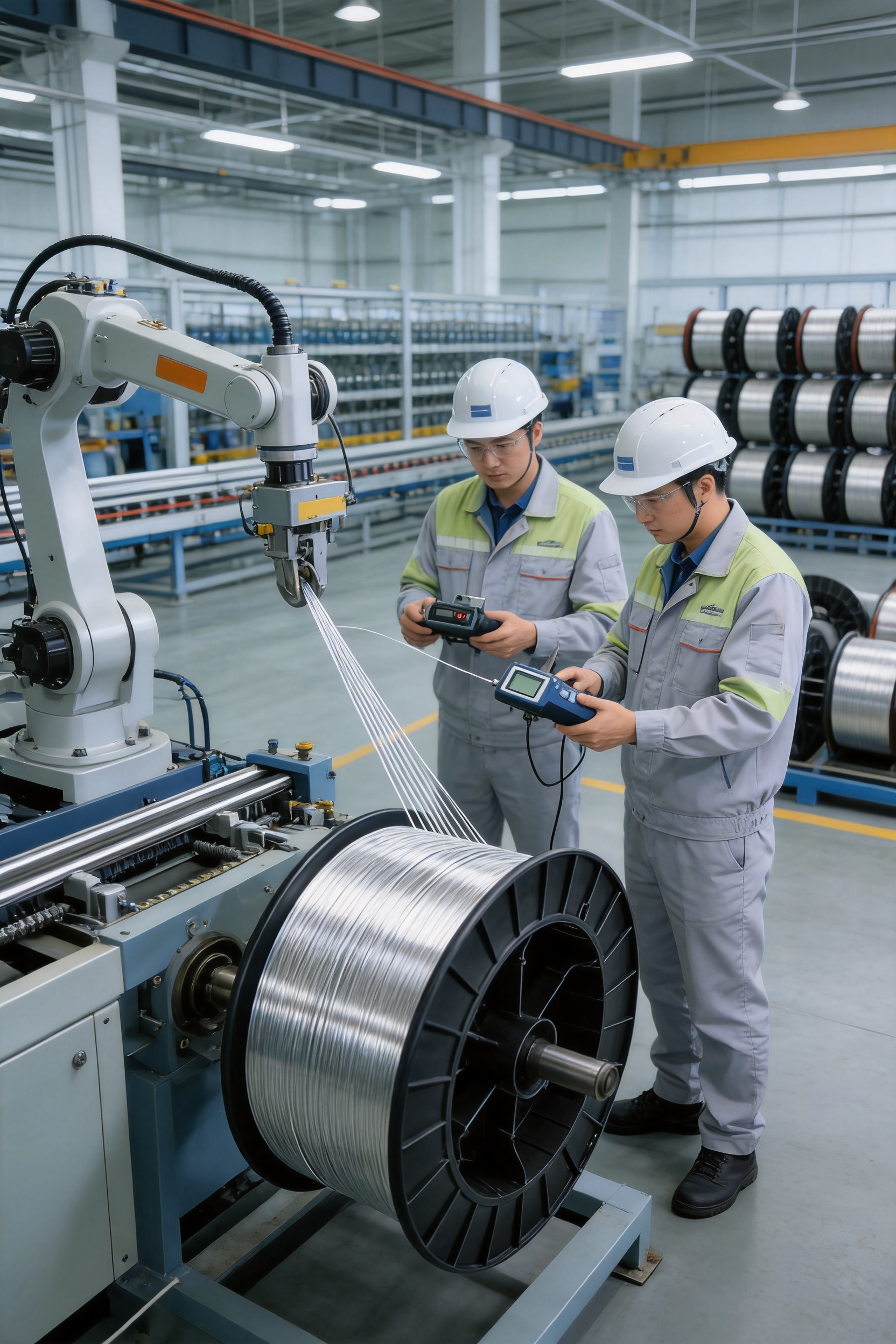
Jiangsu Hetuo Aluminum Wire Co., Ltd. has built an intelligent manufacturing system covering high-purity aluminum wire, high-strength aluminum alloy wire, and aluminum/aluminum alloy welding materials. Intelligent manufacturing in this context means more than equipment automation; it reflects a structured approach to process control, production consistency, inspection, and continuous improvement. The company introduces advanced equipment and facilities, strictly implements quality inspection throughout production, and aligns product quality with international standards.
The factory’s 40,000-square-meter production base provides the space required for organized manufacturing flow, storage, inspection, and process separation. For aluminum wire production, workshop organization matters because contamination prevention, handling discipline, and controlled storage can affect the final product. Clean handling of wire surfaces is particularly important for welding materials. A factory designed around industrial production requirements can better manage materials from incoming rod to outgoing packaged wire.
The company’s team structure also supports manufacturing reliability. Among 60 employees, 30 are professional managers and technicians. This ratio indicates a strong technical and managerial emphasis relative to total workforce size. For precision materials, experienced technicians and quality managers are essential. They control production parameters, monitor equipment, analyze inspection results, address customer feedback, and improve process stability. Welding wire production is not merely a mechanical operation; it is a technical discipline requiring metallurgical awareness and process sensitivity.
Quality management certifications further support the product’s credibility. ISO 9001 provides a framework for quality management, customer focus, process control, and continual improvement. IATF 16949, widely recognized in the automotive supply chain, emphasizes defect prevention, variation reduction, traceability, and disciplined production systems. For aluminum MIG wire buyers, especially those serving automotive, transportation, or high-reliability industries, these certifications can help reduce supplier risk.
Process Control from Raw Material to Finished Wire
The first step in producing dependable aluminum MIG wire is selecting appropriate aluminum or aluminum alloy raw materials. The chemical composition must match the intended wire grade and welding application. Aluminum alloys can include elements such as magnesium, silicon, manganese, copper, or zinc depending on the series and performance target. Even when the exact grade is determined by customer requirements, the principle remains the same: composition must be controlled to support weldability and final performance.
After raw material control, rod processing and wire drawing transform the material into precise wire diameters. Drawing reduces the cross-section through dies while influencing surface finish, mechanical properties, and dimensional stability. Poor die condition, unsuitable lubrication, or uncontrolled drawing parameters can create scratches, residue, uneven hardness, or diameter variation. Advanced equipment and disciplined process monitoring are therefore essential.
Surface treatment and cleaning are central to welding wire quality. Unlike some structural wires, welding wire becomes part of the weld metal, so any contamination on its surface can enter the weld pool. Oil, lubricant, moisture, dust, or excessive oxide may increase porosity risk or arc instability. The company’s emphasis on quality inspection throughout production supports the need for clean, consistent wire surfaces.
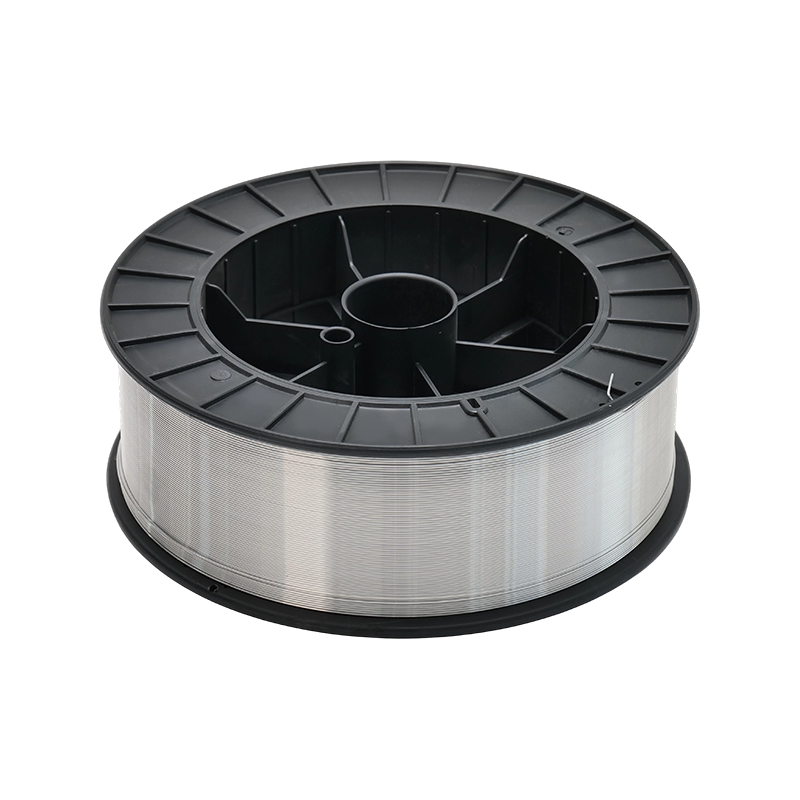
Spooling is another important stage that is sometimes underestimated. A high-quality wire can perform poorly if it is wound unevenly. Proper spooling ensures the wire pays off smoothly without tangling, sudden tension changes, cross-over problems, or feeding interruptions. For MIG welding, consistent payout helps maintain arc stability. Industrial users often evaluate wire quality not only by weld appearance but also by how well the spool runs from beginning to end.
Finished product inspection may include checks related to appearance, diameter, surface quality, packaging condition, and relevant mechanical or chemical requirements. While inspection alone cannot replace good production control, it provides confirmation that the wire meets specified requirements before shipment. By implementing inspection throughout production rather than only at the final stage, a manufacturer can detect variation earlier and prevent nonconforming material from moving forward.
How High-Quality MIG Wire Improves Welding Results
Welding quality depends on multiple factors: base metal preparation, shielding gas purity and flow, machine settings, torch angle, travel speed, joint design, operator skill, and filler metal quality. Among these variables, filler metal quality is one of the most important because it directly enters the weld joint. A stable aluminum MIG wire helps transform correct welding procedures into consistent results.
One of the most visible effects is bead appearance. A consistent wire helps create a smoother weld bead with more uniform width and reinforcement. For applications where weld appearance matters, such as visible aluminum assemblies, transportation components, equipment housings, and architectural parts, clean bead formation can reduce finishing work and improve customer acceptance.
Another effect is porosity reduction. Aluminum welds can develop porosity when hydrogen or contaminants become trapped in the solidifying weld metal. While porosity control requires proper cleaning and shielding, wire cleanliness is an important contributor. A wire manufactured with attention to surface condition and packaging can help reduce one source of contamination.
Stable wire feed also supports penetration control. In MIG welding, fluctuations in wire feed speed can affect current and heat input, leading to inconsistent penetration. When the wire feeds smoothly, the welding machine can maintain more stable parameters. This is important for both manual and automated welding operations, especially when parts must pass inspection or meet structural requirements.
In automated production, wire consistency becomes even more important. Robots do not compensate for subtle wire feeding irregularities the same way an experienced welder might. If the wire produces inconsistent arc behavior, the process may generate defects repeatedly until the issue is detected. Using a more reliable wire helps protect automated production from recurring defects and unplanned downtime.
| Performance Factor | Importance in Aluminum MIG Welding | Advantage of a Well-Manufactured MIG Wire |
|---|---|---|
| Diameter consistency | Supports stable electrical contact and wire feed speed | Helps reduce burnback, arc fluctuation, and feeding interruptions |
| Surface cleanliness | Reduces contamination entering the weld pool | Helps lower porosity risk and improves bead appearance |
| Controlled alloy composition | Determines weld metal behavior and mechanical reliability | Provides predictable weld quality and performance |
| Proper spooling | Ensures smooth payout during welding | Reduces downtime caused by tangling or uneven feeding |
| Quality inspection | Confirms compliance with production and customer requirements | Improves confidence for industrial and high-end applications |
| Manufacturing traceability | Supports quality management and problem analysis | Helps customers meet documentation and supplier control needs |
Application Areas and Industrial Value
Aluminum MIG wire is used wherever aluminum and aluminum alloy components require efficient joining. Because the product is mainly used for melting electrode argon arc welding, it is especially relevant for fabricators seeking continuous, high-productivity welding under inert gas protection. Industries that benefit from reliable aluminum welding wire include transportation, machinery, electrical equipment, marine manufacturing, energy systems, construction products, precision profiles, and general industrial fabrication.
In transportation, aluminum is valued for its lightweight properties. Reducing weight can improve fuel efficiency, increase payload capacity, or support new energy vehicle design. Welding materials used in such applications must provide reliable joining performance. Defects such as porosity, lack of fusion, or weak welds can compromise safety and durability. A MIG wire supported by disciplined manufacturing and quality management gives fabricators a stronger foundation for consistent production.
In machinery and equipment manufacturing, aluminum alloys are often selected for corrosion resistance, machinability, weight reduction, and appearance. Welding may be required for frames, housings, brackets, tanks, platforms, and assemblies. Production environments in these industries need consumables that reduce rework and maintain stable output. Smooth-feeding aluminum MIG wire can help operators complete longer welds with fewer interruptions.
Electrical and electronic applications may also require aluminum wire and aluminum alloy materials. While not every aluminum wire application is a welding application, a manufacturer with broad experience in high-purity aluminum wire and alloy wire can bring material control knowledge into welding consumable production. This supports customers who need not only welding wire but also related aluminum wire solutions.
For marine and outdoor structures, corrosion resistance is an important consideration. Aluminum alloys are often used because they resist many environmental conditions better than ordinary steel. Welding consumables must be selected carefully to match the base metal and service environment. Consistent MIG wire helps ensure that the selected filler metal performs as expected and that the weld is not compromised by avoidable contamination or composition variation.
Why Supplier Capability Matters
For many buyers, the supplier’s manufacturing capability is as important as the product itself. Welding wire is consumed continuously, and production stability depends on repeated deliveries of consistent material. A supplier that can only provide occasional acceptable batches may create long-term risk. A supplier with a structured manufacturing system, certified quality management, technical staff, and inspection procedures is more likely to deliver consistent value.
Jiangsu Hetuo Aluminum Wire Co., Ltd. emphasizes customer needs and customer satisfaction. This is important because welding applications vary widely. Some customers may prioritize high-speed production, while others need cleaner bead appearance, stronger mechanical performance, reliable export documentation, or packaging suitable for long-distance transport. A customer-oriented manufacturer can better understand these requirements and provide suitable aluminum alloy wire and welding material solutions.
The company’s location in Lianyungang, Jiangsu Province, China, places it within one of China’s active manufacturing regions. Its address in the Small and Medium-sized Enterprises Park of the Economic Development Zone in Guannan County supports industrial operations and logistics. For global buyers, production location, export experience, and quality standards are practical factors when evaluating suppliers.
The company’s products comply with international quality standards and are exported to many high-end overseas markets. This indicates that its manufacturing and quality control are designed not only for domestic demand but also for international customer expectations. Export markets often require consistent packaging, documentation, communication, and compliance awareness. A welding wire supplier familiar with such requirements can reduce purchasing complexity for overseas customers.
Supplier strength also affects product development. As industries pursue lighter, stronger, and more sustainable aluminum alloy solutions, customers may require improved wires, customized specifications, or tighter quality control. A company that specializes in high-grade aluminum alloy rods, welding wires, and precision profiles can support customers through material expertise and production experience rather than simply offering standard commodity products.
Quality Certifications and Their Practical Meaning
Quality certifications are sometimes viewed as administrative achievements, but in welding consumables they have practical significance. ISO 9001 requires an organization to define processes, control documents, manage customer requirements, evaluate performance, address nonconformities, and pursue continual improvement. For a welding wire manufacturer, this means quality is not left to chance or individual judgment; it is organized through a management system.
IATF 16949 is even more demanding in many respects because it is associated with the automotive sector, where defect prevention and process consistency are critical. Although not every MIG wire customer is in the automotive industry, the principles of IATF 16949 benefit many industrial buyers. These principles include risk analysis, process control, traceability, change management, corrective action, and continuous reduction of variation.
For customers, buying from a certified manufacturer can simplify supplier evaluation. It does not eliminate the need for testing or qualification, but it provides evidence that the supplier has implemented recognized quality management systems. When combined with factory scale, technical personnel, equipment investment, and inspection discipline, certifications strengthen confidence in the product.
In welding, quality failures can be expensive. A defective weld may require grinding, repair welding, reinspection, or scrapping of the entire component. In severe cases, field failure may damage reputation or create safety concerns. Therefore, prevention is far more valuable than correction. A certified manufacturing system supports prevention by controlling variables before they become customer problems.
Technical Considerations for Selecting Aluminum MIG Wire
Selecting aluminum MIG wire should be based on base metal type, joint requirements, service conditions, welding process, and production environment. Although the specific wire grade is not identified here, the general selection principles are important for users. The filler metal should be compatible with the base material and the expected performance requirements of the welded assembly.
For aluminum alloys, weldability can vary significantly by alloy family. Some alloys are readily weldable, while others require special filler selection or may not be suitable for fusion welding without careful procedure development. The welding wire must be chosen to reduce crack sensitivity, achieve required strength, and support corrosion resistance. Technical consultation with the supplier can help customers choose the proper aluminum or aluminum alloy MIG wire for their application.
Wire diameter is another key factor. Smaller diameters may be suitable for thinner materials or lower current ranges, while larger diameters support higher deposition rates and thicker sections. The welding machine, torch system, liner, drive rolls, and contact tips must be matched to the wire diameter. Even premium wire may perform poorly if the welding equipment is not set up correctly.
Shielding gas selection is also essential. Since the product is mainly used for melting electrode argon arc welding, argon shielding is central to its application. Gas purity, flow rate, nozzle condition, and protection from drafts all influence weld quality. Contaminated or inadequate shielding can cause porosity and oxidation even when the wire itself is high quality.
Storage and handling should not be overlooked. Aluminum welding wire should be protected from moisture, dust, oil, and physical damage. Spools should remain packaged until use and should be stored in a clean, dry environment. If wire is moved from a cold area to a warm humid shop, condensation should be avoided. Proper storage helps preserve the surface quality created during manufacturing.
Operational Benefits for Fabricators
For fabricators, the strongest reason to choose a higher-quality MIG wire is improved production economics. A low-cost wire that causes frequent stops, inconsistent welds, or rework may be more expensive in the long run. The best consumable is not necessarily the cheapest spool; it is the wire that supports stable welding, efficient labor use, and reliable finished products.
Reduced downtime is one of the clearest operational benefits. Feeding interruptions, wire tangles, and arc instability consume operator time and disrupt workflow. In high-volume production, even small interruptions repeated many times can create significant losses. A MIG wire with consistent winding, diameter, and surface finish helps reduce these interruptions.
Improved welder confidence is another benefit. Welders quickly recognize whether a wire feeds smoothly and produces a stable arc. When the consumable is predictable, operators can focus on technique, fit-up, and weld quality rather than constantly adjusting parameters. This is particularly helpful when training new welders or maintaining consistent output across multiple shifts.
Better inspection outcomes also improve production efficiency. If welds are more consistent, fewer parts require repair or rejection. This supports on-time delivery and reduces material waste. For customers working with strict inspection standards, a reliable wire can become part of a broader quality assurance strategy.
Finally, better welding materials support brand reputation for downstream manufacturers. Customers judge finished aluminum products by appearance, strength, durability, and reliability. Weld quality is often visible and sometimes structurally critical. By selecting a dependable MIG wire, manufacturers protect the quality of their own products.
Sustainability and the Future of Aluminum Welding Materials
Aluminum plays an important role in lightweight engineering and sustainability. Because aluminum can reduce component weight and is widely recyclable, it is increasingly used in industries seeking energy efficiency and material circularity. Welding materials that support reliable aluminum fabrication contribute to this broader trend. A wire that reduces defects and rework also reduces wasted energy, wasted labor, and wasted material.
Jiangsu Hetuo Aluminum Wire Co., Ltd. states an aim to provide lighter, stronger, and more sustainable aluminum alloy wire and welding material solutions for global industries. This direction aligns with market demand. Customers are looking for materials that not only meet immediate production needs but also support long-term performance, responsible manufacturing, and efficient resource use.
Advanced manufacturing processes contribute to sustainability by improving yield and consistency. When production is controlled, fewer defective batches are produced, less material is wasted, and customers experience fewer welding failures. Quality is therefore not only a technical issue but also a sustainability issue. Reliable wire helps the entire value chain operate more efficiently.
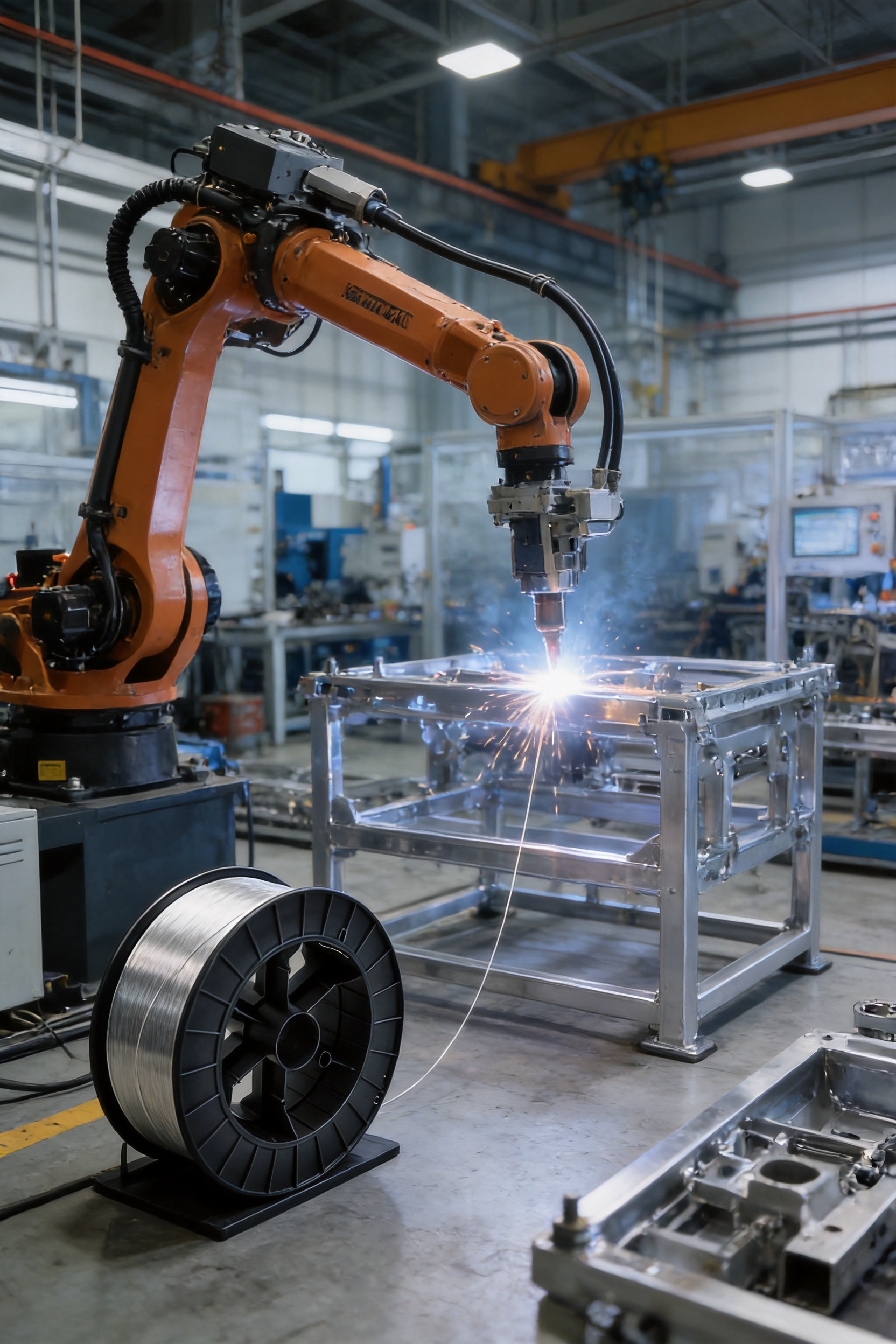
As automated welding grows, the demand for consistent aluminum MIG wire will increase. Robotic systems require consumables that perform predictably over long production cycles. Any variation in wire feed, surface condition, or arc behavior can affect the stability of automated welding. Manufacturers with intelligent production systems and strong quality management are better prepared to support this future.
Company Strengths Supporting Global Customers
Jiangsu Hetuo Aluminum Wire Co., Ltd. brings together several strengths that are relevant to global buyers of aluminum MIG wire. First, it is specialized in aluminum alloy materials rather than treating welding wire as a side product. Specialization matters because aluminum wire production requires knowledge of alloy behavior, drawing processes, surface control, and handling requirements.
Second, the company has invested in a substantial production base. A 40,000-square-meter factory provides manufacturing capacity and supports organized production flow. This scale can help customers who need stable supply, repeat orders, or long-term cooperation. A larger facility also allows room for equipment, inspection areas, storage, and future development.
Third, the company has a technically focused team. With 30 professional managers and technicians among 60 employees, the company demonstrates a strong emphasis on expertise. Technical personnel are essential for process improvement, customer support, quality analysis, and new product development. Their role is especially important when customers require customized requirements or application-specific solutions.
Fourth, the company has obtained ISO 9001 and IATF 16949 certifications. These certifications support confidence in process control and quality management. For customers in regulated or quality-sensitive industries, supplier certification can be a key purchasing consideration. It indicates that the manufacturer is prepared to meet systematic quality expectations.
Fifth, the company’s products are exported to many high-end overseas markets. Export experience suggests that the company understands the importance of international standards, packaging reliability, communication, and customer documentation. For buyers outside China, this experience can make cooperation smoother.
Practical Recommendations for Users
To obtain the best results from aluminum MIG wire, users should combine high-quality consumables with proper welding practices. Before welding, base metal surfaces should be clean and free from oil, dirt, moisture, and heavy oxide. Mechanical cleaning or suitable chemical cleaning may be required depending on the application. Even the best wire cannot fully compensate for contaminated base material.
Equipment setup should be optimized for aluminum wire. Because aluminum is soft, drive roll type and pressure should be chosen carefully. Excessive pressure can deform the wire, while insufficient pressure can cause slipping. Liners should be clean and suitable for aluminum. Contact tips should match the wire diameter and be replaced when worn. Torch cables should be kept as straight as practical to reduce feeding resistance.
Shielding gas should be controlled. Argon purity, flow rate, nozzle size, and torch position influence weld protection. Drafts from fans, doors, or outdoor conditions can disturb shielding gas and cause porosity. Gas hoses and connections should be checked for leaks. A stable shielding environment helps the MIG wire perform as intended.
Welding parameters should be developed through procedure testing. Voltage, wire feed speed, travel speed, torch angle, and stick-out all affect weld quality. For production welding, procedures should be documented and operators should be trained. When switching wire diameter, alloy, machine, or joint design, parameters may need adjustment.
Storage practices should protect wire from contamination. Spools should be stored in original packaging until use, kept dry, and handled with clean gloves when necessary. Opened spools should be protected if not consumed quickly. Good storage preserves the wire’s surface condition and reduces the chance of moisture-related weld problems.
Q&A Section
What is the main use of this MIG Wire?
This MIG Wire is mainly used for melting electrode argon arc welding. In this process, the aluminum wire acts as a continuously fed consumable electrode and filler metal while argon shielding gas protects the molten weld pool from atmospheric contamination.
Why is aluminum MIG wire quality so important?
Aluminum welding is sensitive to surface contamination, wire feeding problems, oxidation, and heat input variation. High-quality MIG wire helps improve arc stability, feeding smoothness, bead appearance, and weld consistency. It can also reduce downtime, rework, and porosity risk when used with proper welding procedures.
How does this product differ from ordinary low-cost welding wire?
A premium aluminum MIG wire is distinguished by controlled alloy composition, clean surface condition, consistent diameter, proper spooling, stable feeding, and systematic quality inspection. Low-cost wire may appear similar but can create hidden costs through feeding interruptions, weld defects, inconsistent arc behavior, and increased rework.
What company capabilities support the quality of the wire?
Jiangsu Hetuo Aluminum Wire Co., Ltd. has a 40,000-square-meter factory, advanced equipment and facilities, a technical and managerial team, and quality inspection throughout production. The company has obtained ISO 9001 and IATF 16949 quality management system certifications, supporting process discipline and product consistency.
Can this MIG wire be used in automated welding?
Aluminum MIG wire is often suitable for semi-automatic and automated welding when the wire specification, equipment, shielding gas, and welding parameters are properly matched. Consistent wire feeding and stable arc behavior are especially valuable in robotic or automated production environments.
What should users do to prevent porosity in aluminum MIG welding?
Users should clean the base metal, protect the wire from moisture and contamination, use high-purity shielding gas, maintain proper gas flow, avoid drafts, and ensure correct welding parameters. Wire cleanliness is important, but porosity prevention also depends on the complete welding environment.
Why are ISO 9001 and IATF 16949 certifications meaningful for buyers?
These certifications show that the manufacturer follows recognized quality management practices. ISO 9001 focuses on systematic quality control and continual improvement, while IATF 16949 emphasizes defect prevention, traceability, and variation reduction. For buyers, this helps reduce supplier risk.
What industries may benefit from high-quality aluminum MIG wire?
Industries such as transportation, automotive manufacturing, rail transit, machinery, marine fabrication, construction products, electrical equipment, and general aluminum fabrication may benefit from reliable MIG wire. Any industry requiring efficient aluminum joining can gain value from stable welding consumables.
Conclusion
Aluminum MIG wire is more than a simple welding consumable. It is a performance-critical material that influences weld quality, production efficiency, operator confidence, inspection results, and final product reliability. For melting electrode argon arc welding, the wire must provide stable feeding, clean melting, controlled alloy performance, and consistent arc behavior. These characteristics depend on disciplined manufacturing and careful quality control.
The MIG Wire described here is supported by the manufacturing strengths of Jiangsu Hetuo Aluminum Wire Co., Ltd., a specialized aluminum wire and aluminum alloy materials producer established in 2019. With an intelligent manufacturing system covering high-purity aluminum wire, high-strength aluminum alloy wire, and aluminum/aluminum alloy welding materials, the company is positioned to serve industrial customers seeking dependable welding solutions. Its 40,000-square-meter factory, technical workforce, advanced equipment, continuous inspection, ISO 9001 certification, and IATF 16949 certification all contribute to product credibility.
Compared with ordinary competitor products, a well-manufactured aluminum MIG wire can reduce hidden costs by improving feedability, arc stability, surface cleanliness, and batch consistency. It can support both manual and automated welding, help reduce rework, and provide the reliability required by high-end industrial applications. For customers seeking lighter, stronger, and more sustainable aluminum alloy joining solutions, choosing the right MIG wire supplier is a strategic decision.
As global industries continue to adopt aluminum for lightweight design, corrosion resistance, and sustainability, the importance of high-quality aluminum welding materials will continue to grow. A reliable MIG wire, produced under advanced manufacturing and quality management systems, gives fabricators the foundation they need to achieve efficient production and dependable weld performance.
References
American Welding Society. Welding Handbook, Volume 2: Welding Processes.
American Welding Society. Specification for Aluminum and Aluminum-Alloy Welding Electrodes and Rods.
International Organization for Standardization. ISO 9001 Quality Management Systems Requirements.
International Automotive Task Force. IATF 16949 Automotive Quality Management System Standard.
Davis, J. R. Aluminum and Aluminum Alloys. ASM International.
Kou, Sindo. Welding Metallurgy. Wiley.
Mathers, Gene. The Welding of Aluminium and Its Alloys. Woodhead Publishing.