

 English
 中文简体
中文简体 русский
 Deutsch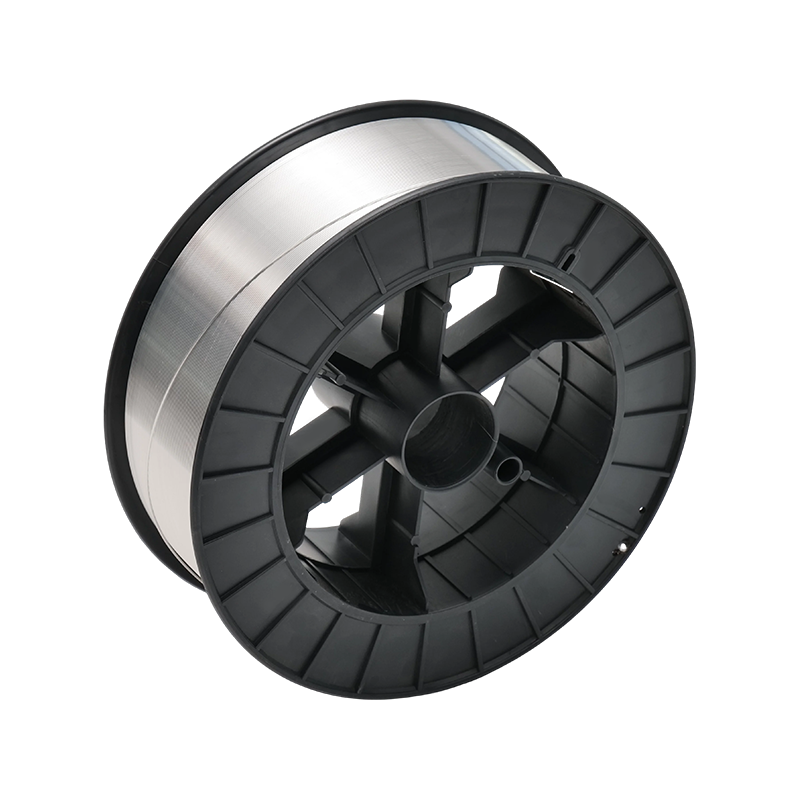
Content
- 1 Introduction: Why MIG Aluminum Welding Wire Matters
- 2 Product Overview: MIG Wire for Aluminum and Aluminum Alloy Welding
- 3 The Role of Melting Electrode Argon Arc Welding
- 4 Key Advantages Over Ordinary MIG Aluminum Wires
- 5 Advanced Manufacturing Strengths Behind the Product
- 6 Manufacturing Process: From Aluminum Material to Precision MIG Wire
- 7 Performance Factors That Define High-Quality MIG Wire
- 8 Applications Across Modern Industries
- 9 Why Company Capability Matters When Choosing Welding Wire
- 10 Quality Control and Inspection Philosophy
- 11 Practical Benefits for Fabricators and Welding Engineers
- 12 Storage, Handling, and Best Use Recommendations
- 13 Sustainability and the Future of Aluminum Welding
- 14 Q&A: Common Questions About MIG Aluminum Welding Wire
- 14.1 What is MIG aluminum welding wire used for?
- 14.2 Why is wire quality so important in aluminum MIG welding?
- 14.3 What advantages does this MIG wire offer compared with ordinary alternatives?
- 14.4 Can this wire be used in automated welding systems?
- 14.5 What role does argon shielding gas play?
- 14.6 How should MIG aluminum welding wire be stored?
- 14.7 Why are ISO 9001 and IATF 16949 certifications meaningful?
- 14.8 Does high-quality wire eliminate all welding defects?
- 15 Conclusion: A Reliable Welding Consumable for Demanding Aluminum Fabrication
- 16 References
- 17 Product: MIG Wire
Introduction: Why MIG Aluminum Welding Wire Matters
MIG aluminum welding wire is a critical consumable for manufacturers that need clean, efficient, and reliable aluminum joining. In modern production, aluminum is no longer used only for lightweight panels or decorative parts. It is now a structural, electrical, thermal, and corrosion-resistant material used in transportation, machinery, construction, electrical equipment, marine components, pressure vessels, and many other demanding fields. As aluminum applications expand, welding materials must also improve. A high-quality MIG wire helps fabricators achieve stable arc performance, smooth feeding, consistent melting, controlled spatter, strong weld appearance, and dependable joint integrity.
The product discussed here is a MIG wire designed mainly for melting electrode argon arc welding. In practical industrial language, it is intended for gas metal arc welding of aluminum and aluminum alloys, where a continuously fed wire electrode melts under an arc protected by shielding gas. For aluminum welding, argon or argon-rich shielding gas is commonly used because it supports arc stability, prevents excessive oxidation, and helps produce an attractive weld bead. The quality of the wire strongly affects the welding experience. Even if a welding machine is advanced and the operator is skilled, inconsistent wire diameter, poor surface cleanliness, improper winding, or unstable metallurgical quality can lead to porosity, burn-back, feeding interruption, irregular bead formation, and reduced productivity.
Jiangsu Hetuo Aluminum Wire Co., Ltd. manufactures aluminum wire, aluminum alloy wire, and aluminum/aluminum alloy welding materials with an intelligent manufacturing system covering high-purity aluminum wire, high-strength aluminum alloy wire, and welding consumables. Established in 2019 and located in Guannan Economic Development Zone, Lianyungang, Jiangsu Province, China, the company has developed a production base of 40,000 square meters and a team of 60 employees, including 30 professional managers and technicians. Its manufacturing and quality systems are supported by ISO 9001 and IATF 16949 certifications, reflecting a commitment to standardized management, process control, and consistent product quality.
For buyers comparing MIG aluminum welding wire suppliers, the key question is not simply whether a wire can melt. The real question is whether the wire can support stable production day after day. High-quality MIG wire should feed smoothly through the welding gun, maintain uniform current transfer, offer excellent surface cleanliness, and provide repeatable weld results across different shifts, machines, and production batches. This is where advanced manufacturing, quality inspection, and specialized aluminum wire expertise become major competitive advantages.
Product Overview: MIG Wire for Aluminum and Aluminum Alloy Welding
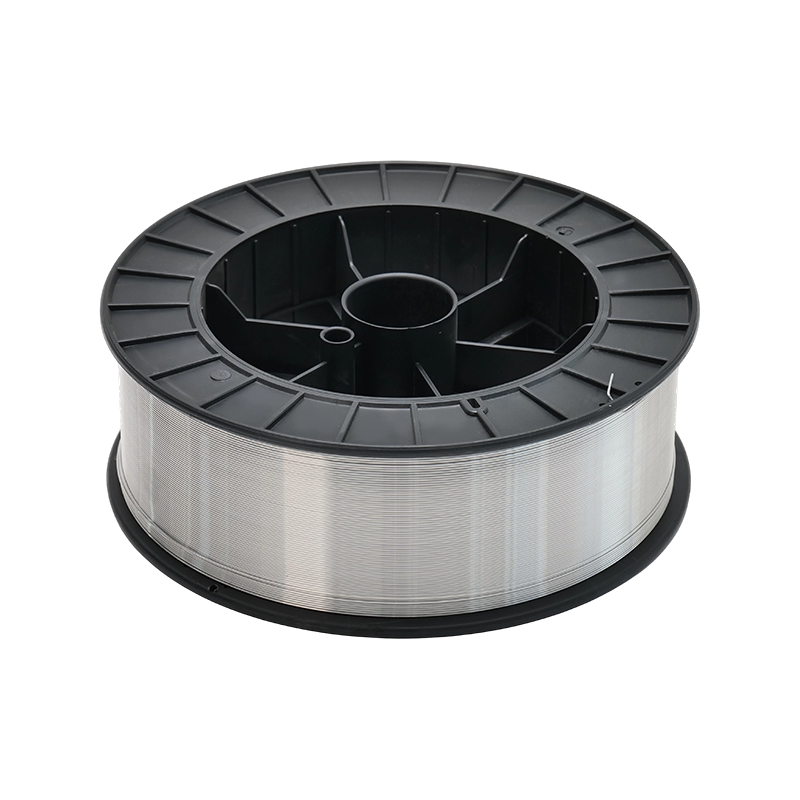
This MIG wire belongs to the category of aluminum and aluminum alloy welding materials. It is mainly used for melting electrode argon arc welding, making it suitable for applications where aluminum components require efficient joining with controlled weld quality. In MIG welding, the wire acts as both the filler metal and the electrode. It is fed continuously into the arc, melts into the weld pool, and combines with the base metal to form the joint. Because the wire performs multiple functions at the same time, its chemical consistency, diameter precision, surface condition, and winding quality are all important.
Compared with manual processes that use separate filler rods, MIG welding supports higher deposition rates, faster travel speeds, easier automation, and better productivity in medium- and large-scale manufacturing. For aluminum, this advantage is especially valuable because aluminum has high thermal conductivity and often requires higher heat input and controlled technique to form a sound joint. A stable MIG wire helps maintain a steady arc and allows the operator or robotic system to place metal efficiently without unnecessary downtime.
The product is relevant to many welding environments, from semi-automatic manual welding to automated production lines. In manual welding, the wire helps the welder achieve smooth operation, good bead profile, and reduced interruptions. In automated welding, the wire must satisfy stricter expectations because robotic systems depend heavily on consistent feeding and stable arc behavior. Even slight variations in wire surface quality or winding can affect the rhythm of automated production. A well-manufactured MIG aluminum wire reduces process uncertainty and supports predictable output.
The company’s broader product structure also strengthens the development of its welding wire. Because it works with high-purity aluminum wire, high-strength aluminum alloy wire, high-grade aluminum alloy rods, welding wires, and precision profiles, it has accumulated knowledge of aluminum metallurgy, plastic deformation, wire drawing, surface preparation, and inspection. This integrated understanding is important because welding wire is not a simple commodity. It is a precision industrial material that must perform under heat, electrical current, shielding gas, mechanical feeding pressure, and metallurgical fusion.
For end users, the practical value of this MIG wire can be summarized in several points: stable feeding, clean welding performance, consistent diameter, good compatibility with argon-shielded welding, support for efficient production, and suitability for aluminum alloy joining needs. These characteristics help fabricators reduce rework, improve weld appearance, enhance production efficiency, and maintain a more reliable welding process.
The Role of Melting Electrode Argon Arc Welding
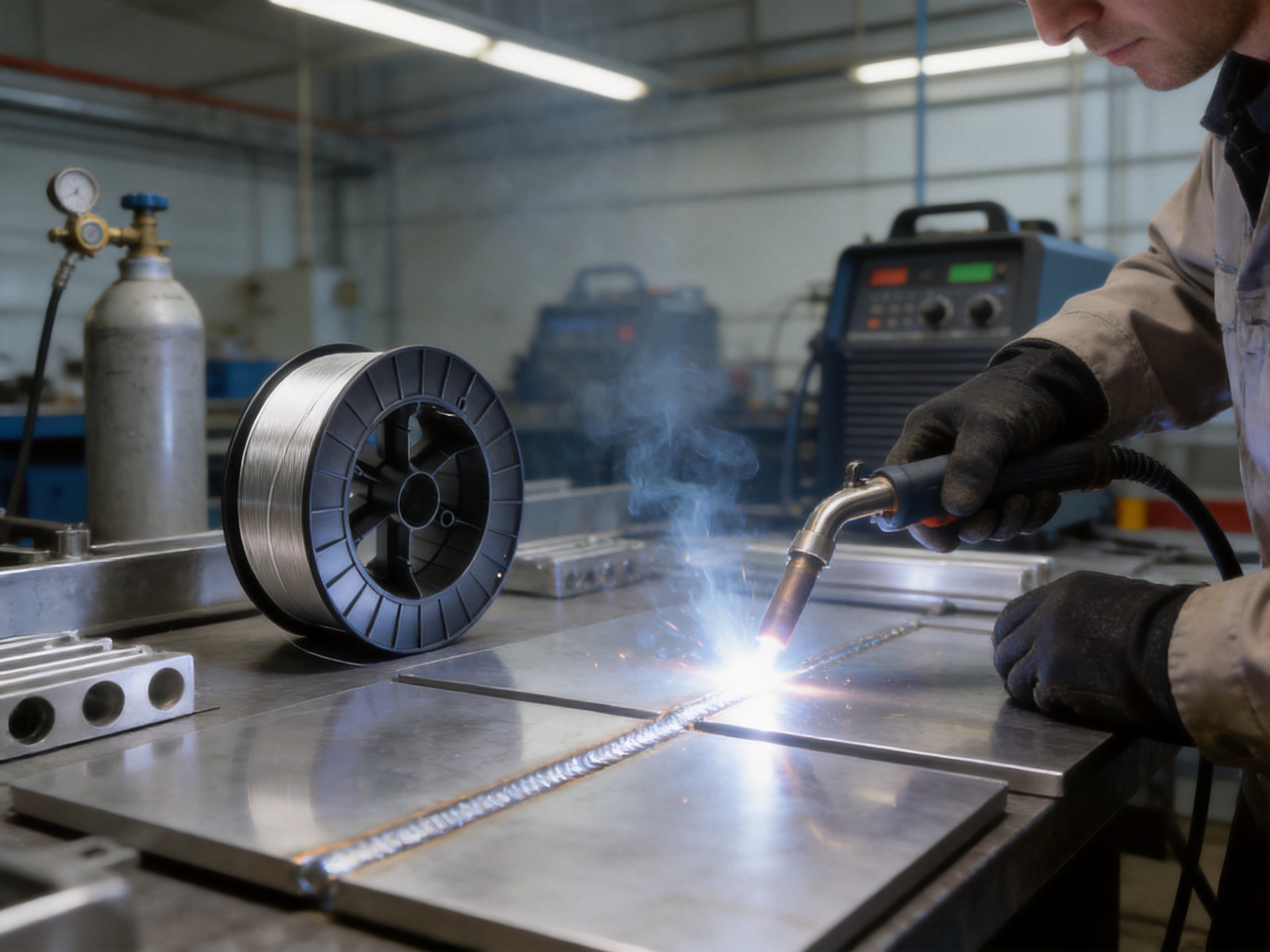
Melting electrode argon arc welding is widely used for aluminum because it combines continuous wire feeding with gas shielding. Aluminum is highly reactive with oxygen and can quickly form an oxide layer on its surface. This oxide layer has a much higher melting point than the aluminum beneath it, which can complicate welding. Proper shielding gas, clean wire, correct machine parameters, and suitable welding technique are essential for achieving a high-quality weld. MIG wire plays a central role in this system because it is continuously entering the arc and weld pool.
Argon shielding protects the molten metal from atmospheric contamination. It also helps stabilize the arc and improve bead appearance. When the wire quality is high, the arc tends to be more consistent, the weld pool is easier to control, and the resulting bead is smoother. When the wire quality is poor, contamination or irregular feeding can lead to porosity, black soot, spatter, unstable arc transfer, and weak visual quality. For manufacturers, these defects create extra costs through inspection failures, grinding, repair welding, scrap, and delivery delays.
MIG welding is particularly attractive for aluminum parts that require speed. It can deposit more filler metal per unit of time than many manual welding methods. This makes it suitable for production of aluminum frames, tanks, profiles, brackets, cabinets, vehicles, trailers, ships, equipment housings, and many fabricated structures. The process is also compatible with mechanized and robotic systems, allowing manufacturers to reduce labor intensity and improve repeatability.
However, the process is sensitive to wire quality. Aluminum wire is softer than steel wire, so feeding performance requires careful control of wire diameter, surface smoothness, cast, helix, spool winding, and packaging. A wire that is too soft, too dirty, unevenly wound, or inconsistent in diameter can cause bird-nesting, burn-back, feeding resistance, or contact tip wear. Advanced wire production helps solve these problems before the product reaches the customer.
By focusing on aluminum and aluminum alloy wire manufacturing, the producer can better understand these challenges and design process controls to reduce them. This specialization distinguishes high-quality aluminum welding wire manufacturers from general wire suppliers that may treat aluminum wire as just another product line. In reality, aluminum welding wire requires dedicated attention because it is mechanically delicate, chemically sensitive, and performance-critical.
Key Advantages Over Ordinary MIG Aluminum Wires
A major advantage of this MIG wire is its focus on reliable welding performance. In competitive markets, many aluminum welding wires may look similar from the outside. They may be packed on spools, labeled by size or alloy, and described with similar terms. Yet their actual performance can differ significantly. The difference usually appears during welding: one wire feeds smoothly and produces a bright, stable weld, while another causes stoppages, soot, porosity, or inconsistent arc behavior. The advantage of a carefully manufactured wire lies in the invisible details.
First, consistent wire diameter is essential. MIG welding equipment depends on the contact tip and drive rolls to transfer current and push the wire. If the wire diameter varies too much, feeding becomes unstable. Oversized sections can increase friction or damage the contact tip, while undersized sections may reduce electrical contact and create irregular arc performance. Precision wire drawing and continuous inspection help maintain dimensional consistency, allowing the welding equipment to operate more smoothly.
Second, surface cleanliness is critical for aluminum welding. Oil, dust, drawing lubricant residue, moisture, and oxide contamination can all contribute to porosity or unstable welding. A high-quality MIG wire must be manufactured and handled with strict cleanliness control. Clean wire supports better arc ignition, smoother melting, and reduced weld defects. This is particularly important for industries where weld appearance and reliability matter, such as transportation equipment, precision structures, and export-oriented manufacturing.
Third, good winding quality improves productivity. Aluminum wire must unwind smoothly from the spool without tangling, crossing, or sudden tension changes. Poor winding can cause feeding interruption and machine downtime. For automated welding, even a short interruption may stop an entire production cell. Reliable winding reduces the risk of bird-nesting and helps maintain a stable feeding rhythm. This is an area where advanced production equipment and careful final inspection provide a real advantage over low-cost alternatives.
Fourth, metallurgical consistency supports predictable welding results. Aluminum alloy welding wire must be produced with controlled composition and uniform material properties. Variations in chemical composition can affect melting behavior, crack resistance, color matching, strength, and corrosion performance. While final weld properties also depend on the base metal and welding parameters, a stable filler wire gives manufacturers a stronger foundation for process control. Consistency from batch to batch is especially important for customers that need repeatable results in long-term production.
Fifth, the wire supports efficient welding with argon shielding. In aluminum MIG welding, a stable arc reduces operator fatigue and improves bead control. A wire that melts evenly and feeds consistently helps welders maintain travel speed and weld pool shape. In production environments, this translates into fewer adjustments, fewer rejected parts, and less time spent troubleshooting.
Compared with competitors that may rely on basic production methods, limited inspection, or inconsistent packaging, this MIG wire benefits from a manufacturing environment built around aluminum wire expertise. The company’s quality management certifications, professional technical team, and advanced equipment provide a stronger basis for dependable product quality. Customers are not simply buying wire by weight; they are purchasing process stability, reduced risk, and better production continuity.
Advanced Manufacturing Strengths Behind the Product
The performance of MIG aluminum welding wire begins long before welding. It starts with material selection, alloy control, rod preparation, drawing, surface treatment, inspection, winding, packaging, and storage. Each stage affects the final user experience. Jiangsu Hetuo Aluminum Wire Co., Ltd. has built an intelligent manufacturing system that covers multiple aluminum wire categories, enabling the company to manage production with a broad understanding of aluminum material behavior.
The factory covers 40,000 square meters, providing space for organized manufacturing, equipment layout, inspection operations, inventory handling, and packaging. A well-planned production environment is important for aluminum wire because contamination control and handling discipline directly affect product quality. Aluminum wire surfaces can pick up dirt or moisture if not properly protected. Dedicated facilities and controlled processes help reduce these risks.
The company has 60 employees, including 30 professional managers and technicians. This ratio reflects a strong technical and management foundation for a manufacturing enterprise. Skilled technicians are needed to control drawing parameters, monitor equipment performance, inspect wire quality, solve process problems, and respond to customer requirements. Professional management helps standardize production planning, quality documentation, delivery coordination, and continuous improvement.
Advanced equipment and facilities are also central to the company’s manufacturing strength. Aluminum wire production requires precision machinery capable of maintaining stable drawing speeds, controlled reductions, surface quality, and spool formation. Equipment condition affects diameter accuracy, surface finish, mechanical properties, and winding quality. By introducing advanced equipment, the company strengthens its ability to produce welding wire that meets the needs of demanding industrial users.
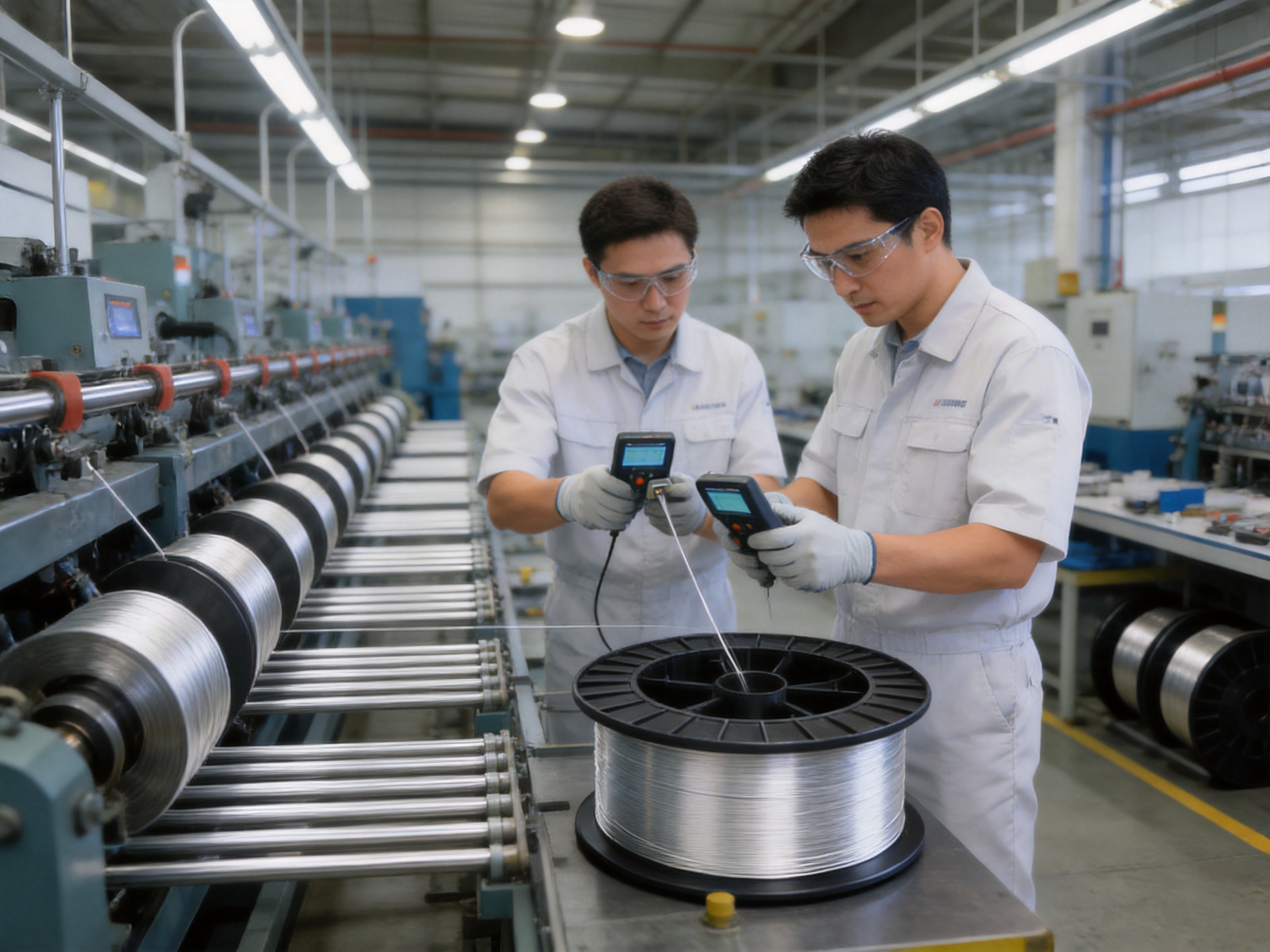
Quality inspection throughout production is another competitive advantage. Instead of relying only on final inspection, effective manufacturers monitor quality at multiple stages. Incoming materials, intermediate wire dimensions, surface condition, mechanical behavior, winding quality, and final packaging can all be checked. This approach helps detect issues earlier, reduce defective output, and improve consistency. For customers, it means fewer surprises when the wire enters production.
ISO 9001 certification indicates that the company has established a quality management system focused on process control, documentation, corrective action, and customer satisfaction. IATF 16949 certification is especially significant because it is associated with automotive industry quality management. Automotive-related supply chains often require strict control, traceability, and continuous improvement. Even when a customer is not in the automotive industry, a supplier with IATF 16949 certification can offer confidence in disciplined manufacturing practices.
The company’s products comply with international quality standards and are exported to many high-end overseas markets. Export experience matters because international customers often have strict expectations for packaging, documentation, consistency, and technical communication. A supplier that can serve high-end overseas markets is typically better prepared to support industrial customers with stable quality and dependable service.
Manufacturing Process: From Aluminum Material to Precision MIG Wire
The manufacturing process for MIG aluminum welding wire must be carefully controlled to ensure that the finished wire performs reliably. Although specific process details vary by alloy and customer requirement, the general production logic includes material preparation, thermal or mechanical conditioning, wire drawing, surface management, dimensional inspection, winding, final testing, and packaging.
The first stage is material selection. Aluminum and aluminum alloy input materials must meet the required chemical and quality standards. Composition affects weld strength, ductility, corrosion behavior, crack sensitivity, and compatibility with base metals. High-purity control is also important because unwanted impurities can influence weld soundness. A manufacturer specializing in high-purity aluminum wire and high-strength aluminum alloy wire has an advantage because it understands the relationship between composition and performance.
The second stage is rod preparation and conditioning. Aluminum alloy rods must be prepared for drawing in a way that supports stable deformation. Surface defects or internal inconsistencies can become more serious as the material is drawn into smaller diameters. Proper preparation helps improve wire surface quality and reduce breakage. This stage requires both suitable equipment and experienced technical judgment.
The third stage is wire drawing. During drawing, the aluminum rod is reduced through dies to reach the target wire diameter. Drawing must be controlled to achieve dimensional accuracy and uniform mechanical properties. Excessive or uneven deformation can create wire that is too hard, too soft, or inconsistent. For welding wire, the balance of strength and feedability is important. The wire must be strong enough to feed through the gun without buckling, yet not so hard or rough that it causes excessive wear or poor arc behavior.
The fourth stage is surface control. Aluminum MIG wire needs a clean, smooth surface. Surface quality influences feeding friction, electrical contact, arc stability, and weld cleanliness. The manufacturer must control residues, oxidation, scratches, and contamination. In competitive welding applications, surface cleanliness can be the difference between a smooth production run and repeated porosity problems.
The fifth stage is dimensional and physical inspection. Wire diameter, roundness, surface condition, cast, helix, and winding behavior may be inspected depending on product requirements. Consistent cast and helix help the wire feed predictably through liners and contact tips. Good dimensional control reduces welding instability. Inspection throughout production is a practical expression of the company’s quality commitment.
The sixth stage is spool winding. Winding must be neat and controlled. The wire should unwind smoothly without tangles or sudden tension changes. For aluminum, this is especially important because the material is relatively soft and can deform if mishandled. High-quality winding reduces downtime and improves operator confidence.
The final stage is packaging and storage. Welding wire should be protected from moisture, dust, and mechanical damage. Packaging must preserve surface cleanliness during transport and storage. Export customers also value packaging consistency because it affects warehouse handling and production planning. A supplier with international market experience is better positioned to meet these expectations.
Performance Factors That Define High-Quality MIG Wire
High-quality MIG aluminum welding wire can be evaluated through several performance factors. These factors are interconnected, and each contributes to the overall welding result. A wire that performs well in one area but poorly in another may still cause production problems. The best welding consumables deliver balanced performance across the full process.
Feedability is one of the most important factors. Aluminum wire is softer than steel wire and can be more difficult to feed over long distances. Smooth surface finish, consistent diameter, proper cast, and careful winding all improve feedability. Good feedability reduces bird-nesting, burn-back, and wire shaving. It also helps operators maintain a consistent arc length and welding speed.
Arc stability is another defining factor. Stable arc performance allows the welder to control the weld pool and bead shape. It also reduces spatter and irregular melting. Although arc stability depends on the welding machine, shielding gas, parameters, and technique, wire quality is a major contributor. Clean, uniform wire supports more predictable current transfer.
Weld cleanliness is especially important in aluminum welding. Porosity is a common concern when hydrogen contamination enters the molten weld pool. Sources may include moisture, oil, dirt, or contamination on the base metal or filler wire. A clean MIG wire helps reduce one potential source of porosity. Customers working on visible welds or quality-sensitive components benefit from reduced cleaning and repair work.
Bead appearance matters for both functional and aesthetic reasons. Aluminum welds are often visible in finished products such as frames, marine structures, railings, enclosures, and equipment housings. A smooth, uniform bead improves customer perception and may reduce post-weld finishing. Consistent wire melting supports attractive bead formation.
Mechanical performance is also important. The final weld joint must meet the application’s strength, ductility, and service requirements. Filler wire selection should match or complement the base metal and expected service environment. Consistent wire composition helps manufacturers maintain predictable weld properties. For critical applications, customers should select the appropriate alloy grade and follow qualified welding procedures.
Productivity is a practical performance factor. A wire that reduces stoppages, rework, and adjustment time creates measurable value. Even if a lower-cost wire appears cheaper at purchase, it may become more expensive if it causes downtime or rejects. High-quality MIG wire can reduce the total cost of welding by improving process efficiency.
| Performance Factor | Why It Matters | How High-Quality MIG Wire Helps |
|---|---|---|
| Diameter Consistency | Supports stable feeding and current transfer | Reduces contact tip problems, arc fluctuation, and feeding resistance |
| Surface Cleanliness | Reduces contamination entering the weld pool | Helps lower porosity risk and improves weld appearance |
| Controlled Winding | Prevents tangles and uneven feed tension | Improves productivity in manual and automated welding |
| Metallurgical Consistency | Supports predictable weld properties | Improves repeatability across batches and production shifts |
| Good Feedability | Maintains smooth wire delivery through the gun | Reduces bird-nesting, burn-back, and downtime |
| Arc Stability | Improves weld pool control and bead formation | Helps achieve smoother welding and fewer defects |
Applications Across Modern Industries
MIG aluminum welding wire is used wherever aluminum components need efficient and reliable joining. Because aluminum offers low density, good corrosion resistance, electrical conductivity, thermal conductivity, and formability, it is widely selected for modern lightweight structures. Welding wire quality becomes especially important when manufacturers need to maintain both performance and productivity.
In transportation equipment, aluminum welding materials are used for vehicle bodies, trailers, rail components, commercial transport structures, and lightweight frames. Weight reduction is a major goal in transportation because it can improve fuel efficiency, increase payload, or support electric vehicle range. MIG welding is useful for joining aluminum structures quickly, and high-quality wire helps manufacturers keep production stable.
In machinery and equipment manufacturing, aluminum is often used for housings, frames, brackets, guards, platforms, and structural assemblies. These parts may require neat welds, dimensional stability, and reliable strength. A stable MIG wire helps operators weld efficiently while reducing rework. For equipment exported to international markets, consistent weld appearance and quality can enhance product competitiveness.
In marine and outdoor structures, aluminum’s corrosion resistance is valuable. Boats, docks, marine frames, access platforms, and outdoor equipment often use aluminum alloys. Welding consumables must support strong joints and clean welds that can withstand service environments. While base metal selection and design remain important, high-quality filler wire contributes to dependable fabrication.
In construction and architectural fabrication, aluminum profiles and panels are used for frames, supports, decorative elements, and specialized structures. Weld appearance may be important because some joints remain visible. MIG wire with stable arc performance and good cleanliness can help produce smooth weld beads and reduce finishing work.
In electrical and thermal applications, aluminum may be selected for conductivity and heat dissipation. Welded components can include busbar structures, heat exchangers, enclosures, and cooling equipment. Welding must be controlled to avoid defects that could affect performance. Clean wire and stable operation are valuable in these applications.
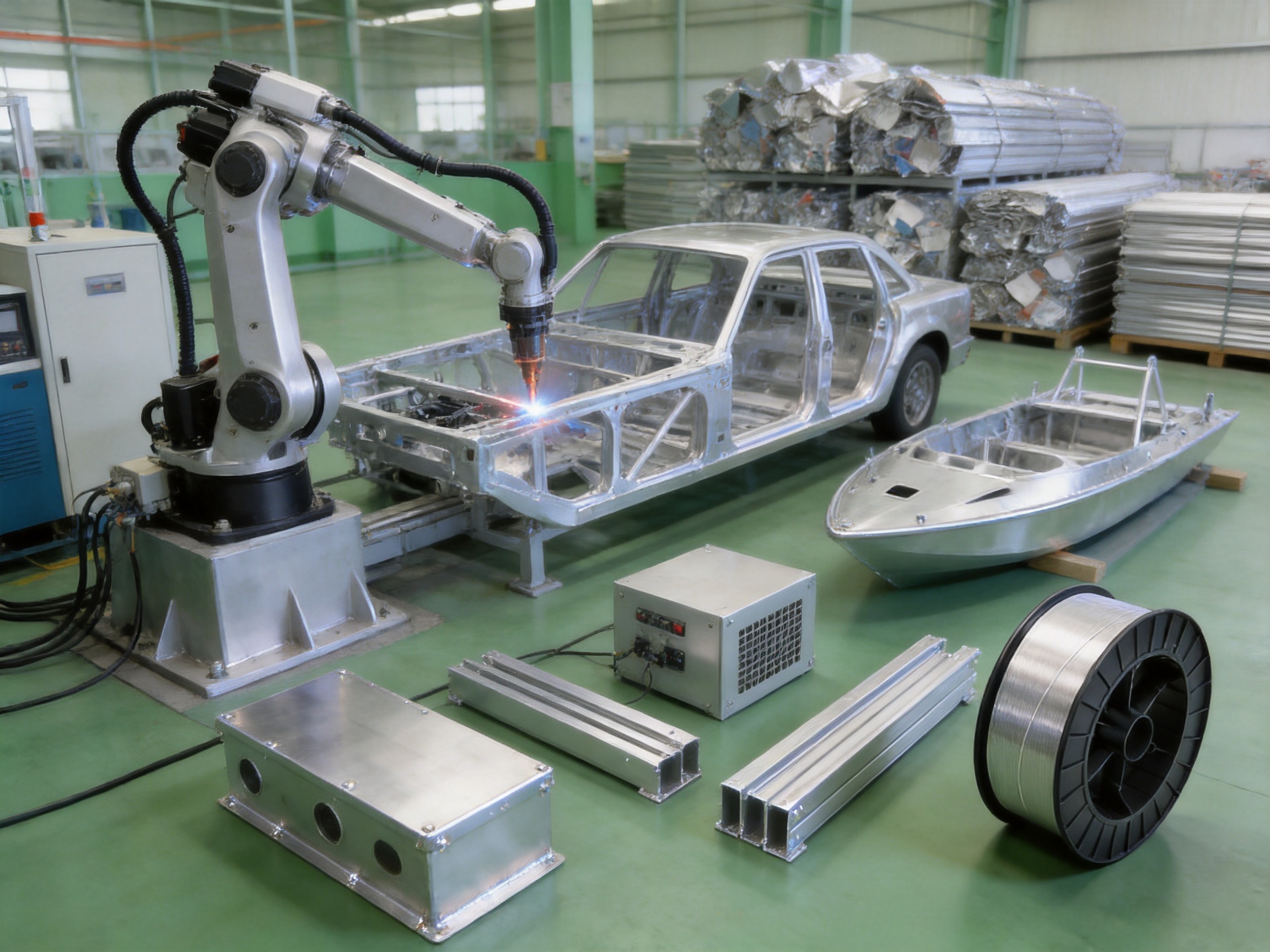
In automated and robotic welding, MIG wire quality becomes even more important. Robots repeat programmed movements precisely, but they cannot compensate for wire tangles, inconsistent diameter, or contamination in the same way an experienced welder might. A dependable wire allows automated systems to operate longer with fewer interruptions. This is one reason manufacturers increasingly choose suppliers with strong quality systems and advanced production capabilities.
Why Company Capability Matters When Choosing Welding Wire
Many buyers initially compare welding wire by price, alloy, and diameter. These are important, but they do not tell the whole story. The supplier’s manufacturing capability, quality management, technical knowledge, and service reliability have a direct impact on the user’s welding results. A low-priced wire that creates downtime, rejects, or inconsistent weld quality can cost far more than it saves.
Jiangsu Hetuo Aluminum Wire Co., Ltd. has positioned itself as an innovative pioneer in China’s aluminum alloy materials industry, guided by customer needs and committed to customer satisfaction. This customer-oriented approach is important because welding applications vary widely. Different customers may use different machines, shielding gases, feed systems, joint designs, base metals, and quality requirements. A capable supplier understands that welding wire must work in real production environments, not only meet a basic specification on paper.
The company’s intelligent manufacturing system covers high-purity aluminum wire, high-strength aluminum alloy wire, and aluminum/aluminum alloy welding materials. This range creates technical synergy. Knowledge gained from producing high-purity wire supports cleanliness and metallurgical control. Experience with high-strength aluminum alloy wire supports understanding of alloy behavior and mechanical properties. Welding material production connects this knowledge directly to joining performance. Together, these capabilities create a stronger foundation than a narrow or purely trading-based supplier can offer.
The company’s certifications, ISO 9001 and IATF 16949, also matter. These systems encourage standardized processes, traceability, corrective action, supplier control, and continuous improvement. For customers, certification is not merely a document. It indicates that the company is prepared to operate under disciplined quality expectations. In industries such as automotive, transportation, and high-end equipment, this discipline can be essential.
Export experience further supports customer confidence. International markets often require consistent quality, accurate documentation, reliable packaging, and communication across technical and commercial requirements. A supplier serving high-end overseas markets must maintain higher standards to remain competitive. This experience helps buyers reduce procurement risk.
Manufacturing scale is another strength. A 40,000-square-meter factory provides room for systematic production and future development. The presence of professional managers and technicians supports process improvement and customer response. In welding consumables, technical support can be important when customers need guidance on product selection, storage, or troubleshooting. While welding procedure qualification remains the customer’s responsibility, a knowledgeable supplier can provide useful product information and consistent material.
Quality Control and Inspection Philosophy
Quality control for MIG aluminum welding wire should be continuous, not occasional. Because welding wire defects can be subtle, a strong inspection philosophy is necessary. The company strictly implements quality inspection throughout production, which helps ensure that potential issues are identified before the product reaches customers.
Incoming material inspection is the first safeguard. Aluminum input materials must meet chemical and physical requirements. Any issue at this stage can affect the entire production batch. By controlling incoming materials, the manufacturer reduces the risk of downstream inconsistency.
Process inspection is the second safeguard. During drawing and intermediate processing, wire dimensions and surface condition must be monitored. If a deviation occurs, early detection prevents large quantities of nonconforming material from being produced. Process inspection also helps technicians adjust equipment settings and maintain stable production.
Final inspection is the third safeguard. Finished MIG wire should be checked for appearance, winding, labeling, packaging, and relevant quality characteristics. Customers expect the wire to be ready for use upon delivery. Final inspection helps confirm that the product meets requirements before shipment.
Traceability is also important. In quality-sensitive industries, customers may need to connect product batches with production records. A mature quality management system supports traceability and corrective action. If a customer raises a concern, the supplier can investigate the relevant batch, process conditions, inspection records, and improvement opportunities.
Continuous improvement is the long-term safeguard. Welding technology, customer expectations, and industrial standards continue to evolve. A strong manufacturer does not treat quality as a fixed achievement; it treats quality as an ongoing process. Feedback from customers, internal inspection results, equipment upgrades, and staff training all contribute to improvement.
Practical Benefits for Fabricators and Welding Engineers
For fabricators, the value of high-quality MIG aluminum welding wire appears in daily production. Operators spend less time clearing feeding problems. Supervisors face fewer interruptions. Quality inspectors see fewer visual defects. Purchasing teams reduce complaints from the shop floor. Production planners gain more confidence in delivery schedules. These benefits may not appear on a simple unit price comparison, but they strongly affect total manufacturing cost.
Welding engineers benefit from consistency. When wire quality is stable, engineers can develop and maintain welding procedures more effectively. If weld results change unpredictably, troubleshooting becomes difficult. The cause may be machine settings, gas flow, base metal cleanliness, operator technique, joint fit-up, or filler wire. Consistent wire removes one major variable from the process and makes welding engineering more manageable.
For manual welders, smooth feedability improves comfort and control. Aluminum welding already requires attention to torch angle, travel speed, heat input, and cleaning. A wire that feeds irregularly adds unnecessary difficulty. Good MIG wire allows the welder to focus on technique rather than fighting the consumable.
For automated welding users, dependable wire helps protect equipment utilization. Robot cells and automated lines are investments that must operate efficiently to justify their cost. Wire-related stoppages reduce the value of automation. A high-quality wire with controlled winding and feedability supports longer uninterrupted operation.
For quality managers, supplier reliability is important. A welding consumable supplier with strong certifications, inspection systems, and international market experience can better support quality objectives. When customers audit supply chains or request evidence of quality control, a certified manufacturer is better prepared.
For procurement teams, the best choice is often not the lowest initial price but the best balance of quality, service, consistency, and cost. A premium-quality MIG wire can reduce hidden costs by lowering downtime, rework, scrap, and complaints. This makes it a strategic consumable rather than a simple commodity.
Storage, Handling, and Best Use Recommendations
Even the best MIG aluminum welding wire must be stored and handled correctly. Aluminum welding is sensitive to contamination, and improper storage can reduce wire performance. Users should keep wire in clean, dry conditions and avoid exposing it to moisture, dust, oil, or corrosive environments. Packaging should remain sealed until the wire is needed. If wire is moved from a cold storage area to a warm shop, condensation should be avoided before opening.
Operators should use suitable drive rolls and liners for aluminum wire. Because aluminum is softer than steel, improper drive roll pressure can deform the wire. Too much pressure may shave the wire or create feeding resistance, while too little pressure may cause slipping. U-groove drive rolls are commonly used for aluminum to support feeding without excessive deformation. A clean liner and correct contact tip size also help maintain stable feeding.
Base metal cleaning remains essential. A clean MIG wire cannot compensate for dirty base metal. Aluminum surfaces should be cleaned of oil, grease, moisture, and excessive oxide before welding. Stainless steel brushes dedicated to aluminum are often used for oxide removal. Proper joint preparation reduces porosity and improves fusion.
Shielding gas flow should be controlled. Argon is commonly used for aluminum MIG welding, but flow rate and coverage must match the application. Too little gas may allow atmospheric contamination, while too much gas can create turbulence that draws air into the weld zone. Drafts from fans or open doors can also disturb shielding. Wire quality works best when the complete welding environment is properly managed.
Welding parameters should be selected according to wire diameter, alloy, base metal thickness, joint design, and equipment capability. Voltage, wire feed speed, travel speed, contact tip-to-work distance, and torch angle all influence results. Users should follow qualified procedures for critical applications. The wire provides a stable foundation, but welding success depends on the complete process.
Sustainability and the Future of Aluminum Welding
Aluminum plays an important role in sustainable manufacturing because it supports lightweight design, long service life, corrosion resistance, and recyclability. Industries seeking energy efficiency and reduced material weight increasingly turn to aluminum alloys. Welding materials must evolve with these needs. High-quality aluminum MIG wire contributes to sustainability by improving production efficiency, reducing scrap, and supporting durable structures.
When welding wire causes defects, manufacturers consume extra energy, gas, labor, and material to repair or replace parts. Reducing defects is therefore not only a quality goal but also a sustainability goal. Stable wire performance helps reduce waste. Better feedability reduces discarded wire from bird-nesting or burn-back events. Clean welding reduces grinding and repair work. Consistent production reduces the environmental burden of rework.
The company’s goal of providing lighter, stronger, and more sustainable aluminum alloy wire and welding material solutions aligns with global industrial trends. Lightweight transportation, efficient equipment, renewable energy systems, and advanced infrastructure all require reliable aluminum joining. As manufacturers adopt more automation and stricter quality requirements, welding wire must become more precise and consistent.
Future aluminum welding will likely demand higher cleanliness, tighter tolerances, improved packaging, better traceability, and stronger technical support. Suppliers with intelligent manufacturing systems and quality certifications are better prepared for these expectations. MIG wire will continue to be a key consumable because it combines productivity, versatility, and compatibility with automation.
Q&A: Common Questions About MIG Aluminum Welding Wire
What is MIG aluminum welding wire used for?
MIG aluminum welding wire is used as a continuously fed electrode and filler metal in gas metal arc welding of aluminum and aluminum alloys. It is mainly suitable for melting electrode argon arc welding, where shielding gas protects the molten weld pool from atmospheric contamination.
Why is wire quality so important in aluminum MIG welding?
Aluminum wire is relatively soft and sensitive to contamination. Poor wire quality can cause feeding problems, porosity, unstable arc behavior, poor bead appearance, and production downtime. High-quality wire improves feedability, arc stability, cleanliness, and repeatability.
What advantages does this MIG wire offer compared with ordinary alternatives?
Its advantages include consistent diameter control, clean surface condition, stable feeding, controlled winding, reliable melting behavior, and production backed by advanced equipment and strict quality inspection. These characteristics help reduce downtime, rework, and welding defects.
Can this wire be used in automated welding systems?
Yes, MIG aluminum welding wire is suitable for both manual and automated welding environments when selected correctly for the application. Automated systems especially benefit from consistent wire diameter, smooth winding, and reliable feedability.
What role does argon shielding gas play?
Argon shielding gas protects the molten aluminum weld pool from oxygen, nitrogen, moisture, and other atmospheric contaminants. It also supports arc stability and helps produce a cleaner weld bead.
How should MIG aluminum welding wire be stored?
It should be stored in a clean, dry environment and protected from moisture, dust, oil, and mechanical damage. Packaging should remain sealed until use, and condensation should be avoided when moving wire between temperature zones.
Why are ISO 9001 and IATF 16949 certifications meaningful?
ISO 9001 reflects a standardized quality management system, while IATF 16949 indicates quality discipline associated with automotive supply chains. These certifications support process control, traceability, corrective action, and continuous improvement.
Does high-quality wire eliminate all welding defects?
No. Wire quality is very important, but welding results also depend on base metal cleanliness, shielding gas, machine settings, joint design, operator skill, and procedure control. High-quality wire reduces one major source of problems and supports a more stable process.
Conclusion: A Reliable Welding Consumable for Demanding Aluminum Fabrication
MIG aluminum welding wire is more than a filler material. It is a performance-critical component of the welding process. Its diameter consistency, surface cleanliness, winding quality, alloy stability, and feedability directly influence arc behavior, weld quality, productivity, and total fabrication cost. For industries using aluminum in lightweight, corrosion-resistant, structural, electrical, or decorative applications, selecting the right MIG wire can improve both production efficiency and finished product quality.
This MIG wire, mainly used for melting electrode argon arc welding, is designed for the practical needs of aluminum and aluminum alloy welding. Its value is strengthened by the manufacturer’s specialized aluminum wire expertise, advanced equipment, quality inspection throughout production, 40,000-square-meter factory, professional technical team, and ISO 9001 and IATF 16949 quality management certifications. These strengths create a dependable foundation for customers seeking stable welding performance and long-term supply confidence.
Compared with ordinary alternatives, a carefully manufactured MIG aluminum welding wire offers advantages that become visible in the workshop: smoother feeding, fewer interruptions, cleaner welds, better bead appearance, reduced troubleshooting, and improved repeatability. In competitive manufacturing, these benefits can be more important than a small difference in purchase price. A stable wire helps protect productivity, quality, and customer satisfaction.
As global industries continue to demand lighter, stronger, and more sustainable aluminum solutions, reliable welding consumables will remain essential. High-performance MIG aluminum welding wire supports this transition by enabling efficient joining, reducing waste, and helping manufacturers achieve consistent results in both manual and automated welding operations.
References
American Welding Society. Welding Handbook: Welding Processes, Part 1.
American Welding Society. Specification for Aluminum and Aluminum-Alloy Electrodes and Rods.
International Organization for Standardization. ISO 9001 Quality Management Systems Requirements.
International Automotive Task Force. IATF 16949 Automotive Quality Management System Standard.
Davis, J. R. Aluminum and Aluminum Alloys. ASM International.
Mathers, G. The Welding of Aluminium and Its Alloys. Woodhead Publishing.
Kou, S. Welding Metallurgy. Wiley.